Get Full Government Meeting Transcripts, Videos, & Alerts Forever!
Get email alerts on the Teacher Preparation topic
No spam. Unsubscribe anytime.
IACTE tells Senate Education Committee Idaho colleges collaborate on teacher preparation, literacy and retention
Summary
Representatives from Idaho’s educator-preparation programs told the Senate Education Committee that statewide collaboration — including the Idaho Higher Education Literacy Partnership (I HELP) — aims to strengthen teacher preparation, address classroom behavioral and mental-health needs, and improve teacher retention in rural and urban districts.
Representatives from Idaho’s colleges of education told the Senate Education Committee on Thursday that statewide collaboration among educator-preparation providers is focused on expanding teacher pipelines, improving literacy instruction and supporting teacher retention.
Bridal Blevins, representing the Idaho Association of Colleges for Teacher Education (IACTE), said the group of institutions meets regularly and cooperates on program review, assessments and initiatives such as the Danielson instructional framework and statewide employer surveys. “Educators do make a difference,” Blevins told the committee as she introduced the group’s work.
The presenters said educator-preparation programs (EPPs) include traditional four‑year routes and alternative pathways that train paraprofessionals and other nontraditional candidates, and that many institutions now offer registered apprenticeship programs in partnership with the Idaho Department of Education.
Dr. Blevins and other speakers emphasized three priorities: ensuring teacher candidates have subject-matter and professional knowledge; expanding clinical experiences with mentor support; and preparing teachers to work with diverse learners, including students with disabilities who have Individualized Education Programs (IEPs) or 504 plans.
On classroom behavior and student needs, Blevins and colleagues told the committee that many students are arriving with higher behavioral and mental‑health needs than in the past, citing the pandemic and increased social-media exposure as contributing factors. The presenters said teachers often act as interim social supports in addition to instructional roles and urged more school-based counselors, psychologists and social workers to reduce burden on classroom teachers. “Teachers cannot continue to do it all,” Blevins said.
Retention and induction programs were a recurring theme. Sherry Disbuke, assistant dean at Boise State University, summarized IACTE research showing that new teachers who received continuing support in their first years had higher retention rates than those who did not. Lewis‑Clark State College representative Bridal Toy urged attention to special-education staffing and scheduling so special-education teachers have time to coordinate services and write IEPs.
Whitney Ward, a professor at Northwest Nazarene University and member of the Idaho Higher Education Literacy Partnership (I HELP), told the committee Idaho is “one of the only 8 states in the nation that covers all of the components of early literacy,” and said Idaho ranks among the top five states in early-literacy measures cited by the National Council on Teacher Quality. Ward said I HELP helps institutions align programs around evidence-based literacy instruction.
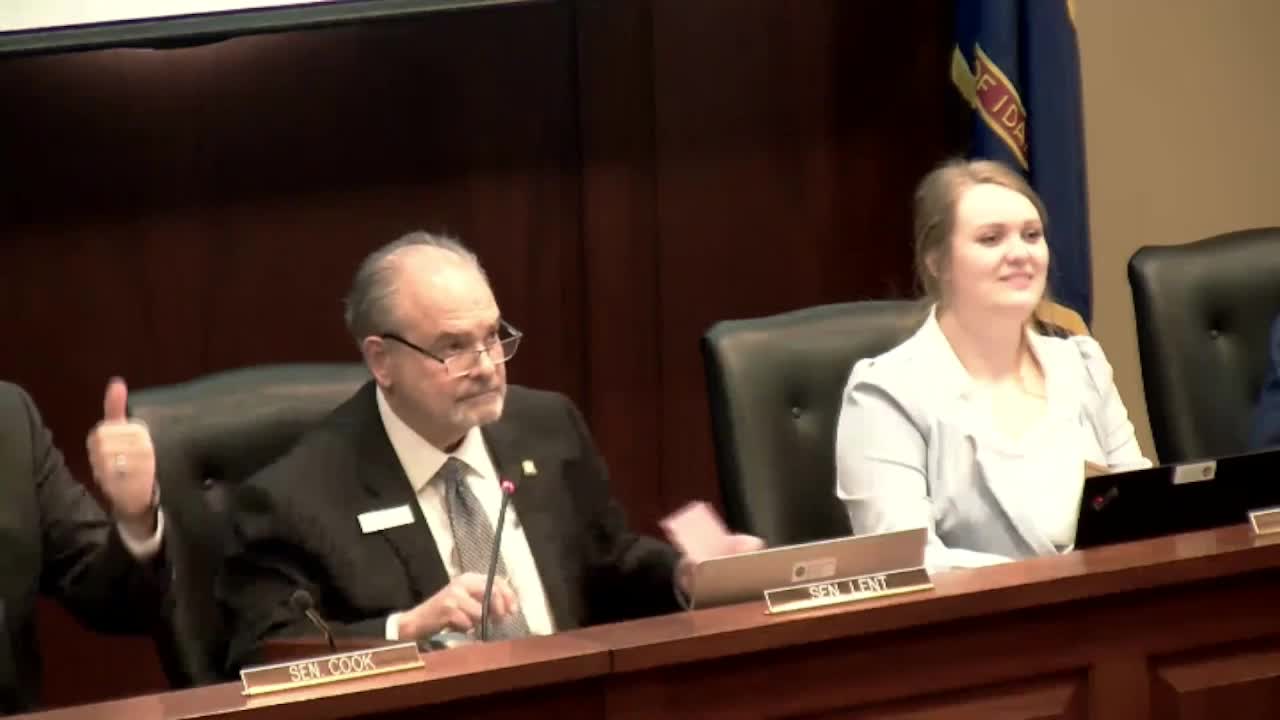
Senate Education Committee Chair Lent framed the discussion with a quote from the Idaho Constitution, saying, “It shall be the duty of the legislature of Idaho to establish and maintain a general uniform thorough system of public free common schools,” and asked the presenters for concrete steps lawmakers could take to support teacher recruitment and retention.
Several senators asked clarifying questions: Senator Simmelrath asked whether traditional programs can include alternative pathways; Blevins confirmed and listed programs such as PACE, IMPACT and PACT as examples that move paraprofessionals and others into teacher certification programs. Senator Wardeng (transcript: Ward Engelking) asked about escalations in student behavior; presenters connected those trends to trauma, social media and pandemic-related disruptions.
Presenters urged legislators to visit teacher-preparation programs and partner schools, consider state support for induction and mentoring programs, and ensure staffing in schools for counselors and special-education roles. IACTE invited legislators to a reception and offered faculty contact information for follow-up.