Get Full Government Meeting Transcripts, Videos, & Alerts Forever!
Get email alerts on the Higher Education Enrollment Workforce topic
No spam. Unsubscribe anytime.
Idaho university presidents tell Senate committee enrollment is rising, LAUNCH aids access and workforce gaps remain
Summary
Presidents from Lewis-Clark State, Boise State, the University of Idaho and Idaho State briefed the Senate Education Committee on enrollment trends, LAUNCH scholarship use and priorities for workforce education and research funding.
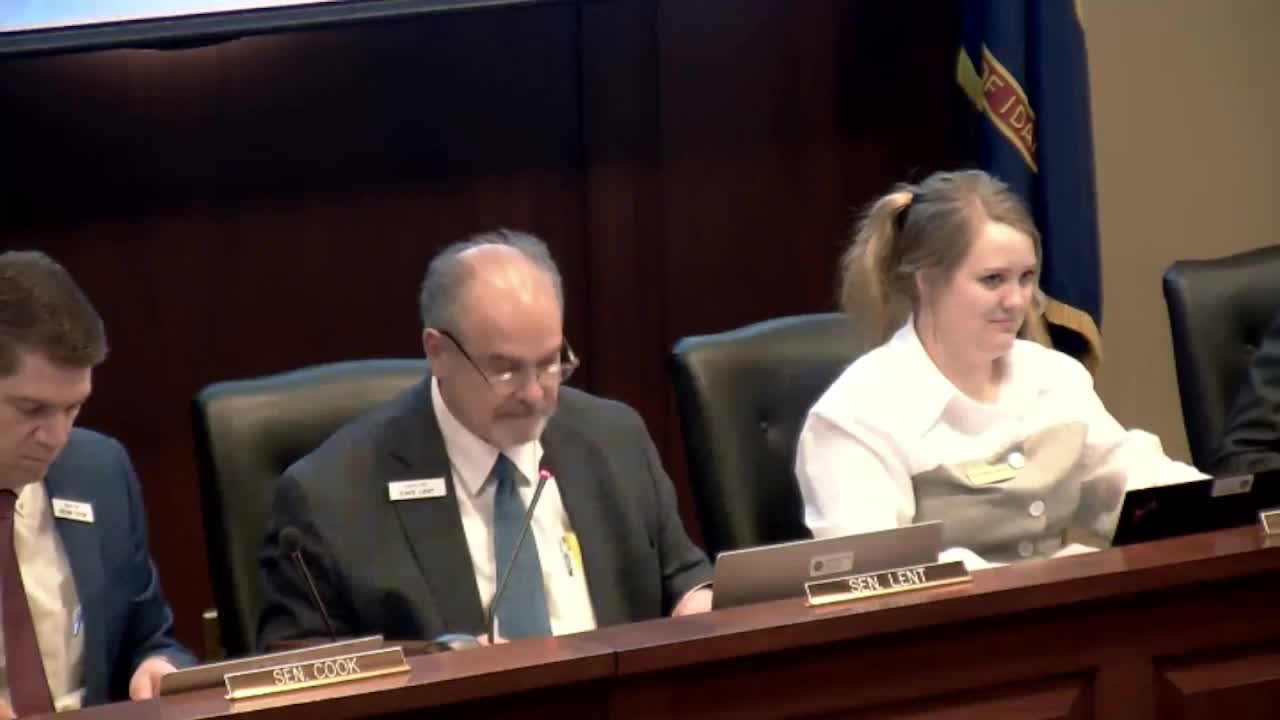
At a Senate Education Committee hearing, the presidents of Lewis-Clark State College, Boise State University, the University of Idaho and Idaho State University told lawmakers their institutions are recovering enrollment and using the LAUNCH scholarship to expand access while seeking further investment to meet workforce needs.
The presidents presented enrollment, economic-impact and program data and described priorities including nursing, engineering, construction management, cybersecurity and expanded research capacity. Dr. Cynthia Pemberton, president of Lewis-Clark State College, said the eight public institutions in Idaho “serve over 43,000 students” collectively and generate “$4,500,000,000 in gross product annually.” She added that LC State remains a small, affordable institution focused on teaching and workforce preparation and that tuition and fees at LC State are $7,610 a year.
“We are a small institution that does big things,” Pemberton said, noting LC State’s role in career-technical education, its nursing and allied-health programs and a prison-education effort. Pemberton said LC State is the only Idaho school that has completed all steps to participate in the federal Second Chance Pell experimental program and that the college now serves about 200 incarcerated students across campuses in Orofino, Boise and Pocatello.
Boise State President Marlene Tromp told the committee Boise State now serves about 33,000 learners and has increased its incoming class of Idaho students by roughly 11.5% this year and by about 52% over five years. Tromp reported nearly 1,300 Boise State students were receiving LAUNCH funds this year, and she said LAUNCH is the only financial assistance for about 600 of those students. Tromp said the university is targeting future state funding to programs that feed the workforce pipeline—nursing, computer science and engineering among them—and that private-sector donors recently funded a new construction management building.
“For every dollar our state invests in the university, we return 2 and a half to the state,” Tromp said, describing Boise State’s economic impact and fundraising priorities for scholarships intended to reduce unmet student need.
University of Idaho President Scott Green highlighted U of I’s distributed extension and research centers, reporting a recent economic analysis that put the university’s annual output at about $2.7 billion and citing $136 million in recent research expenditures. Green said the university is closing in on an R1 Carnegie classification and noted the Idaho Center for Agriculture, Food and the Environment (CAFE) project, which includes a robotic rotary milking parlor and was described as targeted to scale research and workforce training for the dairy industry.
“I have to credit the extension network in delivering practical research to communities across Idaho,” Green said, noting outreach work in agriculture, aquaculture and forestry and the university’s role in statewide wildfire preparedness research.
Idaho State University President Robert Wagner described ISU as “a statewide leader for health sciences” and reported growth in health-related degree programs and workforce training. Wagner said ISU has the most LAUNCH-eligible programs in the state and that about 888 ISU students received LAUNCH support this fall, with top programs including nursing, radiographic science and dental hygiene. Wagner also described collaboration agreements with other Idaho higher-education providers and with the Idaho College of Osteopathic Medicine (ICOM).
All four presidents urged continued attention to workforce-aligned programs and to policies that sustain affordability and student success. Committee members asked about capacity-building, cost drivers and how LAUNCH funds are being used; the presidents said the program is a major contributor to recent enrollment gains and to keeping higher education affordable for many Idaho families.
The presidents concluded by standing for questions from the committee.