Get Full Government Meeting Transcripts, Videos, & Alerts Forever!
Get email alerts on the Higher Education topic
No spam. Unsubscribe anytime.
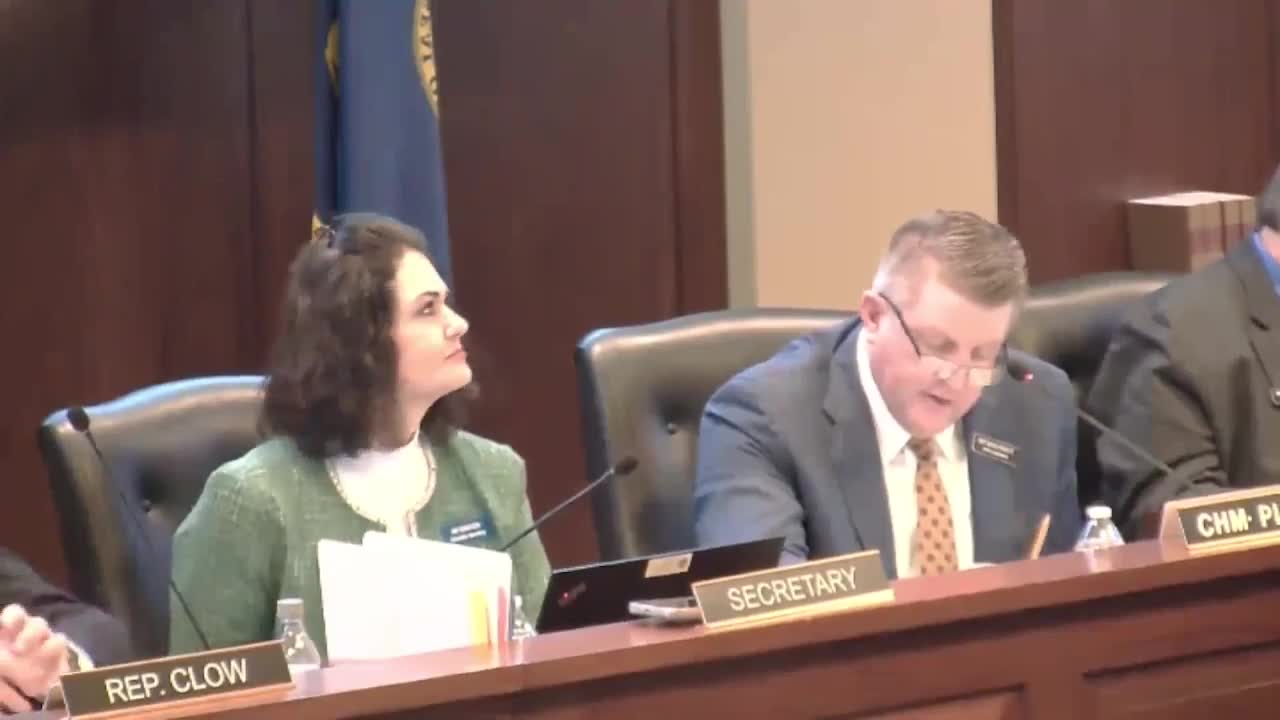
Idaho university presidents tell House education committee enrollment, workforce gains; Boise State questioned on DEI materials
Summary
Presidents from Lewis‑Clark State College, Boise State, the University of Idaho and Idaho State University appeared before the House Committee on Education on Jan. 28 to describe enrollment growth, workforce initiatives and program outcomes; lawmakers questioned Boise State about a DEI certificate listed on the university website.
Four public university presidents gave overview presentations to the House Committee on Education on Jan. 28, highlighting enrollment gains, workforce training, and economic impact; committee members questioned them about program outcomes, campus centers and a certificate listed on Boise State's website.
Dr. Cynthia Pemberton, president of Lewis‑Clark State College, said Idaho's eight public institutions collectively serve about 43,685 students and award more than 18,000 credentials annually. She described LC State as "a teaching institution" with a high proportion of nontraditional students, many working while enrolled, and noted strong outcomes in nursing and allied health programs. Pemberton told the committee LC State was the first Idaho institution to transition its prison‑education program from the Pell experimental pilot to a recognized program, serving nearly 200 incarcerated students across multiple sites.
Boise State University President Marlene Tromp told the committee Boise State serves more than 33,000 students annually, has increased Idaho resident enrollment and awards 56% of bachelor's degrees among Idaho public institutions. Tromp said Boise State has low average student loan debt and emphasized the university's Institute for Advancing American Values and an "Idaho Listens" civic‑engagement program that she said promotes free speech and civil discourse. Several lawmakers pressed Tromp about the university's DEI‑related offerings and campus centers. Tromp said the DEI‑style student centers referenced in prior materials have been closed and that university work has been "revisioned" to expand services and ensure compliance with state board guidance; she characterized the Institute as focused on open exchange and free speech.
Committee members cited a printout showing a "DEI certificate" listed under Boise State's Department of Sociology on the university website and asked whether that certificate remained active and whether it complied with the state board's resolution. Tromp said she would inquire further about the specific certificate and noted that certificates can be created by faculty and are processed differently from degree programs. She said Boise State used only non‑taxpayer funds to cover legal defense costs in a separate litigation matter and that State Risk collaborated with the university on indemnification.
Scott Green, president of the University of Idaho, described the university's land‑grant mission, a statewide extension network, and a record $136 million in research expenditures in the prior year. Green said the university is close to achieving R1 research classification and highlighted a $15 million grant for wildfire research and a major Addo Center for Agriculture, Food and the Environment (a research dairy in the Magic Valley). He said the University of Idaho has the second‑best value among public universities nationally in U.S. News rankings and noted high retention and recent freshman class size records.
Idaho State University President Robert Wagner said ISU focuses on health sciences and statewide access, noting that about 92% of ISU students are Idaho residents. He highlighted ISU's dual‑enrollment expansion to rural high schools, plans to add mental‑health components to rural outreach, and partnerships with the Idaho National Laboratory and the Idaho College of Osteopathic Medicine. Wagner also described completion and retention initiatives and said ISU offers the most Launch‑qualified programs of any Idaho public institution.
Members asked several common questions to all presidents. Lawmakers sought clarity on whether Launch scholarship recipients who benefit from state funds should be required to remain in Idaho for a defined period or sign agreements to work in‑state; presidents said the question raised complex legal and policy considerations and noted examples of limited programs (for example, WWAMI medical education) that impose return commitments in some contexts. President Pemberton said the idea of a service obligation merits legal review. Several presidents said a majority of graduates in health and technical programs remain in Idaho but deferred broader policy judgments to the State Board or the legislature.
Committee members also asked about dual‑credit and credit load ("15 to finish") initiatives and whether enrollments reported by institutions included dual‑credit students. Presidents said institutions track both "core" enrollment (excluding dual credit) and total enrollments; University of Idaho said it was growing under both measures. Lawmakers asked about the impact of the recent federal memorandum pausing certain disbursements of federal financial assistance; University of Idaho President Green said such pauses have occurred under prior administrations and typically give agencies time to review but can cause short‑term uncertainty for time‑sensitive grants and staffing.
On campus centers and DEI: Tromp said campus DEI centers cited in prior materials have been closed and the university restructured services. Committee members asked Boise State to follow up about the specific DEI certificate they found on the website and whether it complies with state board policy; Tromp said she would investigate and report back.
Ending: Presidents presented data on program outcomes and economic impact, emphasized workforce and rural outreach, and agreed to provide requested follow‑up information to the committee where appropriate (for instance, on certificates, enrollment breakdowns and dual‑credit accounting).