Get Full Government Meeting Transcripts, Videos, & Alerts Forever!
Get email alerts on the Unemployment Fraud Legislation topic
No spam. Unsubscribe anytime.
House committee advances bill increasing penalties and clarifying standards for unemployment fraud
Summary
Lawmakers voted to send House Bill 53 to the floor with a do-pass recommendation after sponsors and the Labor director described new definitions for 'knowing' and 'willful' conduct, stepped-up disqualification periods for repeat fraud, and a threshold distinguishing misdemeanor and felony fraud.
Representative Laurie McCann, sponsor of House Bill 53, told a House committee the bill updates Idaho law on unemployment fraud by defining legal standards and increasing penalties for repeat offenses.
McCann said the bill “defines legally what willfully and what knowingly means” and sets stepped disqualification periods tied to repeat fraud determinations: a first fraud results in a one-year disqualification, a second in two years, and a third in three years; penalties escalate from 25 percent on the first fraud to 50 percent on a second and 100 percent on a third, as described by the sponsor. The bill also aligns the criminal classification for unemployment fraud with Idaho’s theft statute: fraud totaling less than $1,000 would be a misdemeanor, while amounts over $1,000 would be a felony. McCann said the bill adds identity theft as an aggravated offense that would be an automatic felony when used to obtain UI benefits.
Director Janie Revere and a department legal adviser explained that the bill moves existing definitions and case-law interpretations into statute. The department’s representative said the draft formalizes how courts and the department have applied “willful” conduct, giving an example where the Idaho Supreme Court found a claimant’s failure to disclose employment after being advised of reporting requirements constituted willfulness.
Lawmakers asked clarifying questions about the language. Representative McGowan asked specifically about “deliberate ignorance” phrasing and the placement of a hyphen; department attorneys and the sponsor said the bill does not change the existing definition but relocates language from one section of code to another so it applies consistently across the chapter. Representative Chiuom asked about the fraud rate and staff assigned to fraud investigations; the director said exact staffing counts fluctuate and that the department would provide a precise number on request.
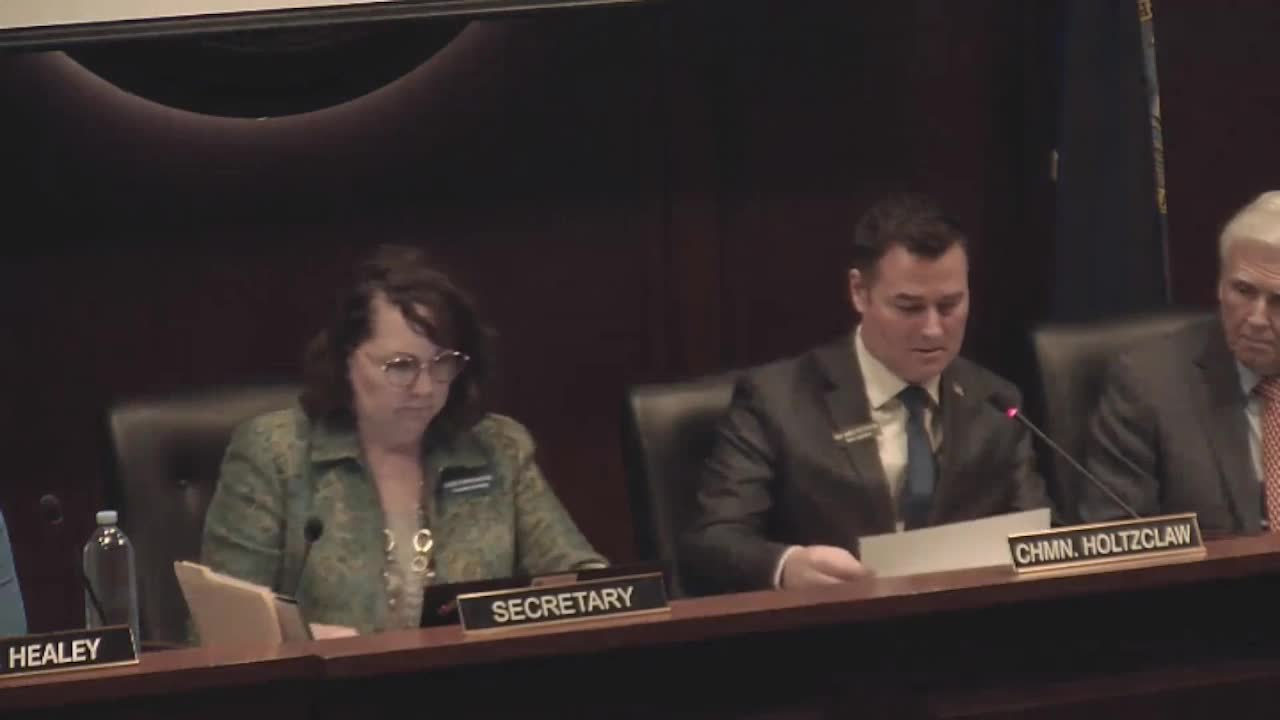
Representative McCann moved that the committee send House Bill 53 to the floor with a do-pass recommendation. By voice vote — recorded as “aye”/“nay” on the transcript — the committee approved the motion and the bill will proceed to the next stage of the legislative process. The transcript does not record a roll-call tally of individual votes.
The bill makes multiple substantive changes to unemployment-insurance enforcement and criminal classification and will return to committee or a floor calendar for further consideration.