Get Full Government Meeting Transcripts, Videos, & Alerts Forever!
Get email alerts on the Statewide Budget Decisions topic
No spam. Unsubscribe anytime.
Joint Finance staff outlines statewide decision choices: revenue forecasts and competing compensation proposals
Summary
Legislative budget staff presented options for FY2026 general fund revenue forecasts and competing change‑in‑employee‑compensation (CEC) proposals: the governor's recommendation and the CEC committee’s alternative. Lawmakers asked for more detail on health‑insurance funding, controller fee changes and the distributional effects of compensation.
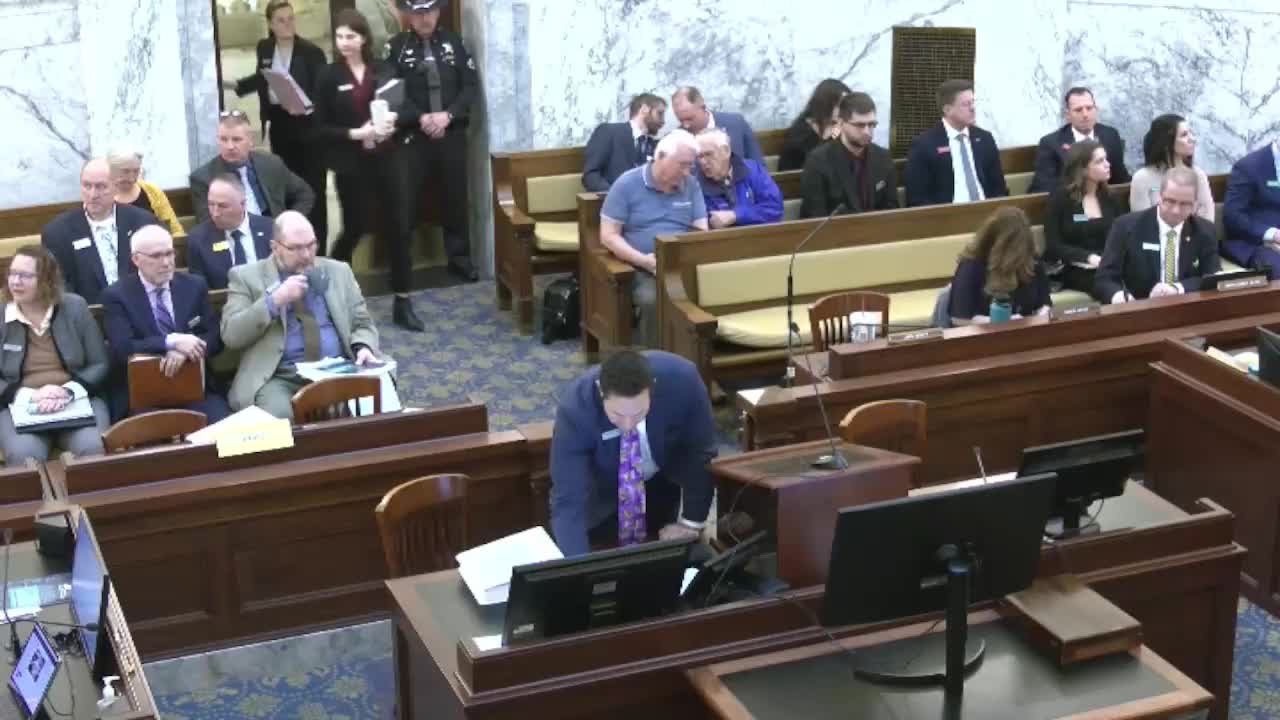
Joint Finance Committee budget staff walked members through statewide decision packets that will be considered later in the week's work schedule, presenting two revenue forecast options and competing personnel compensation proposals.
Keith Bybee, Division Manager for Budget Policy Analysis (Legislative Services Office), and staff explained the committee will take votes on statewide decisions (general fund revenue estimates, personnel benefit cost adjustments, contract inflation, statewide cost allocation and change in employee compensation) on Thursday and then set program maintenance budgets later in the week.
Revenue options presented were the governor’s recommended FY2026 general fund revenue of $6.26 billion and the Economic Outlook and Revenue Assessment (EORA) Committee’s recommendation of $6.4 billion. Staff noted a separate governor baseline and that the numbers are used to set budgets and fiscal assumptions.
On personnel benefits (most notably health insurance), staff presented the governor’s recommendation to increase funding for eligible employees — a change reflected as a per‑employee increase (documented in the packet) — and an alternative CEC committee recommendation. The packet included two compensation options: the governor’s proposal (a 5% or equivalent increase paid as merit for permanent employees, plus schedule shifts for selected classifications and a 5% equivalent for public schools) totaling roughly $179.7 million statewide; and the CEC committee’s recommendation, a slightly lower total near $174.7 million. Staff cautioned the committee that a small number of salary schedule calculations were still being finalized and numbers could be adjusted before Thursday votes.
Lawmakers asked clarifying questions about specific line items: Senator Cook asked why the state controller’s swipe‑cap fee had increased substantially; staff said the jump largely reflects catch‑up after changes tied to the state’s human capital management implementation (LUMA) and payroll adjustments. Several legislators asked for more detail on health‑insurance reserve assumptions and the actuarial basis for the proposed benefit funding; Division of Financial Management (DFM) Administrator Laurie Wolf said actuarial reports and reserve targets guided the agency recommendations and she would provide written backup for the committee.
Committee members also raised distributional concerns: one lawmaker asked why the CEC committee did not recommend a single 5% across‑the‑board merit increase, noting that a per‑hour or per‑employee supplemental can have disparate percentage impacts across agencies. Senator Ward Engelking asked staff to prepare scenarios that better protect highly skilled, highly paid state employees against losing ground to private sector wages.
Committee staff said follow‑up materials and corrections will be provided and that the committee’s timetable calls for votes on statewide decisions on Thursday and subsequent program budget work later in the week.