Get Full Government Meeting Transcripts, Videos, & Alerts Forever!
Get email alerts on the Disability Services topic
No spam. Unsubscribe anytime.
State Independent Living Council seeks small budget shift to cover benefit and pay increases
Summary
Legislative Services Office analysts told JFAC the Idaho State Independent Living Council spends nearly all dedicated-fund revenue and the governor recommends shifting $11,700 from the council's dedicated fund to the general fund to cover part of statewide health benefit and change‑in‑employee‑compensation costs.
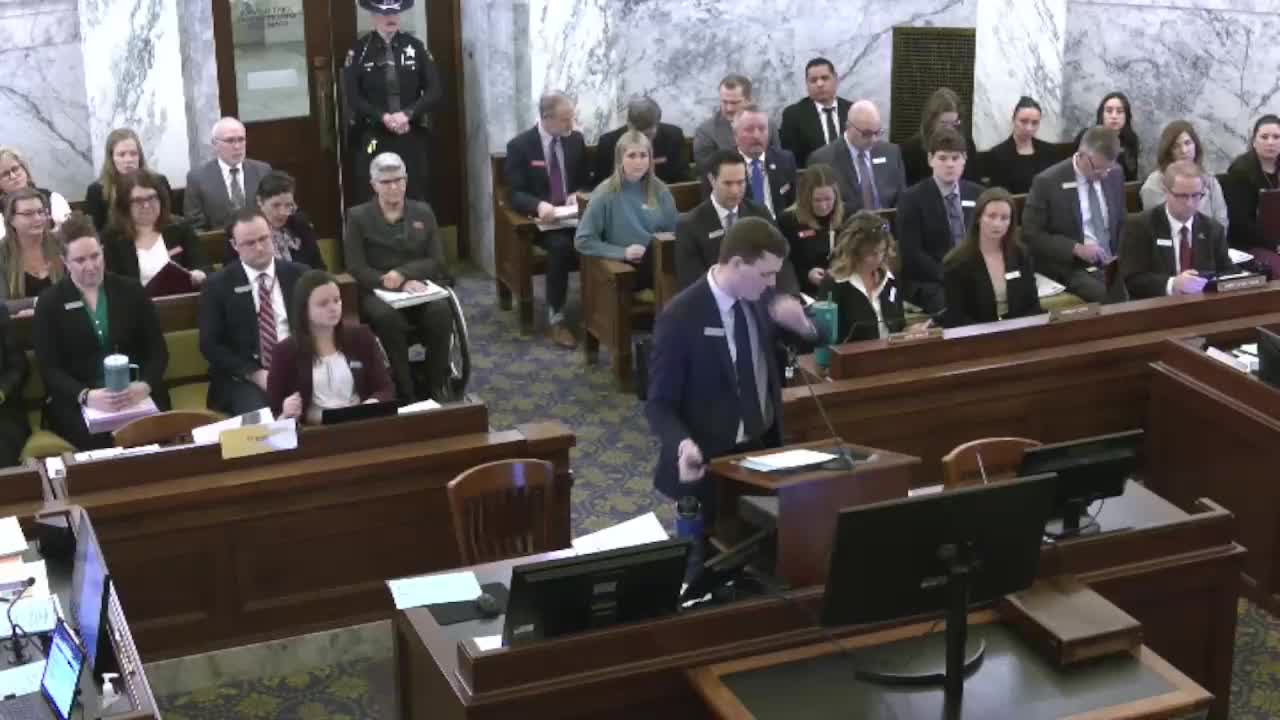
Kellen McGurkin, a budget and policy analyst with the Legislative Services Office, told the Joint Finance and Appropriations Committee on Jan. 15 that the Idaho State Independent Living Council (SILC) is recommending — and the governor supports — shifting $11,700 of appropriation from the council's dedicated fund to the general fund to cover part of statewide health benefit and change‑in‑employee‑compensation (CEC) increases.
The shift would reduce SILC's dedicated‑fund appropriation and increase its general‑fund appropriation so the general fund would pay roughly half of the recent statewide benefit and CEC adjustments that otherwise would come from SILC's dedicated fund, McGurkin said. He told members the dedicated fund is backed by federal independent living grants and has historically carried an ending balance of roughly $280,000 — about 6½ months of expenses.
Why this matters: SILC is the statewide advocacy body for independent living services for people with disabilities. Its dedicated fund receives pass‑through federal grants and supports travel and training around the state, and any change in how personnel costs are funded affects how those grant and travel dollars are used.
McGurkin said SILC is established in Title 56, Chapter 12 of the Idaho Code and that the council’s consolidated fund receives federal grants under Title I of the Rehabilitation Act and Title VII of the Workforce Innovation and Opportunity Act that pass through the Division of Vocational Rehabilitation. He said year‑to‑year differences between federal grant periods and the state fiscal year can produce apparent “overspends” on paper; SILC spent about $3,000 more than revenue in FY 2022 and $13,000 more in FY 2023, which McGurkin attributed to timing differences between federal grant receipts and state fiscal accounting.
McGurkin also summarized SILC’s staffing and spending profile: the agency has four full‑time positions (including Executive Director Mel Levitan), typically fills those positions, and spends roughly 70% of its appropriation on personnel and 30% on operating expenses. Of the operating expenses, about 60% go to rent and travel to provide trainings around the state.
Mel Levitan, SILC’s executive director, thanked the committee for its past support and noted a $10,000 line item added last year to address audit backlogs. He said the additional funding enabled the council to complete audits for fiscal years 2022–24 with no findings and praised staff for sustained service and low turnover since 2020. Levitan said the council travels statewide to meet people who cannot travel to Boise and that maintaining those outreach activities is central to SILC’s mission.
Committee questions focused on the appearance of spending more than revenue in certain years and the mechanics of the governor’s proposed shift. McGurkin clarified the differences are an accounting artifact of federal grant timing rather than an ongoing structural overspend. No formal action or vote on SILC’s request occurred during the hearing.
The committee moved on after Levitan’s remarks; analysts and the director stood ready to answer follow‑up questions in writing if needed.