Get Full Government Meeting Transcripts, Videos, & Alerts Forever!
Get email alerts on the Geologic Survey topic
No spam. Unsubscribe anytime.
Idaho Geological Survey seeks permanent funding for database manager, highlights role in minerals data and public safety
Summary
Idaho Geologic Survey asked legislators for continued funding for a database manager position, described its applied‑research role in mineral and seismic data, and outlined risks of relying solely on grant funding for core data preservation and technical staff.
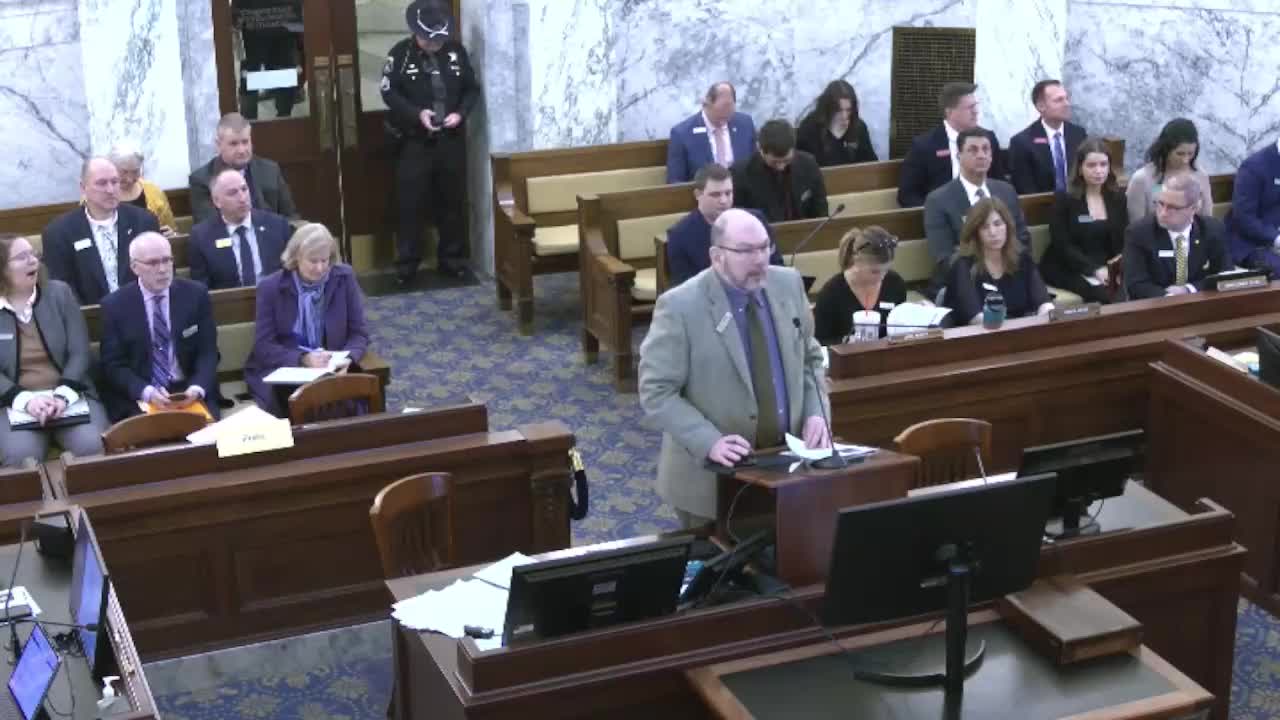
The Idaho Geological Survey (IGS) presented its FY2026 budget priorities to the Joint Finance Committee, including a request to convert a previously grant‑funded database manager position to ongoing general fund support and a description of the survey’s role in collecting geologic, mineral and seismic data for Idaho.
Kevin Campbell, Legislative Services Office budget analyst, said IGS has 12.47 authorized full‑time positions and noted the agency consistently spends its full appropriation. The presentation listed personnel as the largest share of IGS expenditures (about 76.5% in 2024) and said capital purchases in recent years included research microscopes and a seismometer for the Idaho Seismic Network.
Claudio Berti, director and state geologist, told the committee the database manager position has historically been grant funded and that continuing to rely on grants places the role — and the agency’s ability to maintain geologic information systems — at risk. He said the database manager helps the survey secure federal matches (the position can match federal money 2:1) and supports other positions; losing the role would reduce the survey’s capacity to preserve and share geologic data.
Berti described the survey’s core mission: to collect, interpret and disseminate geologic and mineral data to the public, federal and state agencies, academia and private industry. He told lawmakers IGS data are public and that the agency’s data‑preservation program is widely used; he urged expansion of physical core and sample repositories so the state would not need to “reinvent the wheel” by re‑drilling or re‑permitting areas explored by industry.
Lawmakers asked whether IGS conducts economic impact studies of mineral development; Berti said IGS focuses on geologic and resource‑assessment work and that in‑depth economic impact studies typically require partnering with other university units or external groups. Representative Price asked whether the database position could continue to be supported by grants in the future; Berti and Campbell said grant funding has been used but that grants are not a stable, guaranteed source and the survey sought permanent support to reduce programmatic risk.
IGS emphasized regional services such as earthquake monitoring and contributions to critical‑minerals research. Committee members asked for additional information about funding sources and for details on the timeline to convert the database role to a full position; Berti said conversion timing depends on available appropriations and that the agency had requested a partial FTE increase in recent years (0.19 FTE in FY2025; an additional 0.13 FTE requested for FY2026).
The committee did not take a formal vote on the request during the session and asked IGS to provide follow‑up materials.