Get Full Government Meeting Transcripts, Videos, & Alerts Forever!
Get email alerts on the Osb Budget topic
No spam. Unsubscribe anytime.
State board office details expanded budget, highlights $15 million workforce grant request and growth in centralized staff
Summary
The Office of the State Board of Education told the Joint Finance Committee it has grown in staff and responsibilities and is seeking a one‑time $15 million public‑private workforce capacity grant for FY2026, while lawmakers pressed officials for more detail on IT plans, Independent Study Idaho and fee‑funded programs.
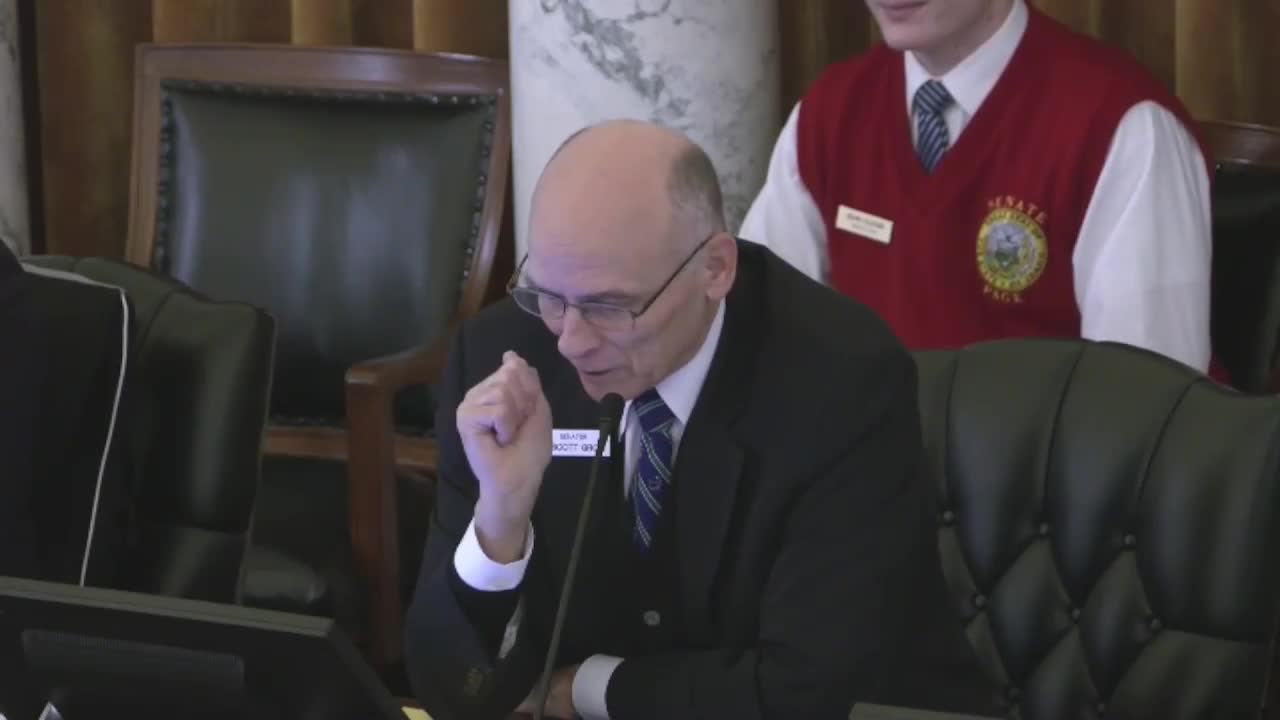
The Office of the State Board of Education outlined its FY2026 budget request and recent organizational changes during the Joint Finance Committee work group, noting transfers that increased centralized staff and a governor‑proposed one‑time $15 million public‑private workforce capacity grant.
Kevin Campbell, Budget and Policy Analyst with the Legislative Services Office, told the committee the Office of the State Board (OSB) is responsible under Idaho Code section 33‑101 for managerial, financial and coordinating functions across state educational institutions and that OSB now includes divisions for administration, IT and data management, and school safety and security. He said OSB currently has 84.25 authorized full‑time positions with eight vacancies and a five‑year average authorized FTP of 55.95, a figure Campbell said was skewed low because of recent transfers into the office.
The committee heard that major recent additions included IT and data management transferred from the State Department of Education, the school safety and security program (moved to OSB in FY2022), risk management staff taken in from institutions, and internal audit staff. Joshua (Josh) Whitworth, executive director of the State Board of Education, told legislators the board has pursued greater “systemness” — centralizing some functions so policies and standards are applied consistently and institutions are not duplicating work.
Whitworth and Campbell described the governor’s largest FY2026 enhancement request for OSB: a one‑time $15,000,000 public‑private workforce capacity grant intended to build institutional infrastructure related to workforce training for in‑demand careers. The request would require private matching funds: a 1:1 match for Boise State University, Idaho State University and the University of Idaho, and a 1:2 match requirement for Lewis‑Clark State College and the four community colleges, according to the presentation. Funds would be awarded to institutions that raise private dollars to match state investment and would target programs identified by technical advisory committees, business advisory committees and the Workforce Development Council as high demand (examples cited by the director included welding, fabrication, mechatronics, forestry and mining‑related training).
Committee members pressed OSB leadership on several topics during the question period: the causes of staff growth and whether the centralization yields net savings; detailed plans and backlog metrics for the expanded IT functions; which FY2026 requests require underlying legislation; and more data on Independent Study Idaho. Representative Petzke asked why centralized staff had grown from roughly 60 FTPs to over 80 in recent years; Whitworth answered that transfers of audit, risk management, IT and the school safety team account for much of the increase and said centralization can yield consistent policies and efficiencies across institutions.
Independent Study Idaho — a flexible, self‑paced program Campbell described as serving nontraditional students and funded largely by student fees — drew questions about scale and whether general fund support is appropriate. Campbell said per‑credit fees are about $160 and that program fees historically funded most costs but are not keeping pace with growing expenses; the board presented a requested revision to base funding for that program in FY2026.
Members also raised DEI‑related concerns. Multiple legislators stated that services or centers focused on historically marginalized communities have been funded by student fees rather than by appropriation; OSB and board members confirmed that most of those services are paid via student fees and that the board has been reviewing fee structures and indirect costs.
Campbell and Whitworth noted that OSB’s budget figures are affected by federal COVID and ARPA funds in prior years, which distort the five‑year appropriations/expenditures graph. Campbell emphasized that OSB’s largest single budget category is trustee and benefit payments (including grants such as the Empowering Parents program), which comprised a large share of the office’s recent spending.
Lawmakers asked for additional materials: a written IT plan and backlog metrics; identification of which FY2026 budget requests require legislation (Whitworth said the behavioral threat assessment teams proposal requires legislation and had a sponsor and committee assignment); and clarification of the public‑private grant eligibility and expected outcomes. Whitworth said he would provide more specificity about eligible programs and said the matching requirement is intended to demonstrate industry demand and partner commitment.
The presentation did not include formal committee action or votes; members directed staff and OSB to provide follow‑up information to inform work group deliberations.
The committee will return to statewide decisions and program budgets later in the week as part of its scheduled work group timeline.