Get Full Government Meeting Transcripts, Videos, & Alerts Forever!
Get email alerts on the University Budget Finance topic
No spam. Unsubscribe anytime.
University of Idaho says finances improved after deep cuts but reserve metrics and OPEB accounting remain issues; Phoenix talks continue
Summary
University of Idaho President C. Scott Green told the Joint Finance‑Appropriations Committee on Jan. 27 that the university’s fiscal position has improved following multi‑million dollar cuts but that accounting for retiree medical liabilities and reserve targets still present challenges.
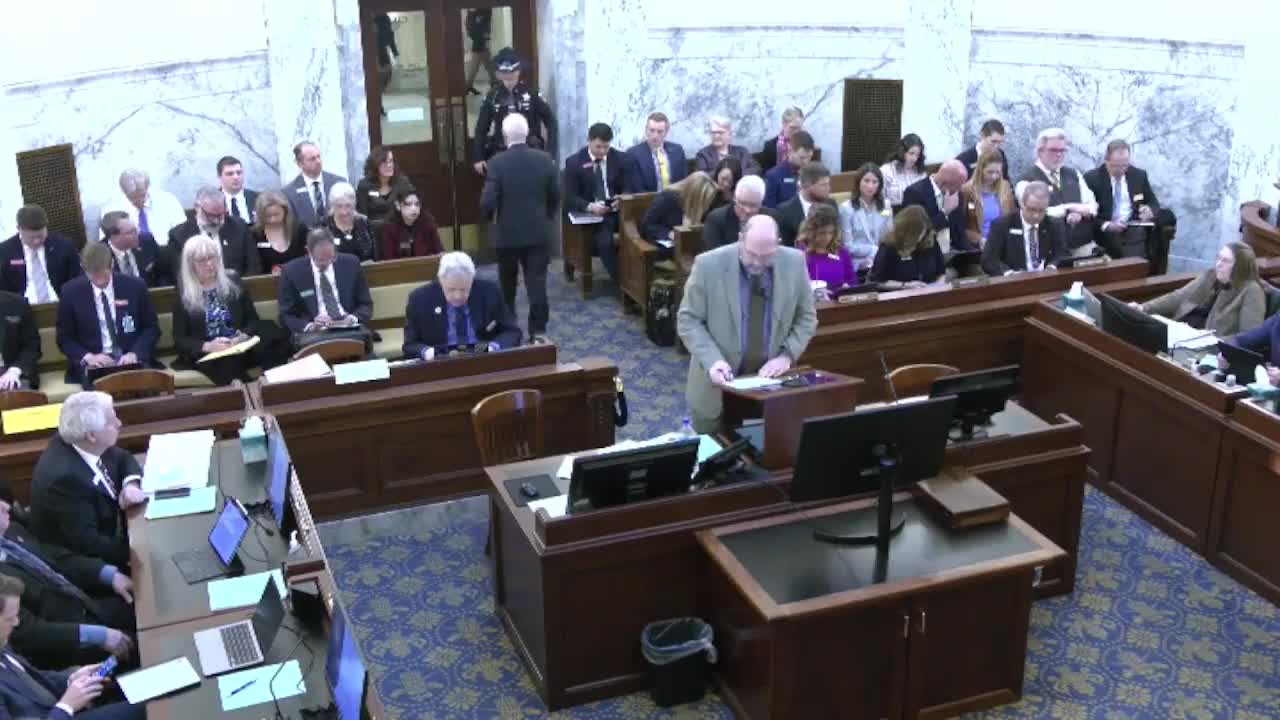
BOISE, Idaho — University of Idaho President C. Scott Green told the Joint Finance‑Appropriations Committee on Jan. 27 that the university’s financial position has “greatly improved” following a roughly $26 million base reduction taken in recent years but said accounting for retiree medical obligations means the university still does not meet some reserve thresholds.
Green said the university took aggressive steps to stabilize cash flow after arriving with a structurally weak budget. "We're about 18 months from running out of cash," Green said recounting the situation he inherited, and added the institution has since stabilized through employee separations, cost reductions and enrollment gains.
Why it matters: University of Idaho is the state's land‑grant research university and the largest public research institution in Idaho; its fiscal health affects statewide research, workforce and extension functions. Green described a mix of restricted and unrestricted net position that complicates reserve calculations used by the State Board of Education.
Financial position and OPEB accounting: Kevin Campbell, Legislative Services Office analyst, told the committee the University of Idaho’s FY2025 base budget is roughly $196.3 million and enrollment about 12,286 students. Green noted that at one point the university recognized an Other Post‑Employment Benefits (OPEB) liability tied to retiree medical benefits that required a $33 million adjustment of unrestricted reserves to comply with accounting rules; those funds now appear in restricted accounts for the same purpose.
Green said the university maintains sufficient cash for current obligations but continues to work toward the State Board reserve target. "We are in a much, much better position than we were, but we still have work to do," he told JFAC.
University of Phoenix affiliation talks: Green updated the committee on a previously reported potential affiliation with the University of Phoenix. He said the sellers extended a deadline through June and that the agreement contains a break‑up fee designed to offset the university’s transaction expenses. Green said the university had already received $5 million under the agreement to offset costs and that the sellers retained the right to seek other partners or public market options. Any path forward would require legislative and State Board review. "We hope to hear shortly what they would like to do," Green said.
DEI offices reorganization and student supports: In response to a State Board of Education directive, Green described an administrative reorganization that eliminated several named offices and positions and reassigned staff to other roles reporting to the dean of students. "All positions have been dissolved and staff have been reassigned to different positions that serve all of our students," Green said, while noting the university retained an executive director for tribal relations. He said new or reorganized units such as Vandal Success and a first‑generation student support unit are available to all students and are intended to concentrate resources on academic progress and retention.
WWAMI and medical education partnerships: The committee also discussed the WWAMI (Washington, Wyoming, Alaska, Montana, Idaho) medical education partnership. Green said the university is in talks with the University of Utah over a possible future arrangement intended to expand rural physician training and that any change would require State Board approval. "We feel that the closest culturally to our state would be the University of Utah," Green said when asked why that partner was considered a fit.
INL partnership, energy and water research: Green emphasized ongoing partnerships with Idaho National Laboratory (INL), noting a forthcoming memorandum to reinforce work on nuclear materials, integrated energy systems and secure power engineering. He described research collaborations — including work on molten salt reactor parts and cyber‑physical security for energy systems — and described university water research tied to state needs, naming the Idaho Water Resources Research Institute and regional projects addressing aquifers, water quality and river protection.
Federal grants and pass‑throughs: Committee members asked about federal grant activity and subrecipient pass‑throughs. Green said the university administers significant federal research funding and subcontracts parts of research to partner institutions and that the university will provide additional detail about subrecipients to committee members on request.
What’s next: President Green closed by reiterating the university’s statewide mission in research, extension and workforce training and thanked the committee for its support. The committee postponed further statewide colleges and universities hearings to allow additional time for questions and follow up.
Sources and attribution: Remarks and figures above came from testimony by C. Scott Green, President, University of Idaho; Kevin Campbell, Legislative Services Office; and questions from JFAC members during the Jan. 27, 2025 hearing.