Get Full Government Meeting Transcripts, Videos, & Alerts Forever!
Get email alerts on the Itd Annual Report topic
No spam. Unsubscribe anytime.
ITD director briefs committee on 50-year agency results, funding, staffing and projects
Summary
Idaho Transportation Department Director Scott Stokes presented an annual report highlighting maintenance metrics, a $966 million payout last year, the department’s funding sources including a $80 million annual sales-tax transfer used to support TECM bonding, staff retention challenges and major ongoing projects.
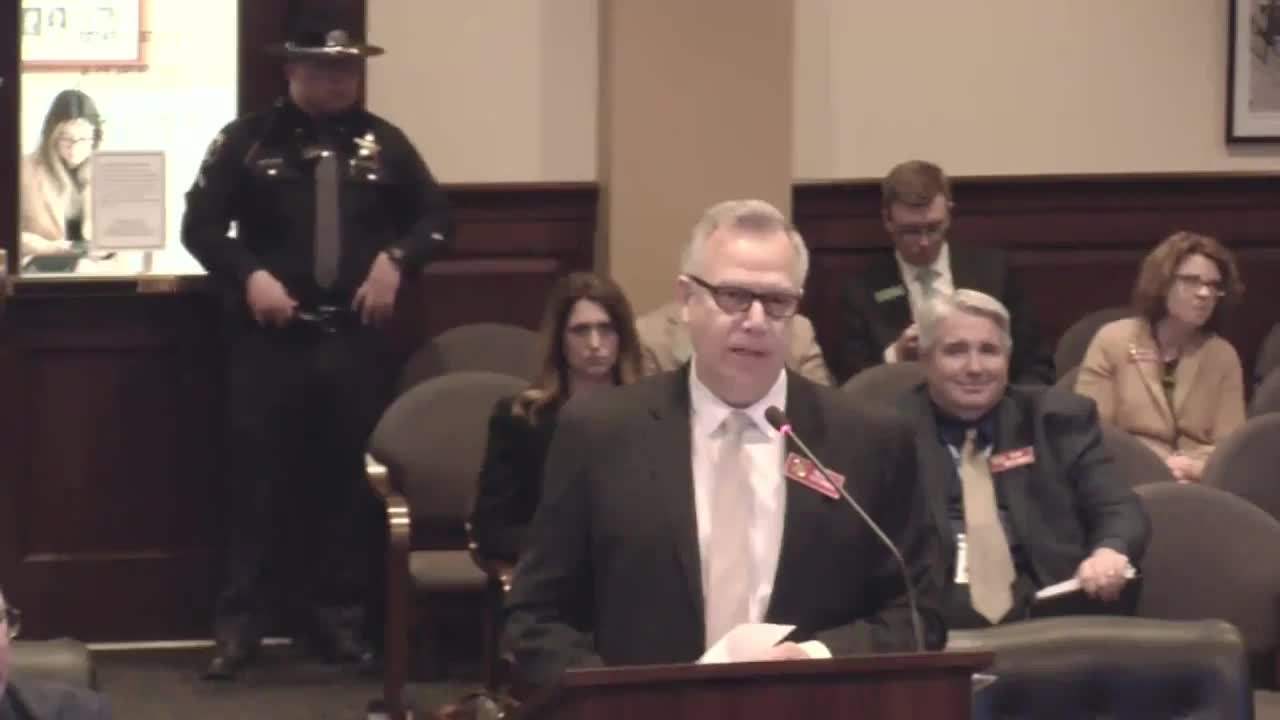
Scott Stokes, director of the Idaho Transportation Department, delivered the agency’s annual report to the House Transportation & Defense Committee, outlining recent delivery, funding sources, workforce challenges and priorities for the coming year.
Stokes said ITD maintains more than 12,000 lane miles and 1,800 bridges, processed roughly 3.7 million DMV transactions with county partners last year, and reported a construction payout of about $966,000,000 in the most recent year. He said the department exceeded its pavement condition target, reporting 86% of pavements in good or fair condition, and credited new funding streams that began in FY22 for accelerating project delivery.
On funding, Stokes described four primary revenue sources: federal apportioned funds, state user fees (fuel taxes and registration fees) that are constitutionally dedicated to roads and bridges, strategic-initiative transfers from the general fund (referred to in committee as “leading Idaho dollars”), and the Transportation Expansion and Congestion Mitigation program (TECM), a state bonding program supported by an $80 million annual sales-tax transfer to pay debt service. He told members ITD has programmed strategic initiative funds through 2031 and expects to issue a final TECM bond sale in the coming weeks, estimating that sale at $340 million to $350 million and saying the total TECM capacity is roughly $1.3 billion.
Stokes reviewed operational highlights and emergency responses: crews cleared storm wreckage, repaired landslide damage (including eight stabilizing walls and multiple culvert replacements on affected north Idaho routes), and restored routes after wildfires that damaged guardrail and pavement. He also described innovations such as an automated tire-anomaly classification system that has flagged 6,000 tire anomalies and DMV improvements including an online portal for dealers, skip-the-trip services (about 1.7 million transactions) and auto-renewals for disabled-veteran registrations.
Committee members pressed the director on staff turnover and bond costs. Stokes said the maintenance workforce is roughly 400–450 employees and has averaged just under 80 maintenance-employee separations per year over the past three years; he said staff-engineer tenure averages about 2.5 years and that recruiting and retention are ongoing challenges. On bonding, Stokes said the TECM program produces $80 million per year in debt service capacity and he estimated remaining GARVEE bond principal in the roughly $400–$500 million range with current annual GARVEE payments near $62 million.
Stokes also outlined the governor’s FY26 recommendations that would increase strategic-initiative transfers by 3% and add $50 million to produce a new TECM bonding round. The budget request included replacement equipment (two rotary snowplows cited at roughly $700,000 each), a targeted compensation adjustment for maintenance pay steps and other line items Stokes said are intended to reduce turnover and preserve institutional knowledge.
Committee members asked project-specific questions, including cost and right-of-way implications for auxiliary lanes on I‑84 in the Boise area. Stokes said auxiliary lanes are currently estimated at roughly $10 million per lane mile — “about $20 million per each” connector — and that a corridor build from the Y to Garrity could cost well over $200 million. He said the department has completed design work for several candidate projects and is seeking funding to advance construction.
Quotes in this article are taken directly from Director Stokes and committee members during the committee presentation and question-and-answer period.