Get Full Government Meeting Transcripts, Videos, & Alerts Forever!
Get email alerts on the Higher Education Budget topic
No spam. Unsubscribe anytime.
Lewis‑Clark State College tells JFAC salary gap persists as EWA and enrollment shifts alter funding
Summary
At a Jan. 27 Joint Finance‑Appropriations Committee hearing, Lewis‑Clark State College President Cynthia Pemberton outlined the college’s FY2025 base budget, said LAUNCH funds boosted career-technical enrollment, and asked for additional support to close faculty and staff salary gaps tied to an enrollment‑weighted funding formula (EWA).
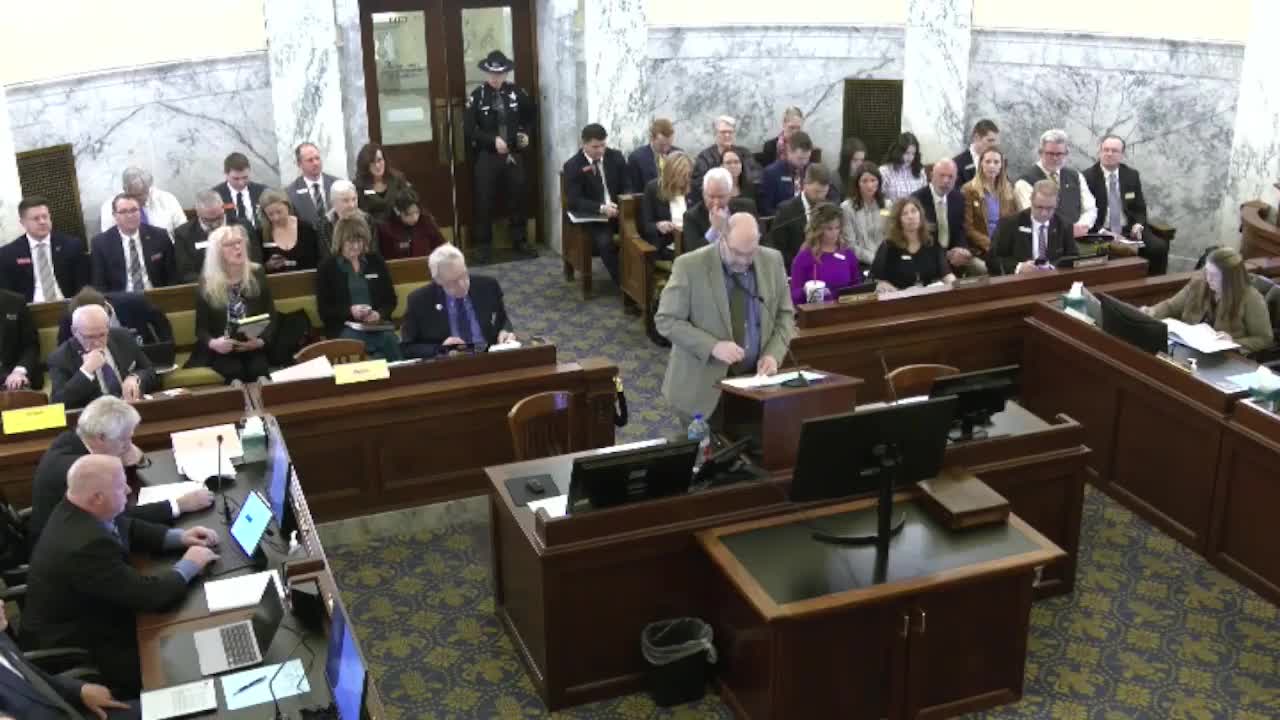
BOISE, Idaho — Lewis‑Clark State College President Cynthia Pemberton told the Joint Finance‑Appropriations Committee on Jan. 27 that the college is recovering enrollment after pandemic declines but faces continuing budget pressure because of formula adjustments and a persistent salary gap with K‑12 salaries.
Pemberton, appearing with the college’s finance vice president, discussed the college’s FY2025 base appropriation of about $41.7 million and explained how tuition and fees are reappropriated between academic years as part of the institutions’ financial management. Kevin Campbell, a budget and policy analyst with the Legislative Services Office, told the committee that Lewis‑Clark’s FY2024 appropriation was $40,517,100 and that the college reported approximately $23.7 million in tuition and fee revenue reappropriated into FY2025.
Why it matters: Lewis‑Clark is a small, regional four‑year public college that draws a high share of Pell‑eligible, first‑generation students. Changes to the State Board of Education’s enrollment workload adjustment (EWA) formula and the composition of students’ credit hours can shift funding among institutions and affect the college’s capacity to pay competitive wages.
Campbell and Pemberton explained the EWA—an enrollment funding formula based on a three‑year weighted credit‑hour total—and the college’s expected FY2026 reduction tied to that formula. "EWA…is a net 0, you are correct, it is a weighted credit hour formula," Pemberton said, while also noting Lewis‑Clark’s average credit‑hour weighting is lower than sister institutions, which contributes to funding differences between colleges.
Pemberton described how the college has used recent operational capacity enhancement (OCE) and combined enhancement funds (CEC or similar catch‑all enhancements) to cover occupancy, custodial, IT and marketing costs for new facilities and recruitment. She said Lewis‑Clark received $370,100 from a governor’s combined enhancement in FY2024 and $440,200 in OCE for FY2025, plus an enrollment workload adjustment increase of $54,700 for that year. In 2023 the college received $2.1 million in CEC, Campbell said, and some of that was offset by tuition transfers.
On personnel and pay, Pemberton asked the committee for more help to close the gap with K‑12 salaries. She provided comparative figures the college uses internally and said, "an LC State instructor, on average, makes $9,000 less per year than the new average of K‑12" and an assistant professor earns about $3,777 less on average. Pemberton said Lewis‑Clark requested $287,000 in OCE for FY2026 to make limited progress on pay but said the college estimates about $1.2 million would be required to meaningfully close the gap toward K‑12 medians.
Enrollment and programs: Campbell noted Lewis‑Clark’s reported headcount of 3,881 students. Pemberton said enrollment is rebounding: the college was up 2.4% in fall and up 9% in the spring term at the time of the hearing. She described the effect of the LAUNCH financial aid program on career‑technical programs: "about 240 different individual students were recipients of LAUNCH funds this fall," she said, and cited double‑digit increases in several industrial programs (auto, CNC machining, diesel, HVAC, welding, engineering, electronics) where LAUNCH supported students.
Prison education and workforce training: Pemberton told the committee Lewis‑Clark has completed federal and state approvals to convert an experimental prison education program into a full prison education program and is serving about 200 incarcerated students across multiple locations. She described the prison program as requiring coordination among the state Department of Correction, the State Board of Education, the college’s accreditor and the U.S. Department of Education.
Budget composition and constraints: Campbell summarized that roughly 82.6% of Lewis‑Clark’s budget is personnel (faculty and supporting staff), 16.5% is operating expenses and less than 1% is capital outlay. He said endowment distributions such as the Normal School Income Fund are governed by Idaho law and split among institutions per statute. "It is important to note that reappropriation does not mean unspent or uncommitted or unaccountable," Campbell told the committee.
What’s next: Pemberton closed by reiterating Lewis‑Clark’s role as Idaho’s small public four‑year college and asked the Legislature to consider continued support for salary competitiveness and operational capacity as the institution pursues strategic but modest enrollment growth.
Sources and attribution: Remarks and figures above came from testimony by Dr. Cynthia Pemberton, President of Lewis‑Clark State College; Kevin Campbell, Budget and Policy Analyst, Legislative Services Office; and Dr. Julie Cray, Lewis‑Clark vice president for finance and administration, during the Joint Finance‑Appropriations Committee hearing on Jan. 27, 2025.
The committee did not take formal action on Lewis‑Clark’s budget during the hearing.