Get Full Government Meeting Transcripts, Videos, & Alerts Forever!
Get email alerts on the Lake Pend Oreille Commission Appointments topic
No spam. Unsubscribe anytime.
Senate committee interviews two incumbents for Lake Pend Oreille Commission
Summary
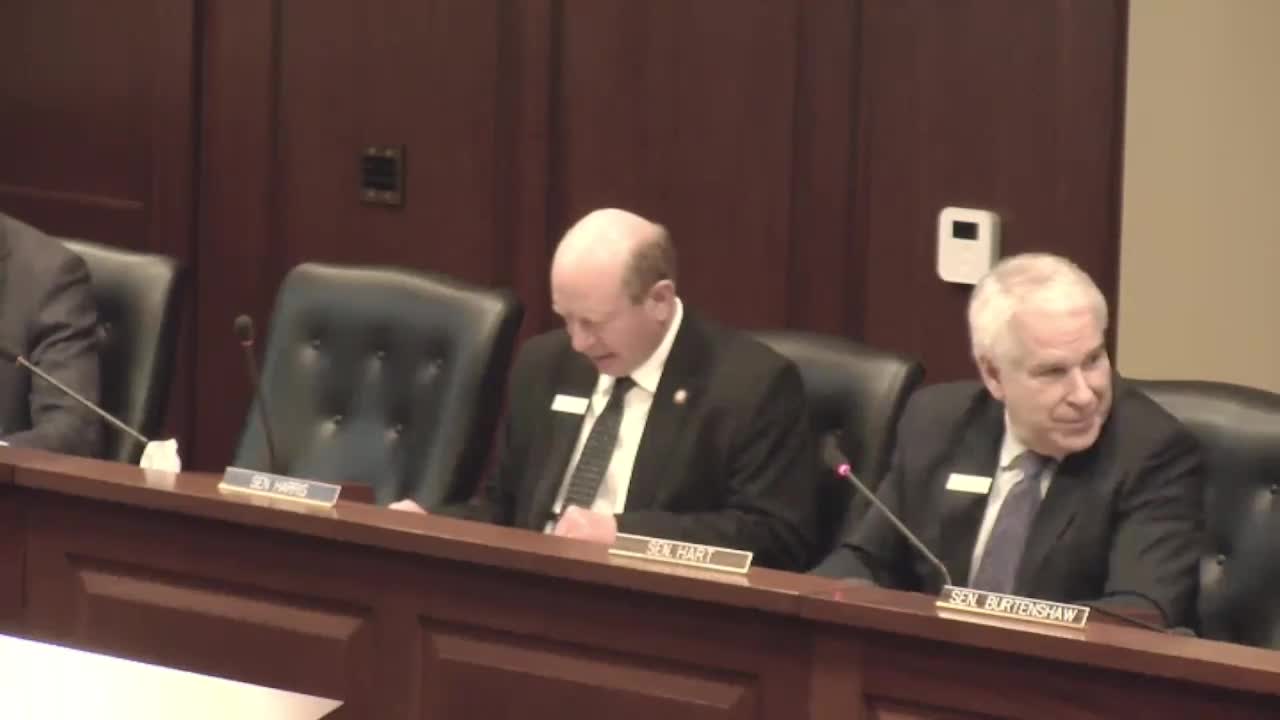
The Senate Resources and Environment Committee, chaired for the day by Vice Chair Senator Hart, conducted initial interviews with Brent Baker and Frank Brinkmeyer for gubernatorial appointments to the Lake Pend Oreille Commission during a virtual meeting (date not specified).
The Senate Resources and Environment Committee, chaired for the day by Vice Chair Senator Hart, conducted initial interviews with Brent Baker and Frank Brinkmeyer for gubernatorial appointments to the Lake Pend Oreille Commission during a virtual meeting (date not specified).
Both incumbents described the commission’s recent priorities and ongoing concerns: a University of Idaho–supported economic impact study of the Pend Oreille basin, disputes over lake level management tied to downstream power generation, invasive aquatic species, and emergency-response planning for the lake basin.
The interviews are preliminary; Senator Hart said the committee will defer a formal vote on the appropriateness of each candidacy to a later meeting at the discretion of the committee chair.
Brent Baker, an incumbent commissioner on the Lake Pend Oreille Commission and executive director of his county’s economic development organization, told the committee the commission “finally have in place now an agreement to conduct an economic impact study.” Baker said the University of Idaho will perform the study and “they're donating half the cost, and we're contributing half the cost,” with work expected to begin at the end of the month and finish by June. He said the study is intended to give the commission more data and “more clout” in discussions with the U.S. Army Corps of Engineers and power operators about lake management.
Baker described recurring local concerns about lake levels that he said are “driven primarily by … power generation interest,” which he said reduces seasonal recreational use and harms businesses dependent on higher spring and fall water levels. He also listed aquatic invasive species — “quagga mussels, zebra mussels, and … milfoil and flowering rush” — and the commission’s role as a local clearinghouse for disaster-response preparedness across a basin with limited road access.
Frank Brinkmeyer, owner of Idaho Forest Group and also an incumbent commissioner, echoed Baker’s description of the commission’s role and highlighted past projects. He pointed to restorations at the Clark Fork and Pack River deltas and called the commission “a conduit … for conversation” between development interests and environmental stakeholders. Brinkmeyer described collaboration with universities and conservation partners on restoration work and noted the commission monitors renegotiations of the Columbia River Treaty to protect local interests.
Brinkmeyer also described work at his company that uses remote sensing and data analytics: “we morphed … into academics, analytics, and artificial intelligence,” he said, describing partnerships with academic institutions and the use of LiDAR and satellite data to map and manage forest resources. Senators on the panel asked about those technologies’ applications and about local workforce or education ties; Senator Guthrie praised Brinkmeyer’s community work with Sandpoint High School’s carpentry program and juvenile detention center involvement.
Committee members asked both candidates about the commission’s stakeholders. Baker said headwaters and tributaries involve British Columbia and Montana, local Idaho jurisdictions, and downstream users in Washington. He said the commission has funded legal representation to ensure the commission’s interests are considered during treaty renegotiations.
No formal motions or confirmations occurred. Vice Chair Senator Hart told both applicants that the chairman will schedule a later meeting to take up votes on their appropriateness for reappointment.
Ending: The committee closed after the two interviews and signaled that formal consideration of the nominees will occur at a later date set by the committee chair.