Get Full Government Meeting Transcripts, Videos, & Alerts Forever!
Get email alerts on the Public Safety topic
No spam. Unsubscribe anytime.
Judiciary committee sends anti-swatting bill to the floor after law enforcement and public-safety testimony
Summary
Senate Bill 1019, which would revise Idaho Code § 18-333 to criminalize false reports of violence or emergencies ("swatting") and raise penalties to enable stronger enforcement, was sent to the Senate floor with a due-pass recommendation after testimony from law enforcement and a policy group.
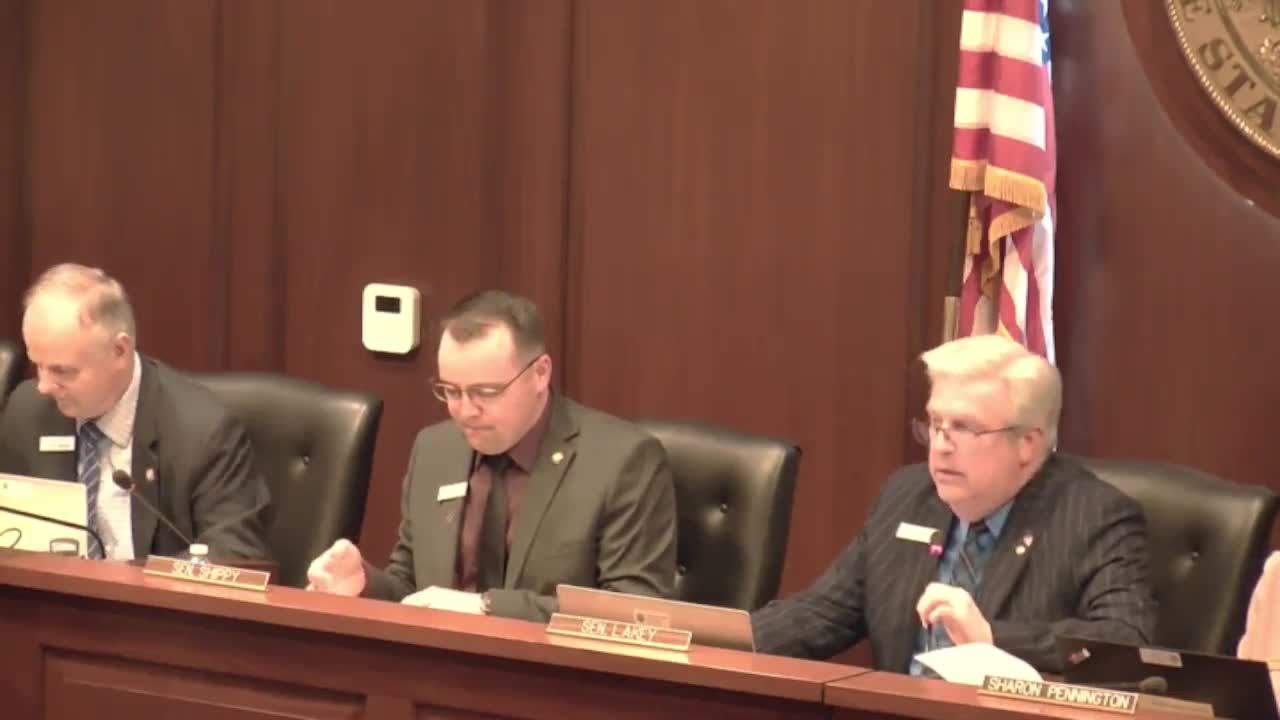
The Idaho Senate Judiciary and Rules Committee voted to send Senate Bill 1019 to the Senate floor with a due-pass recommendation after testimony from law enforcement leaders and a policy advocate who said the measure is needed to deter “swatting” — false emergency reports that can provoke large-scale, dangerous responses.
Senator Tammy Nichols (District 10) presented SB 1019 as an "anti-swatting" bill that would revise Idaho Code § 18-333 to explicitly criminalize knowingly making false reports of violence or emergencies in public or private places. Nichols said the bill is intended to deter false emergency reports, protect public and private safety, and prevent the waste of law enforcement resources. She told the committee that the measure had been revised from last year to address penalty concerns raised previously.
Fred Birnbaum of the Idaho Freedom Foundation testified in support, saying the bill’s language clarifies that a person who causes or procures a false report can be held accountable and that the statute retains judicial discretion by not imposing mandatory minimum sentences. Birnbaum noted the danger posed by false reports when firearms are involved and said the provision requiring knowledge that the report is false helps distinguish deliberate swatting from accidents.
Chief Tracy Bastoreccia of the Meridian Police Department, representing the Idaho Chiefs of Police Association, described swatting as a semi-regular problem for Idaho law enforcement and said calls can be extremely realistic. She cited recent incidents that forced school districts to shut down and said swatting increases risk to officers and the public. Chief Rex Ingram, president of the Idaho Chiefs of Police Association and chief of police in Caldwell, said Idaho is not immune to swatting and recounted responding to what was later determined to be a swatting incident at a high school; he supported upgrading the offense to a felony to enable extradition of out-of-state suspects.
Senators asked for clarifications. Nichols said the bill excludes explosives because Idaho law already addresses bomb threats and explosive devices in a separate statute. The committee moved to send SB 1019 to the floor with a due-pass recommendation: Senator Foreman moved and Senator Ricks seconded; the motion carried.
Nichols and witnesses cited national and state figures during testimony: Nichols referenced a nationwide estimate of roughly 20,000 swatting incidents since the early 2000s and said the FBI launched a national database in 2023; she also said that from 2023 through April 2024 Idaho had 21 known incidents. Chief witnesses and policy testimony emphasized that many swatting calls originate out of state and that elevating penalties can assist prosecutors and law enforcement in pursuing interstate cases and extradition when appropriate. The committee advanced the bill to the floor for further consideration.