Get Full Government Meeting Transcripts, Videos, & Alerts Forever!
Get email alerts on the Education Teacher Workforce topic
No spam. Unsubscribe anytime.
House committee hears testimony for $10 million transfer to Oregon Teachers Scholars Program
Summary
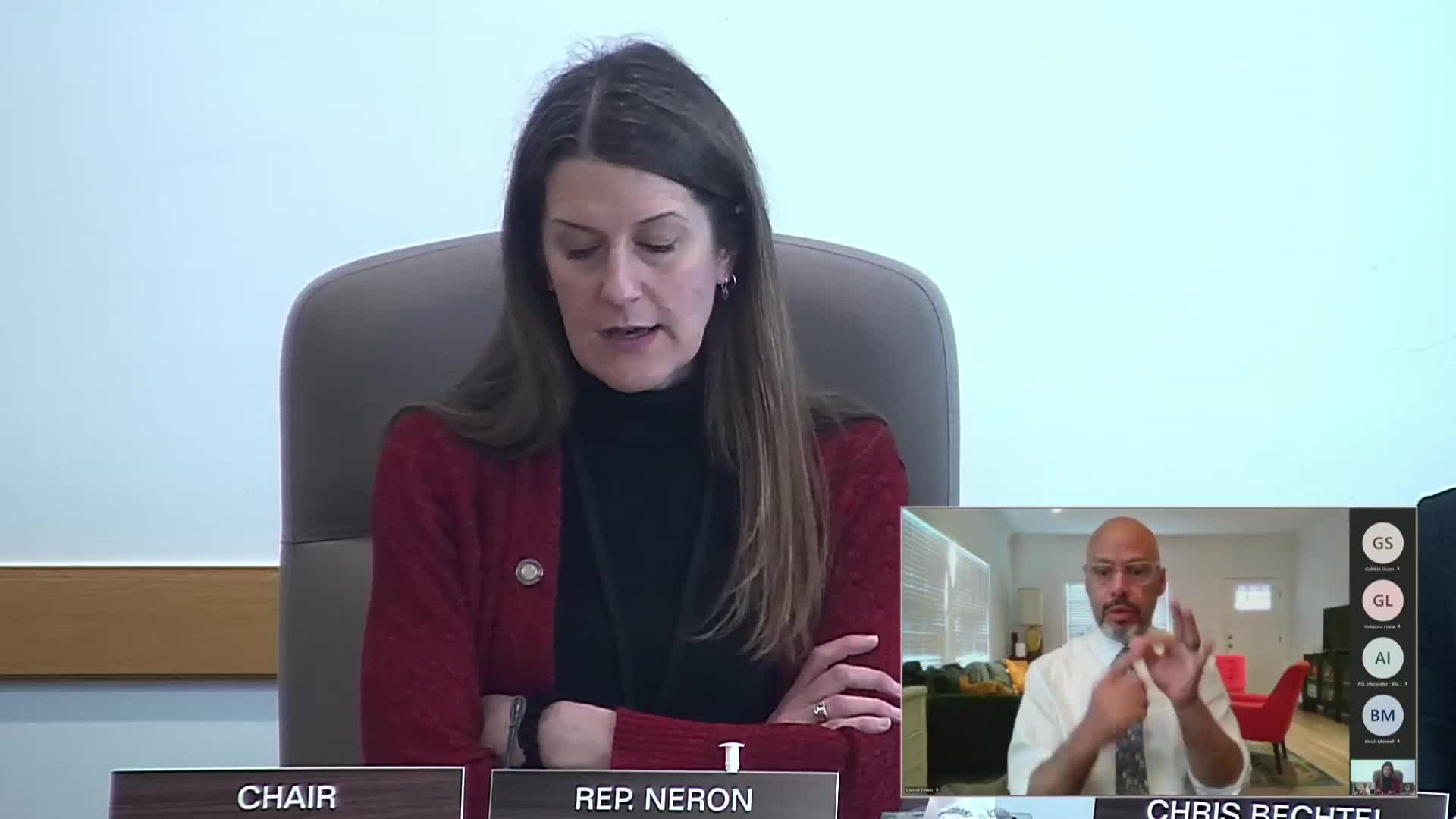
House Education Committee Chair opened a public hearing Feb. 12 on House Bill 3,200, which would direct the Oregon Department of Education to allocate $10,000,000 from the Fund for Student Success to the Oregon Teachers Scholars Program and declares an emergency with an effective date of July 1, 2025.
House Education Committee Chair opened a public hearing Feb. 12 on House Bill 3,200, which would direct the Oregon Department of Education to allocate $10,000,000 from the Fund for Student Success to the Oregon Teachers Scholars Program and declares an emergency with an effective date of July 1, 2025.
Supporters told the committee the program is a targeted investment to increase the number of linguistically and culturally diverse educators in Oregon classrooms. Sarah Arbuckle, chief of staff to Representative Hua Wynne, read Wynne’s written testimony into the record, saying, “I am state representative Hua Wynne and I represent House District 48, which includes Outer Southeast Portland and North Clackamas County. I'm here today to testify in strong support of house bill 3,200,” and urging the committee to back the bill. Cynthia Branger Munoz, speaking for the Oregon Education Association, said OEA “strongly supports HB 3,200.” Juan Baez Adebelo of the Higher Education Coordinating Commission described the program’s statutory reference and administrative history and gave program numbers.
Why it matters: proponents described the program as a recruitment and retention tool aimed at increasing teacher representation that mirrors Oregon students’ linguistic and cultural backgrounds. Testimony cited program growth since 2018 and recent statutory changes that expanded eligibility and increased award amounts.
Program details and testimony Juan Baez Adebelo, director of the Office of Student Access and Completion at the Higher Education Coordinating Commission, told the committee the program is referenced in statute (as reported in testimony) and was authorized in law in 2017 following recommendations from the Oregon Educator Equity Advisory Group. Baez Adebelo summarized the program expansion in 2023 (House Bill 3178), saying award amounts were increased and licensure fields were broadened to include school counselors, social workers and psychologists. He said the program has awarded $6,800,000 in scholarships to 838 participants since 2018 as reported in the record and that award amounts have risen (testimony cited increases from $5,000 per recipient in 2018 to $12,000 in 2023).
Cynthia Branger Munoz of the Oregon Education Association said the scholarship helps aspiring teachers who “reflect the rich linguistic and cultural diversity of Oregon’s student population.” She told the committee an amendment on the bill concerns only the funding source and not program policy and said OEA would urge an “aye” vote if the committee advances the measure.
Eligibility and financial stacking Committee members asked how applicants qualify. Baez Adebelo said applicants self‑identify their linguistic or cultural diversity and one qualifying factor can be having a first language other than English. He explained that undergraduate students who qualify for Pell or the Oregon Opportunity Grant may stack those awards with a Teachers Scholars award; graduate students do not have Pell or Oregon Opportunity Grant options, so the scholars award is often the primary affordability tool for graduate licensure candidates.
Next steps No committee vote took place in this hearing. Witnesses said the bill would likely move to Ways and Means for consideration of the funding source; OEA indicated an amendment addressing the revenue stream is expected if the bill advances. Committee members asked clarifying questions and were told details on the proposed funding-source amendment would be discussed in Ways and Means.
Ending The committee closed the public hearing on HB 3,200 and moved on to an informational meeting on special education funding shortfalls. No formal action on HB 3,200 was recorded during the Feb. 12 session.