Get Full Government Meeting Transcripts, Videos, & Alerts Forever!
Get email alerts on the Background Checks topic
No spam. Unsubscribe anytime.
Lawmakers hear push to fund Rap Back background-check enrollment to reduce delays
Summary
Witnesses urged the House Committee on Judiciary to fund House Bill 3,239 so Oregon can enroll in the FBI Rap Back service to reduce background-check delays that slow hiring for caregivers and other service providers; agency witnesses outlined implementation variables and initial cost uncertainties.
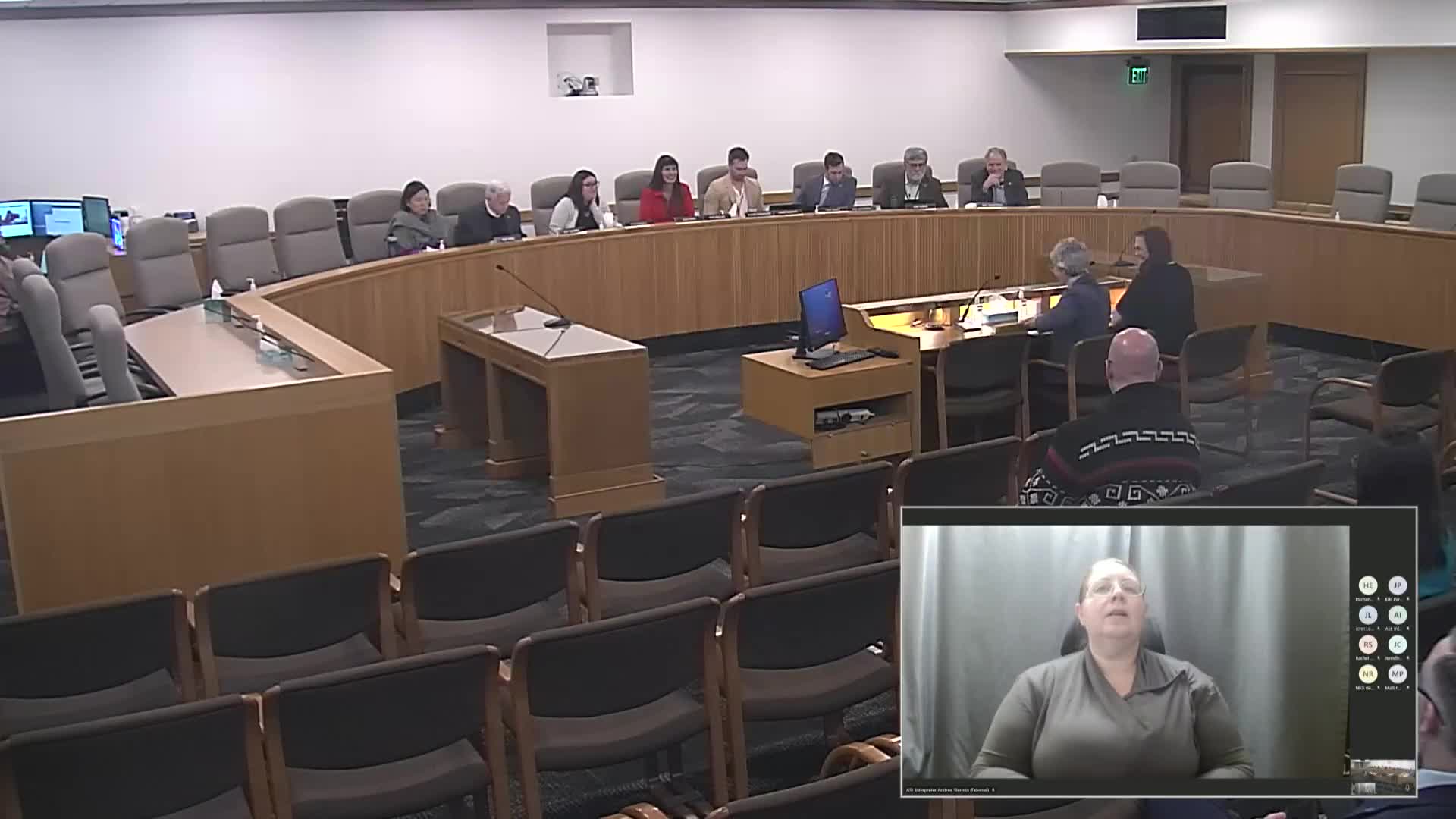
The House Committee on Judiciary heard testimony Feb. 11 on House Bill 3,239, which would appropriate general-fund money to the Oregon Department of Human Services and other agencies to enroll in the federal Rap Back program and to subsidize background-check costs for employees. Supporters said Rap Back would reduce multi-week delays in both initial and rechecks that currently slow hiring for caregivers and other providers.
Representative Nancy Nathanson, the bill sponsor, told the committee that long wait times for background checks — sometimes three to four weeks — prevent caregivers from starting jobs and can delay services to older adults or people recently discharged from hospitals. Nathanson said Oregon processed roughly 20,000 background checks in 2023 and expected about 240,000 in 2024, with roughly half that total representing rechecks done every two years.
Senator Sarah Gelser Bluhin and representatives of long-term-care providers and unions — including Libby Battlin of the Oregon Health Care Association and Courtney Graham of SEIU Local 503 — urged the committee to fund enrollment in Rap Back (a federal continuous-monitoring service managed by the FBI’s Criminal Justice Information Services) so agencies could receive continuous notifications of new criminal-history events and eliminate the manual recheck backlog.
Oregon State Police witnesses said technical variables and the number of agencies that ultimately enroll will determine the program’s cost. Captain Kyle Kennedy and Wendy Landers, deputy director for CORE Services at Oregon State Police, outlined that OSP currently charges $33 and the FBI charges $12 to process fingerprints; Rap Back enrollment would retain fingerprints for continuous monitoring and require additional FTE and systems capacity. Landers said OSP and partner agencies are refining fiscal estimates and working with legislative fiscal staff.
Jeff Aiken, Deputy Chief Operations Officer at the Oregon Department of Human Services, said DHS’s background check unit expects an initial surge of fingerprinting for rechecks and then a leveling off after two years once the existing workforce is enrolled. Aiken and other witnesses said many implementation variables remain: the number of agencies that enroll; FBI approvals; whether agencies enroll multiple authorizing statutes; and how to phase the initial surge of fingerprinting.
Union and provider witnesses emphasized that Rap Back also reduces downstream safety risk by telling agencies quickly if a worker acquires new disqualifying convictions. Committee members noted the bill includes an emergency clause and said budget questions would be addressed in Ways and Means, where more precise fiscal estimates will be reviewed.
The committee closed the public hearing after taking testimony. No final committee vote on HB 3,239 was recorded during the Feb. 11 hearing.