Get Full Government Meeting Transcripts, Videos, & Alerts Forever!
Get email alerts on the Higher Education Budget topic
No spam. Unsubscribe anytime.
Lewis‑Clark State asks for targeted operational funds as enrollment rebounds
Summary
Lewis‑Clark State College presented its FY2026 budget request to the Joint Finance‑Appropriations Committee on Jan. 27, citing enrollment gains, reliance on tuition, a multi‑decade weighted credit‑hour formula that reduces its formula funding and a continuing faculty/staff salary gap it says requires additional state support.
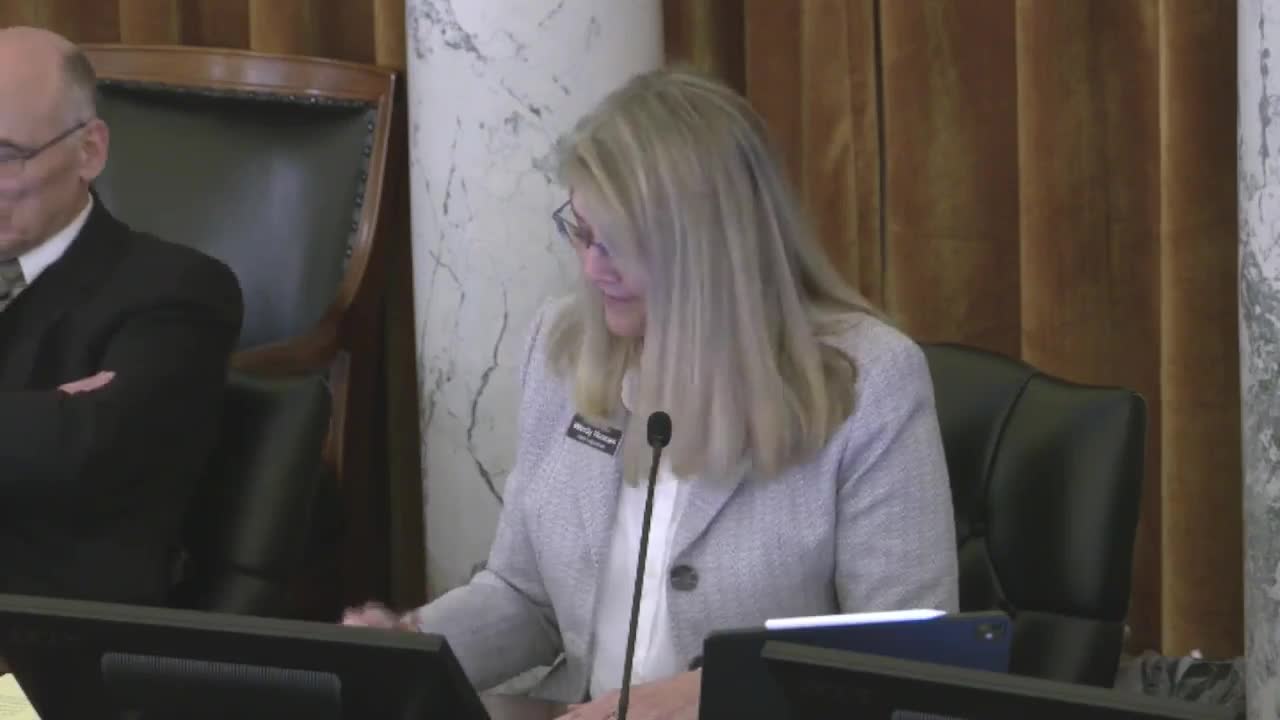
Lewis‑Clark State College President Cynthia Pemberton told the Joint Finance‑Appropriations Committee on Jan. 27 that the college is asking for modest operational capacity enhancements and endowment adjustments as it seeks to sustain recent enrollment gains and close persistent salary gaps.
Pemberton, testifying after a presentation by Kevin Campbell of the Legislative Services Office, said Lewis‑Clark (enrollment 3,881) has seen a recent rebound in students and that the state’s Enrollment Workload Adjustment (EWA) formula will reduce the college’s FY2026 allocation by $102,500. She said the college has requested $287,000 in operational capacity enhancement (OCE) for FY2026 that would be applied to competitive employee compensation (CEC). Campbell explained the presentation and how tuition/fee reappropriation is shown in college budgets.
The request also includes a $255,000 endowment adjustment and continued authority for reappropriated tuition and fees, Campbell said. He described the Normal School Income Fund and other endowments that support the college and noted statutory constraints on how those endowment distributions are used.
Why it matters: Lewis‑Clark presents itself as Idaho’s small public four‑year college, serving many Pell‑eligible and first‑generation students. Its budget and pay competitiveness affect regional workforce training — especially in health care and technical trades — and the availability of programs such as prison education.
Details and committee discussion
Campbell told the committee Lewis‑Clark’s base FY2025 appropriation was about $41.7 million and explained that tuition and fee revenue is reappropriated across fiscal years because the academic calendar and the state budget cycle do not align. He said roughly 82.6% of Lewis‑Clark’s budget is personnel, 16.5% is operating, and less than 1% is capital outlay.
Pemberton and Vice President for Finance Julie Cray described how LAUNCH scholarship funds and other supports contributed to recent enrollment increases and workforce training results. Pemberton said about 240 students received LAUNCH funds in the fall term, with a disproportionate share in career‑technical programs; she said career‑technical enrollment at the college rose 19% last fall and was up another 10% in the spring cycle she reported.
On salaries, Pemberton presented comparative data the college has compiled showing Lewis‑Clark faculty and instructional staff lag K‑12 pay and sister institutions. She said an LC State instructor earns on average about $9,000 less per year than an average K‑12 teacher, and an assistant professor about $3,777 less, based on the data she cited. Pemberton said the college needs roughly $1.2 million to close the gap substantially and asked the committee to consider ongoing funding beyond the $287,000 requested for FY2026.
On the EWA, Campbell and Pemberton said the formula is a three‑year weighted credit‑hour calculation established by the State Board of Education; it redistributes a capped or formula pool among institutions based on weighted credit production. Pemberton said Lewis‑Clark’s average credit‑hour weighting (about 1.85) is lower than sister institutions (about 2.51), partly because Lewis‑Clark offers fewer graduate credits and heavier weights are assigned to graduate and certain technical/health courses.
Programs and outcomes
Pemberton highlighted programmatic items she says would affect state workforce needs: nursing (including graduate nursing), cyber accounting, automotive and industrial trades, occupational/physical therapy assistant pathways, dental hygiene and medical laboratory programs. She told the committee Lewis‑Clark is the only Idaho institution to complete full transition approval for the postsecondary prison education program, enabling nearly 200 incarcerated students to access Pell‑eligible courses at sites the college operates in Orofino, Pocatello and Boise.
What the college asked for and next steps
Lewis‑Clark requested: ongoing OCE to address CEC and occupancy costs; endowment adjustments; and continued authority for tuition/fee reappropriation. The college placed the salary gap front and center, asking the legislature to consider additional ongoing funding to reach parity with regional K‑12 and peer institutions. No formal vote or committee action was taken during the Jan. 27 hearing; the presentation will be part of JFAC’s ongoing budget deliberations.
Ending
Pemberton closed by restating Lewis‑Clark’s role as a “small‑school” public option in Idaho, focused on workforce training and student success, and urged continued legislative support to maintain operations, improve compensation and expand targeted program capacity.