Get Full Government Meeting Transcripts, Videos, & Alerts Forever!
Get email alerts on the Animal Health Enforcement topic
No spam. Unsubscribe anytime.
Oregon agriculture agency seeks civil penalties for animal disease and feed violations
Summary
The Oregon Department of Agriculture told the Senate Judiciary Committee a bill would add civil penalties to animal disease-control, swine feeding and feed manufacturing rules to modernize enforcement tools used during outbreaks.
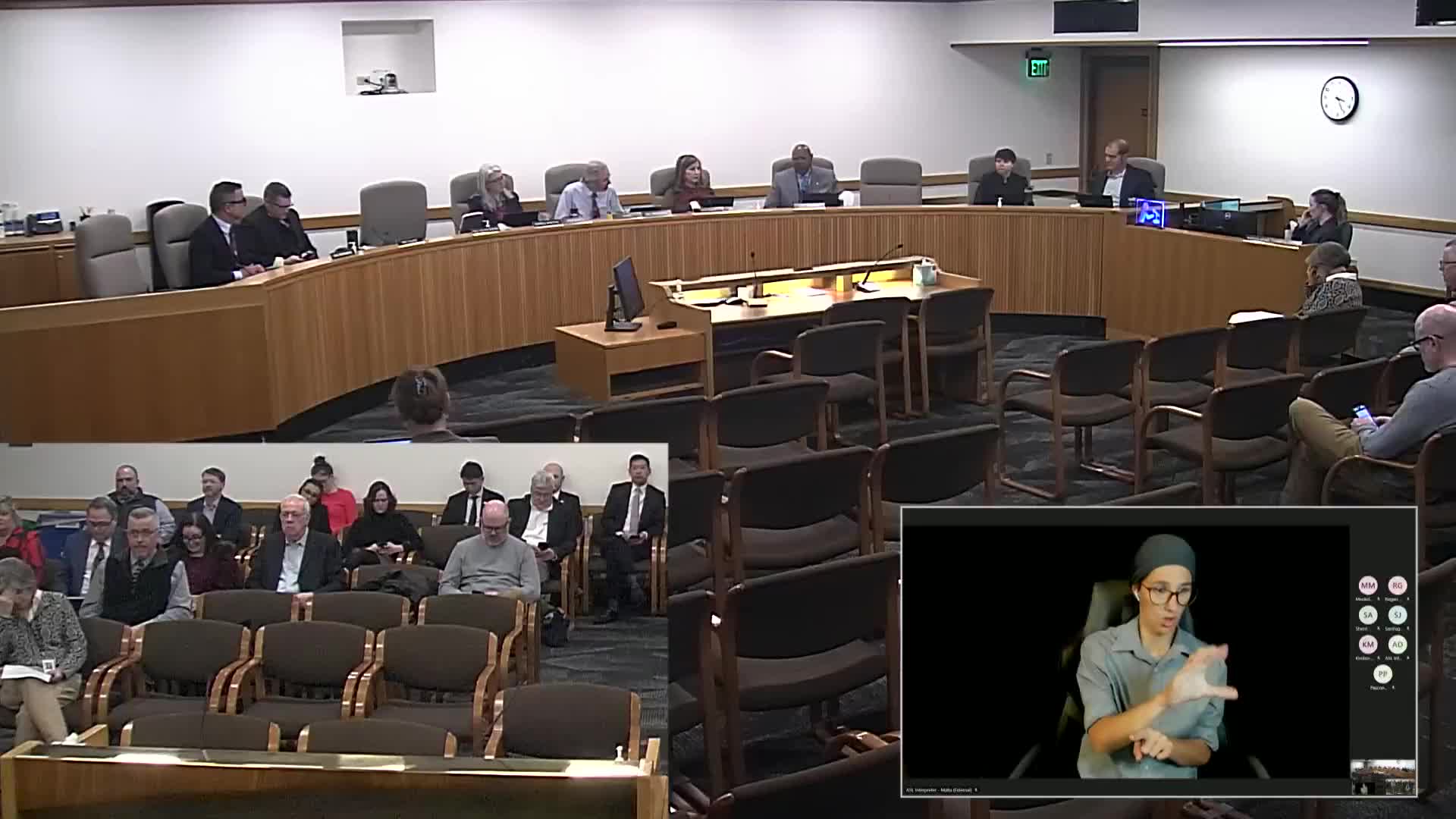
The Oregon Department of Agriculture told the Senate Committee on Judiciary that Senate Bill 832 would add administrative civil-penalty authority to the agency’s animal health, swine feeding and feeds programs.
“It's not about new regulation. It's not about adding regulation. It's about adjusting a tool in the toolkit to assure compliance with our laws,” Lisa Sharpeleaux Hanson, identified in testimony as director of the Oregon Department of Agriculture, said during the committee’s Feb. 12 public hearing.
The department said the change would let it rely on administrative penalties after education, outreach and technical assistance, rather than defaulting to criminal prosecution when producers or operators repeatedly fail to comply with disease-control requirements.
The measure would create civil penalties tied to violations of animal disease control and reporting requirements and violations related to garbage-fed swine and animal feed manufacturing plants, staff told the committee. The department said the civil-authority model aligns the animal health program’s enforcement tools with administrative enforcement used elsewhere in the agency.
“An administrative process is what we're very familiar with using in programs like our pesticide program, in our fertilizer program, in our ag water quality program,” Hanson told senators. “We typically work with quarantines, and we're either trying to keep diseases out or when they happen, quarantines to keep them in place.”
State Veterinarian Ryan Schultz answered technical questions about the scope of the authority and disease definitions, saying the statute the department relies on is ORS chapter 596, which covers disease control for livestock. He said the authority applies to traditional farm species, poultry and, in statutory language, some domesticated animals such as dogs when those animals fall under reportable disease provisions.
During questioning, senators raised several operational questions the bill does not answer in itself, including how violations would be counted (for example, whether penalties would be assessed per animal or per incident), what due-process protections would look like in an administrative system, and the size of penalties. Hanson said rulemaking would set many details and that assessed funds would be deposited into the department’s general administrative account and used for education and outreach rather than treated as a revenue stream.
The department gave avian influenza as a recent example where quarantine and movement controls were necessary and where civil enforcement could be used when education and outreach do not secure compliance. The department emphasized that the bill was intended to add an administrative backstop, not to create new regulatory obligations.
No committee action was taken at the hearing; the item was presented as a public hearing and closed after testimony and questions.