Get Full Government Meeting Transcripts, Videos, & Alerts Forever!
Get email alerts on the State Public Defender topic
No spam. Unsubscribe anytime.
New State Public Defender office seeks millions in supplements and ongoing funds as caseloads surge
Summary
Officials for Idaho’s new State Public Defender told the Joint Finance‑Appropriations Committee they need both one‑time and ongoing appropriations to fully use a $39 million cash transfer and to pay for transcripts, experts, higher contract rates and staffing as the agency transitions counties into the statewide system.
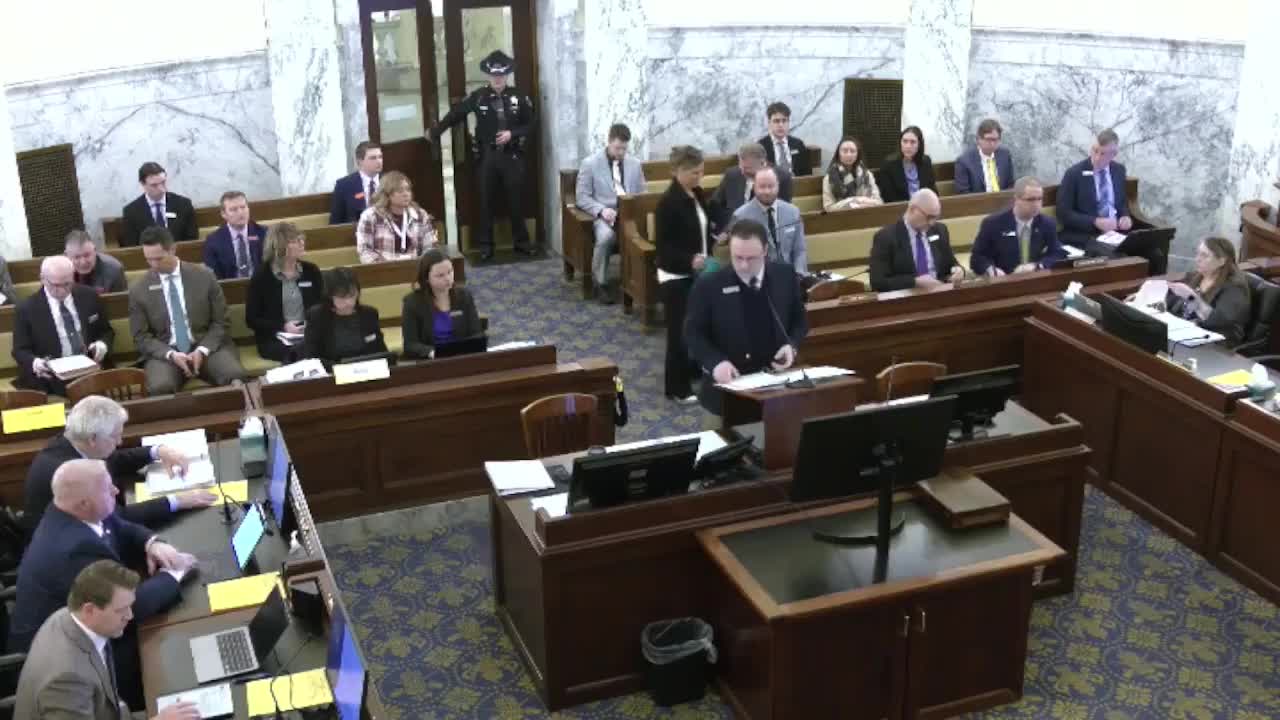
The State Public Defender’s office told the Joint Finance‑Appropriations Committee it needs additional one‑time and ongoing funding to stabilize operations after transitioning cases from county systems and to fully use a $39 million state transfer designated to fund the new agency.
Christopher Lahoset, budget and policy analyst with the Legislative Services Office, presented an overview of the agency and said the office is newly created under the State Public Defender Act (Title 19, Chapter 60) and is funded primarily through the State Public Defense Fund established in Idaho Code §57‑8207. Lahoset emphasized a $39 million cash transfer from the tax relief fund into the State Public Defense Fund and said that, last year, $2.5 million of appropriation was omitted during budget formulation; the agency’s supplemental asks would restore ability to spend the transferred cash.
Eric Fredericksen, the State Public Defender, and staff told lawmakers the office assumed responsibility for a large volume of cases when the agency launched and is still resolving staffing, contracting and operational issues. Fredericksen said the agency walked into a high number of withdrawals and inherited flat‑fee contractor arrangements that he described as “unethical and unconstitutional,” and said the office must raise contract rates and recruit staff to meet statewide standards. He added the office has had to litigate appointments to cases outside its statutory mission and is “handling private terminations … custody issues” and other matters that his staff believes should not be assigned to the state public defender.
The agency’s requests and the governor’s recommendations presented in the hearing include: - A supplemental $2.5 million in the current fiscal year to provide appropriation authority to fully utilize the $39 million cash transfer; Lahoset said that portion is earmarked to provide representation for children and parents who qualify under the Child Protective Act (CPA). - A governor‑recommended one‑time supplemental of $390,200 to cover transcript costs after a Dec. 5 Idaho Supreme Court ruling in State v. Blasick that makes the state responsible for covering certain transcripts. - A governor‑recommended one‑time supplemental of $5,427,600 in the current fiscal year to cover additional personnel and contracting costs; the agency said county information showed initial forecasts were short and that increased funding is needed to recruit/retain employees and raise contract rates for attorneys and investigators. - FY26 requests including $2.5 million ongoing appropriation to use the transferred $39 million, a multi‑million general fund operating request for conflict/primary contract attorneys, investigators, experts, capital litigation, training and transcripts, and authorization for roughly 18 additional full‑time positions to onboard Benewah, Elmore, Jerome and Shoshone counties. - The governor also recommended a one‑time transfer of $16,867,400 from the general fund to the State Public Defense Fund for recruiting, retention and increased contract rates.
Fredericksen told the committee that the agency has 29 vacant positions in its budgeted complement and that counties are required under current law to continue providing facilities until 2029; he said some costs previously covered by counties — such as psychosexual and other expert evaluations — are now obligations the state must anticipate and fund. Fredericksen described the office’s shift from caseload measures to workload measures to better account for complexity and staff time and said it will take time to stabilize recruitment, especially in rural counties.
Committee members asked about the items grouped as “miscellaneous,” the scope of cases being assigned to the state office (including child protection and custody matters), the legal and statutory limits of county facility obligations, and how many counties remain to be onboarded. Fredericksen said the statewide case-management system will improve data and workload tracking; he repeatedly said additional funds are needed to raise contract rates and to make pay uniform across regions to recruit attorneys to rural counties.
No formal committee action or vote occurred during the hearing. Lawmakers asked the agency and Legislative Services for additional breakdowns of anticipated expenditures, county facility status, and the composition of the requested “miscellaneous” costs.