Get Full Government Meeting Transcripts, Videos, & Alerts Forever!
Get email alerts on the State Insurance Pbm Wildfire topic
No spam. Unsubscribe anytime.
Insurance director reports PBM enforcement, rising wildfire costs and requests new actuary and fire-marshal funding
Summary
The Idaho Department of Insurance reported on implementation of pharmacy benefit manager reporting, the state's high-risk reinsurance pool, wildfire impacts on the property market and four FY2026 enhancement requests including a staff actuary, a regulatory compliance specialist and fire marshal compensation increases.
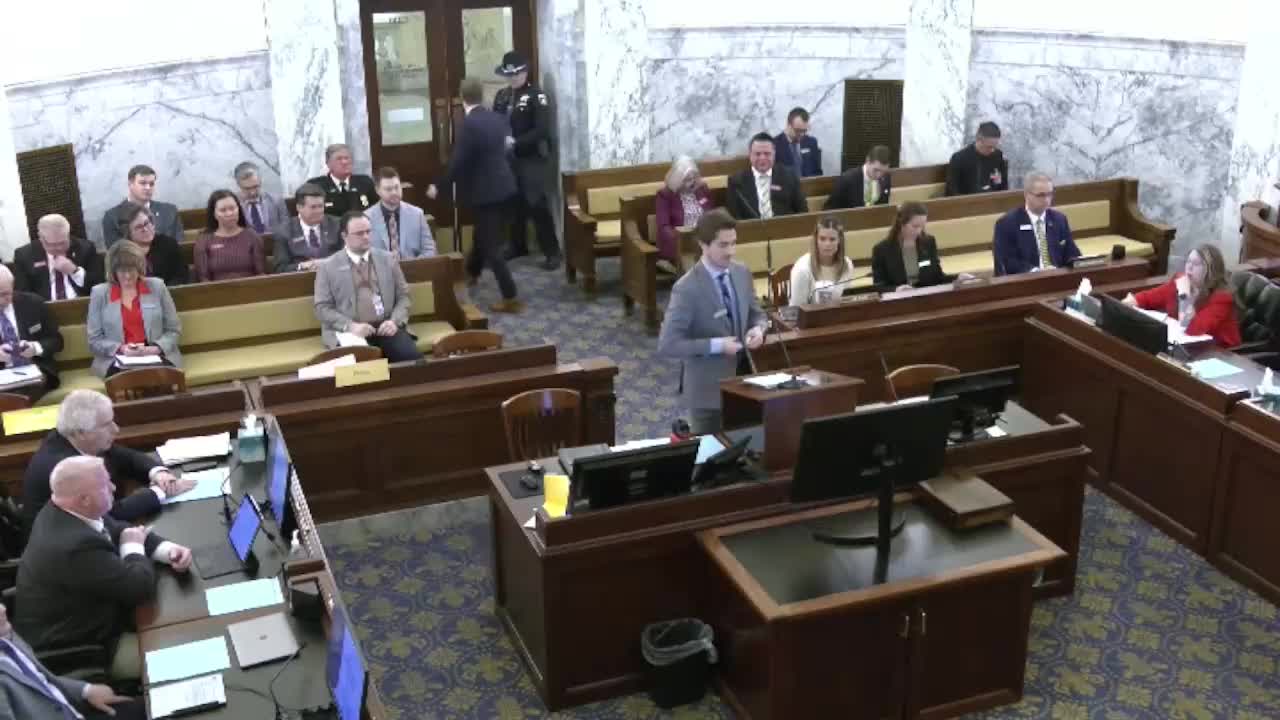
The Department of Insurance presented its budget and policy priorities to the Joint Finance‑Appropriations Committee on Jan. 21, reporting progress on pharmacy benefit manager (PBM) oversight, warning of wildfire‑related pressures on the homeowner insurance market and requesting four enhancement items for fiscal year 2026.
Director Dean Cameron told the committee the department has 75.5 approved full‑time positions and reported a fiscal‑year 2024 reversion of just under $2.2 million split between personnel and operating appropriations. He described the department’s premium tax distribution mechanism and noted that premium tax receipts are statutorily redistributed to the insurance administrative fund, an arson/fire/fraud prevention fund, the firemen’s retirement fund, the high‑risk reinsurance pool and the general fund.
On PBM oversight, Cameron said the PBM reform law that took effect Jan. 1 (House Bill 596) is being implemented. The department added a compliance analyst to handle PBM complaints and to process data submissions; Cameron said most PBMs have complied with the required data format but a few had not yet provided data. "Most have complied and have submitted their data," Cameron said. He told the committee complaints span dispensing fees, contract issues and nonresponsiveness, and the department will provide a fuller report as data collection continues.
Cameron described the state high‑risk reinsurance pool as a reinsurance mechanism that shares certain expensive claims with the pool; he said the pool has helped broaden carrier participation on Idaho's individual market and contributed to lower age‑to‑age rates compared with five years earlier. Representative Tony Furniss asked for a brief explanation of the pool; Cameron said it operates by reinsuring identified risks (by CPT code) and paying a share of those claims.
On wildfires and homeowner insurance, Cameron warned of tightening insurance markets and higher reinsurance costs following catastrophic losses in the West. He said Idaho burned "a million acres, just under a million acres" last year and that the department tracked more than 140 structures destroyed, including roughly 40 residences. Cameron said regulators have seen carriers pull back in fire‑prone areas and an expansion of the surplus lines market for homeowners, which provides fewer consumer protections. He said he has handled three carrier insolvencies in the past year and that the department will propose legislation to help home hardening and to provide a pool to mitigate carrier losses.
For FY2026 the department requested four enhancements: a staff actuary ($201,900 total, $198,900 ongoing plus $3,000 one‑time office equipment) to conduct actuarial reviews; a regulatory compliance specialist (requested at a pay rate the agency described as 80–95% of policy across different options) to serve as an internal legal resource and public policy advisor; $48,100 ongoing to increase compensation for the state fire marshal and deputies ($38,100 salary, $10,000 variable benefits); and $162,200 one‑time capital outlay for the state fire marshal including $10,000 for turnout gear, $16,200 for cameras and $136,000 for two medium‑duty pickup trucks equipped with canopies and bed slides. The analyst Noah Peterson told the committee these requests are drawn from the insurance administrative fund and the arson/fire/fraud prevention fund as applicable.
No formal action or vote occurred at the Jan. 21 hearing. Committee members asked the department to return with more detailed PBM complaint counts and compliance metrics to enable oversight and to track the effect of the department’s actions on consumers and market stability.
Cameron closed by urging continued legislative attention to the insurance market’s stability and to consumer protections: "Insurance is absolutely critical in the economic well‑being of the state," he said.