Get Full Government Meeting Transcripts, Videos, & Alerts Forever!
Get email alerts on the Appellate Public Defender topic
No spam. Unsubscribe anytime.
State Appellate Public Defender seeks deputy attorney to curb outside-contract costs
Summary
The Office of the State Appellate Public Defender told the Joint Finance‑Appropriations Committee it is requesting one additional deputy appellate attorney to reduce reliance on contracted counsel and cover noncapital appeals, citing rising caseloads and costly overflow contracting.
The Office of the State Appellate Public Defender asked Idaho’s Joint Finance‑Appropriations Committee to approve one additional attorney position and re‑appropriation authority for one‑time funds to handle an ongoing influx of appeals.
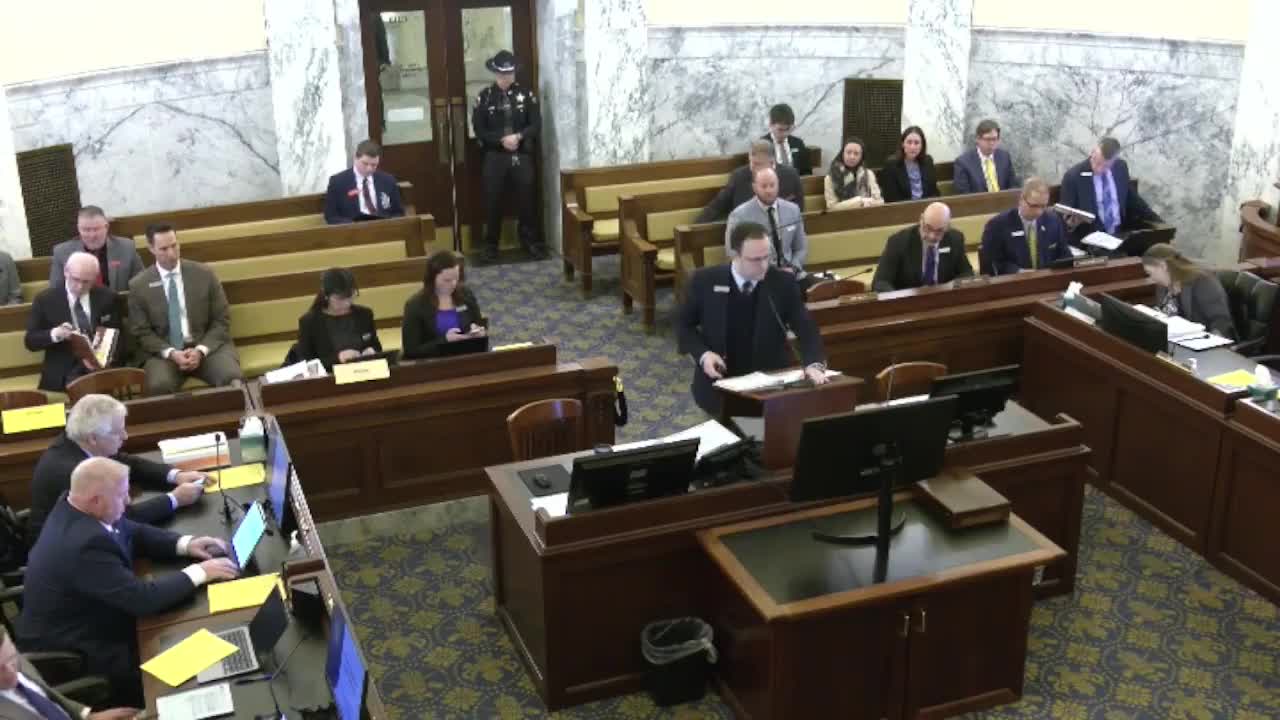
Christopher Lahoset, a budget and policy analyst with the Legislative Services Office, opened the agency’s budget presentation and said the office currently has 26 authorized full‑time positions and, as of Dec. 15, no vacancies. Lahoset said about 85% of the office’s expenditures are personnel costs and summarized prior supplemental appropriations, including a $1,309,400 one‑time supplement approved by the Legislature in 2023 that has been reappropriated but is not part of the base budget.
The request centers on hiring a deputy state appellate public defender to handle noncapital felony, misdemeanor and juvenile district and post‑conviction appeals. Eric Leighton, director of the Office of the State Appellate Public Defender, told the committee that adding a 13th appellate unit attorney would spread the current caseload — roughly 650 cases in the current fiscal year — more evenly and provide training opportunities for less‑experienced attorneys.
Leighton said the office currently contracts out a small number of overflow cases and must always contract out in conflict situations. He told lawmakers the agency has about $200,000 earmarked for conflict counsel and that contracting out overflow cases is “an imperfect solution” because it is more expensive than handling the work in‑house and can cross fiscal years, complicating budgeting.
Lahoset presented cost estimates the office provided: contracting overflow cases could cost roughly $254,000 per year, while a salaried deputy attorney at an estimated $140,000 salary would yield savings. He also noted roughly $1,259,000 remains from previously appropriated one‑time funds that may be spent on cases.
Committee members asked about turnover, hiring challenges and how the new position would change workload distribution. Leighton said the office had experienced recent turnover tied in part to the creation of the State Public Defender and departures of senior staff; he added the office is fully staffed at the moment but expects additional personnel movement. He described the office’s practice of tailoring assignments to attorney experience and using in‑house cases as training opportunities.
There were no formal actions or votes on the request during the hearing.
Looking ahead, committee members pressed staff for further details on conflict‑counsel processes and the amount and timing of remaining one‑time funds. Leighton and Lahoset said the office would provide follow‑up information as requested.
This budget hearing focused on staffing and operational choices intended to reduce expensive outside contracting and to manage an increased post‑pandemic appeals caseload.