Get Full Government Meeting Transcripts, Videos, & Alerts Forever!
Get email alerts on the State Budget Finance Cyber topic
No spam. Unsubscribe anytime.
Idaho Finance Department requests six examiners focused on cybersecurity and consumer fraud; governor declines two positions
Summary
The Department of Finance told the Joint Finance-Appropriations Committee it seeks six new full-time positions—mostly cybersecurity and exam-focused—to address rising fintech and elder fraud cases. The governor recommended all but two of the requested positions; lawmakers asked the agency for workload data to measure results.
The Department of Finance asked the Joint Finance-Appropriations Committee on Jan. 21 for six new full-time positions and related one‑time capital outlay to expand cybersecurity and investigative capacity aimed at fintech, mortgage and consumer fraud.
The request would add six FTPs and $816,600 from state regulatory funds, including positions described by agency staff as IT examiners, financial examiners, two ‘‘financial investigator 3’’ roles focused on IT examinations, a cybersecurity specialist for the securities bureau and a forensic-accounting examiner. The agency also requested $52,600 in one-time OITS‑recommended hardware (laptops, docking stations and portable field monitors). Budget analyst Noah Peterson said the governor recommended the enhancements except for the two ‘‘financial investigator 3’’ positions proposed for the Consumer Finance Bureau.
The department described the need as driven by growing cybercrime and schemes that target older Idahoans. Department Director Patty Perkins told the committee, "There is a huge increase in cybercrime. And, we have a particular concern about the elderly population in the state." Perkins said the department has been working with the Idaho State Police and other law enforcement to "follow the money" in cases involving crypto and cross‑jurisdictional schemes and that current investigative staff are limited.
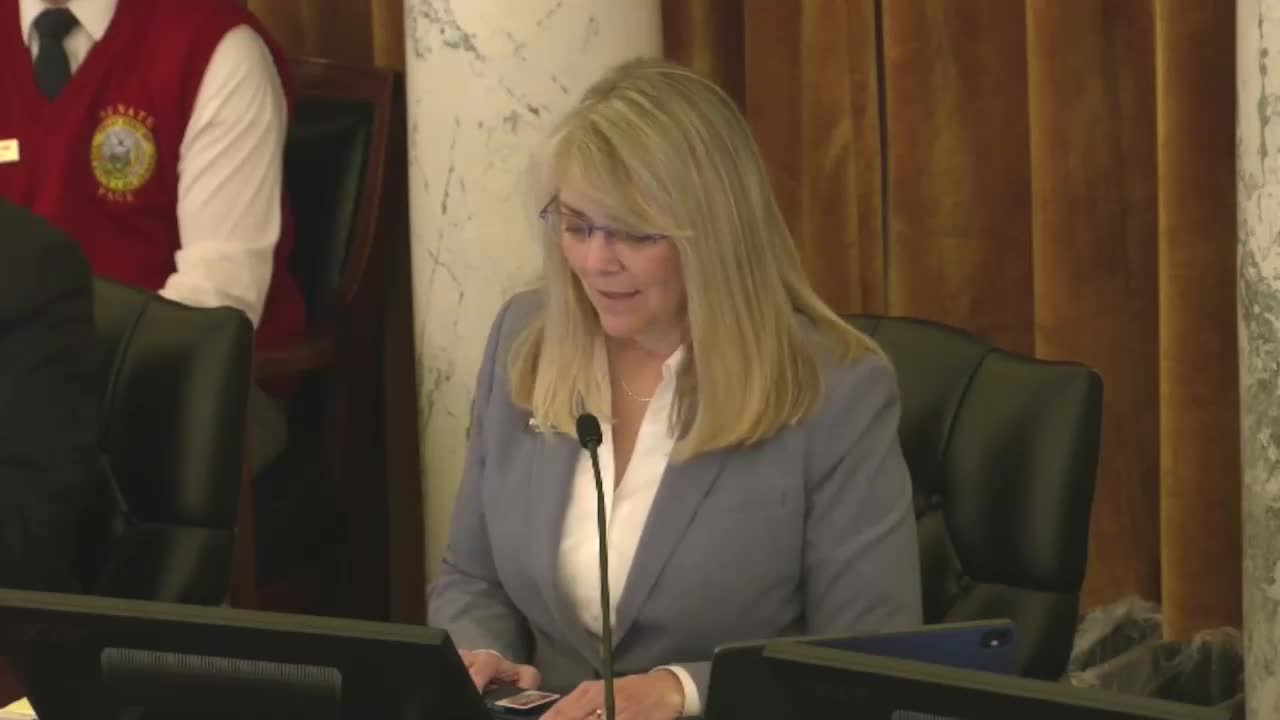
Senator Cherie Wintrow and Senator David Cook pressed for more quantitative evidence linking the requested FTPs to measurable outcomes. Cook said he wanted baseline data to evaluate return on investment: "I would like to be able to see that where you're at and why we are justifying having four new FTPs." Peterson and Perkins told the committee they would provide additional workload and case data on demand, with Perkins offering to deliver a more detailed briefing to the committee later.
The agency presented details on compensation levels for the requested roles: two positions budgeted at $121,300 (100% of policy for salary grade P), and several investigator/examiner positions budgeted at $82,500 (100% of policy for salary grade M). Peterson said all enhancement funding would come from the Department of Finance’s state regulatory funds; the department’s operating budget is funded almost entirely from fee revenues collected from examinations, assessments, filing fees and fines.
Peterson noted historical context for the department: roughly 72 full‑time positions are currently budgeted within the single program that houses the Financial Institutions Bureau, the Consumer Finance Bureau and the Securities Bureau. He said the Department of Finance consistently spends more than 90% of its appropriation and that recent staffing additions (net +2 FTP in 2024) included a mortgage examiner, a public outreach specialist and a securities technician.
No formal committee action or vote was recorded on the requests during the Jan. 21 hearing. Committee members signaled interest in supplemental information before making final funding decisions.
Looking ahead, the department pledged to deliver additional metrics on cases, workload and investigative outcomes to allow JFAC members to track whether the added positions produce measurable reductions in fraud and enforcement costs. Perkins closed by saying the agency supports the governor's recommendation overall and stands ready to provide the committee the data it requested.