Get Full Government Meeting Transcripts, Videos, & Alerts Forever!
Get email alerts on the Substance Abuse topic
No spam. Unsubscribe anytime.
State seeks fund-source swaps and oversight after federal cap on administrative spending
Summary
The Department of Health and Welfare and LSO discussed substance abuse block grants, opioid settlement funds, Millennium Fund allocations and a federal 5% administrative spending cap that prompted requests to move personnel costs to non-federal fund sources.
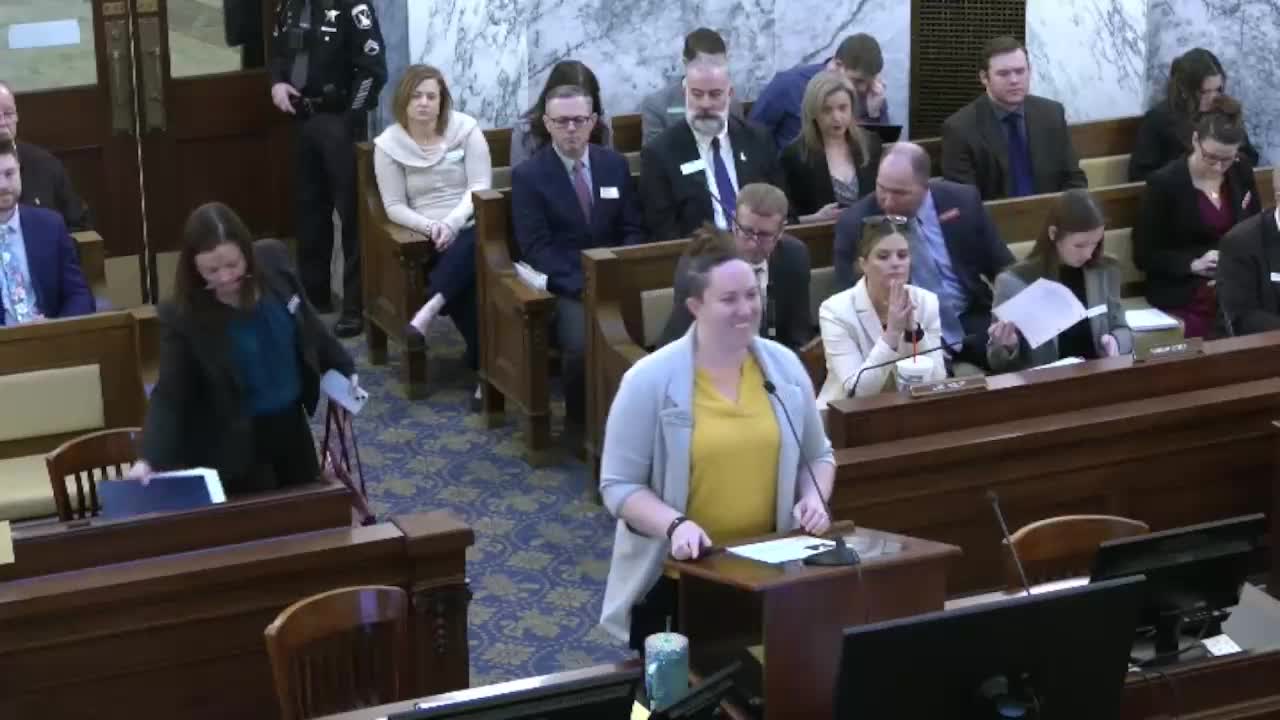
Alex Williamson and Director Alex Adams presented the substance abuse treatment and prevention program budget and explained a request to swap fund sources to meet federal administrative-spending limits.
Williamson reviewed recent appropriations: $8 million for the state opioid response grant (made ongoing in FY2024), one-time COVID relief funds in FY2022, and FY2025 ongoing funds for Millennium Fund grants to support community-based recovery centers and the Idaho Drug Free Youth program.
The department told the committee SAMHSA placed Idaho on a corrective action plan after the state exceeded the 5% administrative/personnel cap on the substance use block grant. To comply while maintaining staffing, the department requests a swap: move $533,900 from liquor-control dedicated funds to cover personnel costs and move $673,900 from personnel (federal fund) to trustee-and-benefit payments on the federal side so the federal administrative share stays below the cap.
Senator Cook asked whether this was simply “shuffling money” to avoid the federal 5% limit. Williamson explained the swap is intended to preserve program staffing while complying with federal rules, and Adams confirmed the department proposed net reductions in FTP in other parts of the budget as part of the solution.
Williamson also described other spending: the department received $1,200,000 one-time opioid settlement funding in FY2025 for specified recommendations, and the department administered Millennium Fund allocations for tobacco compliance, recovery centers, and an Idaho collegiate recovery program at Boise State University.
Adams characterized DHW largely as a pass-through for Millennium and opioid settlement funds: “My budget was used as a pass through. I have no operational oversight or control of these,” he said, and added the department did not request to make these ongoing.
Committee members asked for performance and outcome information for Millennium-funded projects. Adams offered to circulate reports he had, including an update that Boise State’s collegiate recovery program had established on-campus activities: the director said BSU staff “have established the collegiate recovery program on campus. Today, they have hosted 7 social events for 375 students.”
No formal committee vote on the requested fund-source swaps was recorded during the hearing; the committee asked the department to provide more detailed performance metrics and documentation of corrective actions with the federal grant.