Get Full Government Meeting Transcripts, Videos, & Alerts Forever!
Get email alerts on the Behavioral Health topic
No spam. Unsubscribe anytime.
Lawmakers hear why Idaho behavioral health plan required supplemental and transfer exemptions
Summary
Department of Health and Welfare officials told the Joint Finance-Appropriations Committee delays, legal challenges and mismatched appropriation years required new supplemental authority and transfer exemptions to access federal funds tied to the Idaho Behavioral Health Plan.
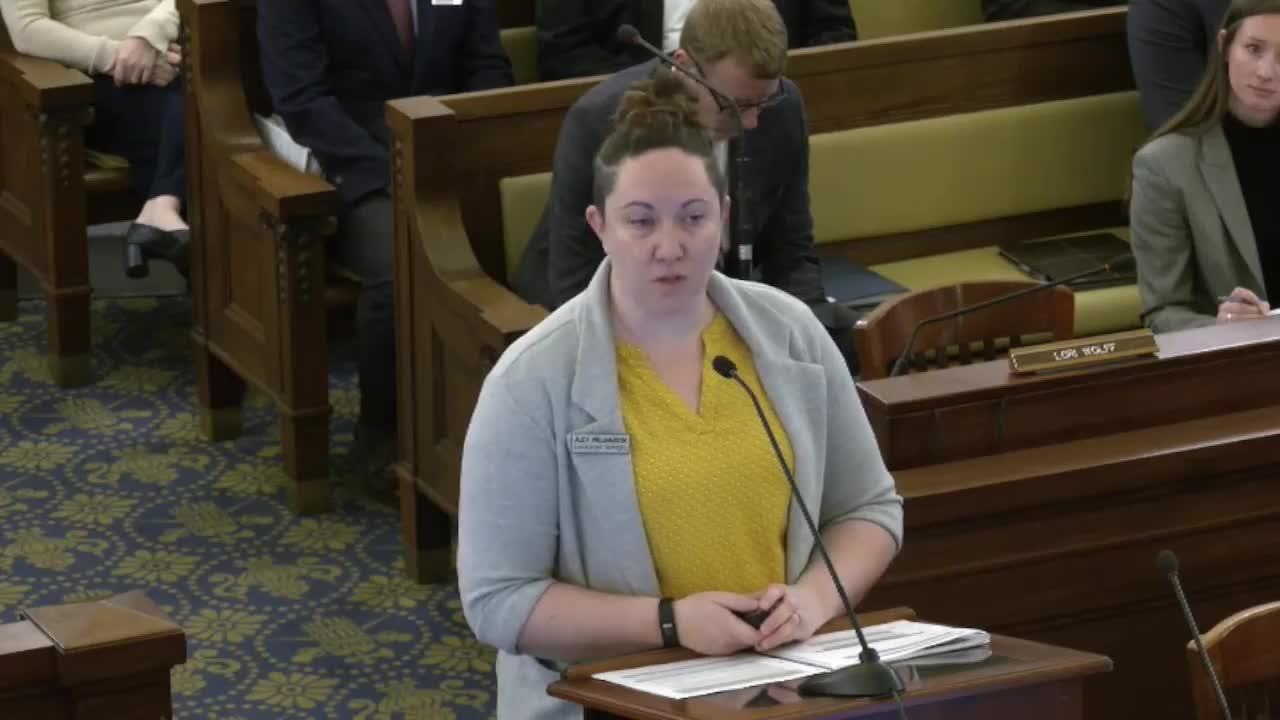
Alex Williamson, budget and policy analyst with the Legislative Services Office, told the Joint Finance-Appropriations Committee that the Department of Health and Welfare (DHW) is seeking both a fiscal 2025 supplemental and ongoing federal funding authority for the Idaho Behavioral Health Plan (IBHP).
The supplemental request described by Williamson includes $6,700,000 in one-time federal funds to support the IBHP in its first year of operation and an ongoing federal request of $261,400 for operating expenditures associated with federal grants administered by the Substance Abuse and Mental Health Services Administration (SAMHSA).
The IBHP, Williamson said, “was originally slated to go live in 2022. However, due to some delays, it actually went live July of this last year, so 2024.” She said the appropriation was made for 2022 and therefore the agency needs current-year authority to access federal grants that remain available.
Alex Adams, director of the Department of Health and Welfare, told the committee additional delays resulted from legal challenges and the scale of the procurement. “I believe it is the largest contract in the history of the state,” Adams said, and added there were about a year of legal challenges that delayed implementation.
Adams described the department’s preference to proceed carefully after litigation was resolved. “When this went live in July, tried to provide the committee, I think initially it tapered off, because this, albeit with some speed bumps, went relatively smooth,” he said.
Officials also requested an exemption from the 10% program transfer limitations found in Idaho Code 67-35-11 for fiscal year 2025 to allow broader program transfers across the department to respond to unforeseen expenditures. Williamson described the request as allowing “unlimited program transfers” into adult and children’s mental health for the current fiscal year; the governor’s recommendation would also remove transfer limitations beyond those established in statute in fiscal 2026.
Senators on the committee pressed for detail about the RFP and delay, with Senator Cook asking “why it took so long to get the RFP out” and whether legal challenges and procurement scale were the cause. Adams confirmed both factors contributed.
The director and the LSO analyst said these requests are intended to allow DHW to access federal grants and move funds between object classes where needed to keep services running. Adams also emphasized the department’s limited discretion over entitlement spending and the practical need for transfer flexibility in non‑entitlement programs.
The committee did not record a committee vote on the supplemental or the transfer-exemption requests during this hearing; the items were presented for consideration in the agency’s enhancement requests.