Get Full Government Meeting Transcripts, Videos, & Alerts Forever!
Get email alerts on the Employee Benefits Health Insurance topic
No spam. Unsubscribe anytime.
Joint finance committee approves $14,130 per‑employee health insurance funding for FY2026
Summary
The Joint Finance‑Appropriations Committee approved a health insurance funding rate of $14,130 per eligible full‑time equivalent for fiscal year 2026 and associated employer payroll adjustments; the committee also reviewed projected reserve balances for the statewide insurance fund.
The Joint Finance‑Appropriations Committee on Jan. 31 approved an increase in health insurance funding for state employees to $14,130 per eligible full‑time equivalent position for fiscal year 2026, voting to raise related employer benefit appropriations across agencies.
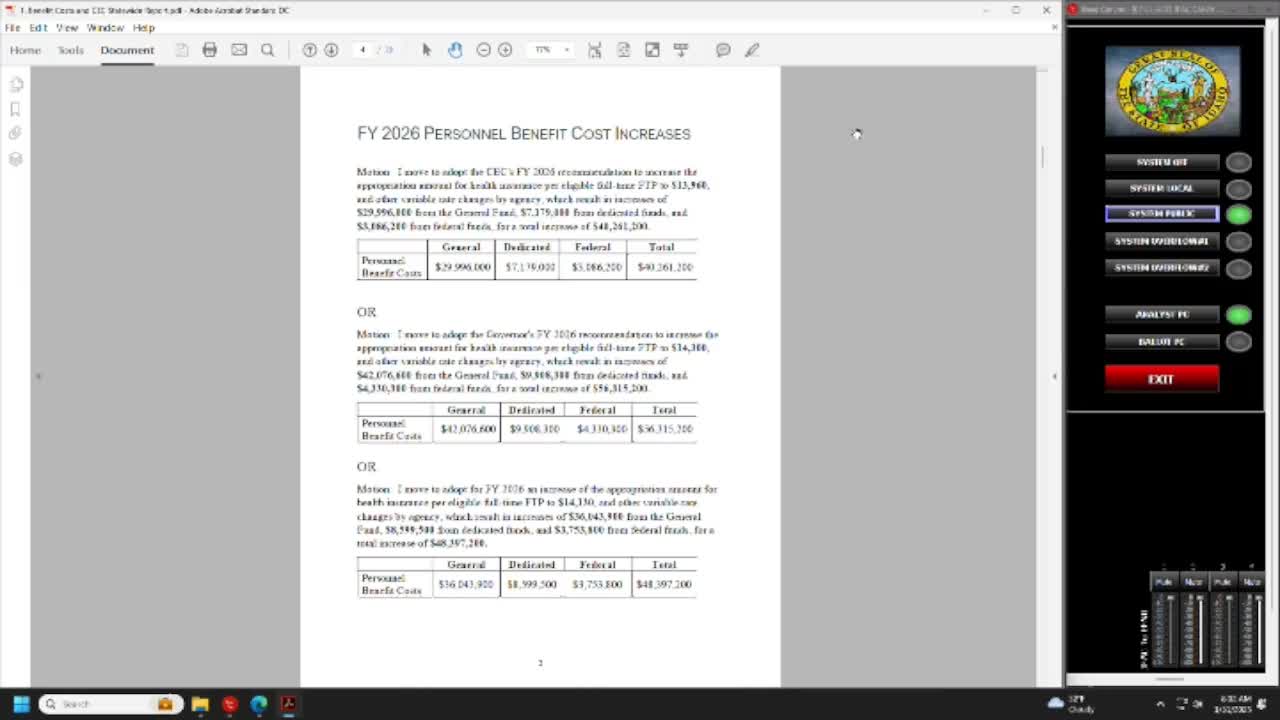
The motion, moved on the floor as a compromise level, passed by the joint committee with a total tally of 17 ayes, 0 nays and 3 members absent or excused, producing a stated total appropriation increase of $48,397,200 across the general, dedicated and federal funding sources.
Committee analyst Aaron Bybee told members the health insurance line is the largest driver of the personnel benefit adjustments and presented three dollar levels for consideration: the CEC committee recommendation of $13,960 per FTE, the governor’s recommendation of $14,300 and a midpoint compromise of $14,130. “The most significant adjustment in these personnel benefit cost increases is, of course, the health insurance that I just described,” Bybee said.
Senator Steven Woodward moved the $14,130 compromise motion and Representative Tanner seconded it. The motion’s sponsor said it reflected a compromise between different funding levels presented to the committee; the committee clerk completed the roll call after members debated projected reserve balances and procedural questions.
Why it matters: the committee’s decision sets the statewide per‑employee funding level that agencies will use in their fiscal 2026 budgets to pay employer‑paid portions of group health insurance and other small employer costs such as Social Security and workers’ compensation.
Members discussed how the selected funding level would affect the insurance reserve. Bybee told the committee the projected reserve balance at the end of fiscal 2026 would be approximately $51.6 million under the $13,960 proposal, about $61.4 million under the governor’s $14,300 recommendation and roughly in between for the $14,130 compromise.
Several members urged caution about using reserve funds to “buy down” premiums. Senator Ward Engelking said buying down the premium in previous years produced a misleading appearance of a large year‑to‑year increase: “If we buy it down again this year, we're gonna see a big — it's gonna look like a bigger increase next year than it actually is. I think we should be reflecting the actual cost of insurance.” Representative Furness argued for the lower CEC number based on historical reserve levels and actuary conservatism.
The committee’s action also included agency‑level adjustments for employer costs beyond health insurance; the motion’s sponsor and Bybee said those other increases cover employer Social Security, workers’ compensation and similar variable costs and are reflected in the total appropriation increase reported to the committee.
The committee recorded the action as a due‑pass recommendation to carry forward with the adopted funding level. Staff and members said they would apply the adopted per‑employee rate and the committee‑approved variable adjustments when the Legislature completes agency budget bills.
Ending: With the health insurance funding decision completed, the committee moved on to the separate and longer debate over change‑in‑employee‑compensation options (CEC). That CEC discussion produced several competing proposals but no final committee recommendation; the committee adjourned after instructing staff to return with revised motions at a future meeting.