Get Full Government Meeting Transcripts, Videos, & Alerts Forever!
Get email alerts on the Personnel Benefits Health Insurance topic
No spam. Unsubscribe anytime.
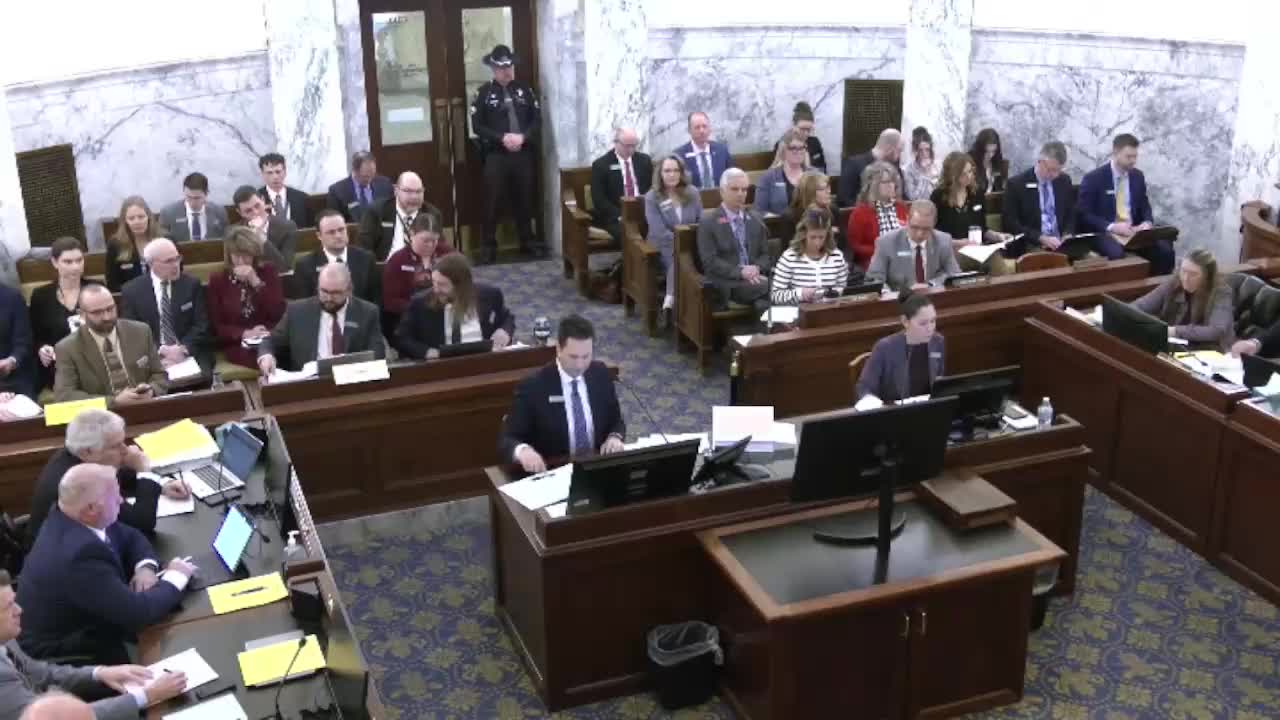
JFAC deadlocks on proposed health-insurance base increase amid reserve concerns
Summary
Committee members debated raising the state health-insurance base per eligible full‑time position but failed to approve either the committee (CEC) recommendation or the governor’s higher proposal after multiple roll-call votes; deliberations focused on reserve size and contractual risks if contingency reserves fall below 10%.
Committee analysts presented two competing proposals for the health‑insurance base used in agency budgets for fiscal year 2026: the Economic Outlook/Change in Employee Compensation Committee recommendation to set the base at $13,960 per eligible full‑time position and the governor’s recommendation to set it at $14,300.
Keith Bybee described the two options and the dollar impacts to the general fund and other funds. The governor’s recommendation would raise the per‑position base to $14,300 and, according to analysts, leave an additional projected cushion in the Office of Group Insurance contingency reserves compared with the lower figure.
Analysts and administrators warned about reserve risks. Faith Knowlton, administrator for the Division of Insurance and Internal Support, told the committee, “If we fall below the 10% contingency reserve, then a risk charge can be assessed to the state.” Division of Financial Management administrator Laurie Wolf and actuary projections were also cited: staff said Milliman projections indicated that adopting the CEC recommendation would pull contingency reserves close to the contractual 10% minimum (projected at about $51,600,000 versus the current reserve near $80,000,000). The governor’s recommendation would leave a larger cushion — about $10,000,000 more, analysts said.
Members debated tradeoffs between minimizing current premium pressure on agencies and schools and preserving reserve buffers that reduce risk of future assessments or premium spikes. Representative Furness, who supported the CEC recommendation, said the state has “almost double the amount in the reserve account right now” and urged caution about overfunding a reserve with large amounts of taxpayer dollars. Others, including members who supported the governor’s higher figure, said the larger cushion reduces the likelihood of future risk charges or larger increases the next year.
The committee took multiple roll-call votes on substitute and original motions. No motion ultimately achieved the committee’s dual-majority requirement from both houses: the substitute motion failed (combined tally reported as 8 ayes, 12 nays on one roll-call), and subsequent votes on the original motion also failed to secure the necessary majorities from both chambers. Because neither option met the required thresholds, the committee did not adopt a change to the health‑insurance base at the session and left the item for further consideration.
Direct quotes
- “If we fall below the 10% contingency reserve, then a risk charge can be assessed to the state,” — Faith Knowlton, Division of Insurance and Internal Support.
Votes at a glance
- Substitute motion (CEC recommendation: $13,960 base): failed (combined tallies reported during the session did not meet both‑house majorities).
- Original motion (governor recommendation: $14,300 base): failed to secure required majorities from both chambers and therefore did not pass.
Context and implications
Staff and members emphasized the contractual nature of the Office of Group Insurance arrangements and the role of actuarial projections. Adopting a lower base this year would likely reduce near‑term premium outlays but shrink the contingency reserve and could increase the risk of downstream assessments or a larger premium increase next year; adopting the higher base would cost more now but preserve additional cushion in the contingency fund.
Ending
The committee paused action on the health‑insurance base after failing to approve either proposal; staff will return with updated projections and options when the committee resumes deliberations.