Get Full Government Meeting Transcripts, Videos, & Alerts Forever!
Get email alerts on the Higher Education Budget topic
No spam. Unsubscribe anytime.
Lewis‑Clark State College tells JFAC budget constrained by enrollment formula, pay gap
Summary
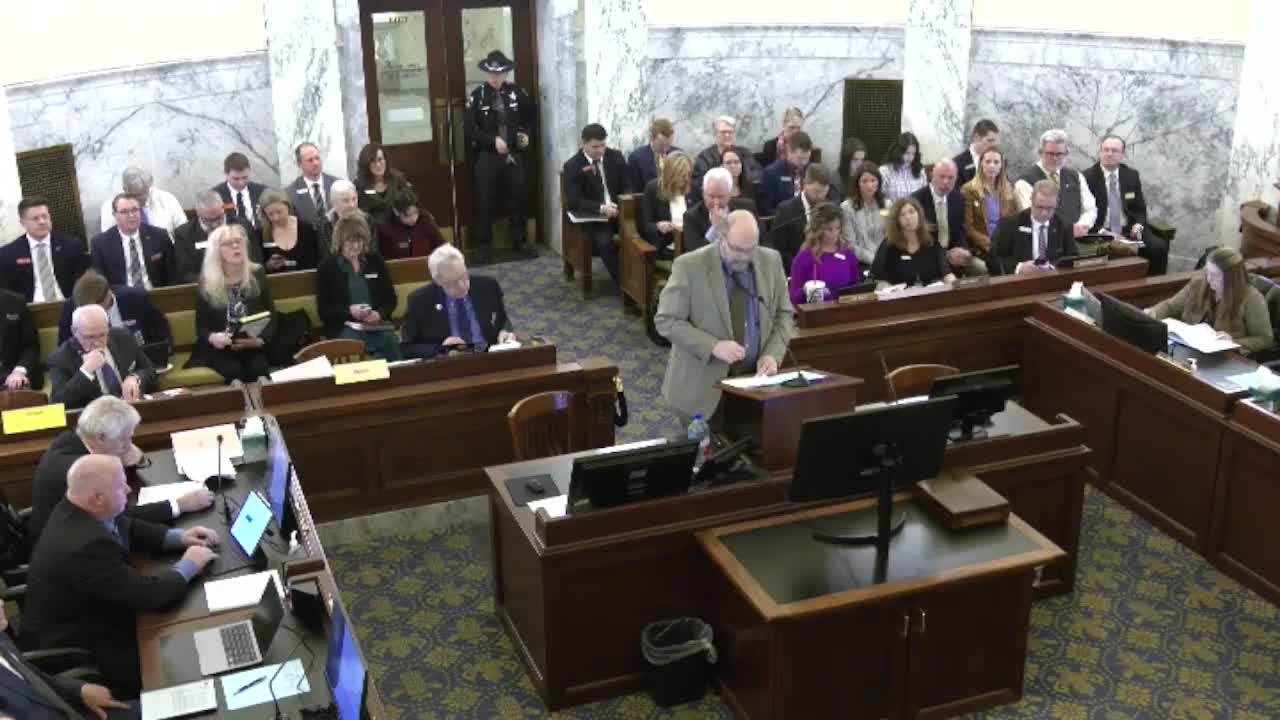
BOISE — Lewis‑Clark State College officials told the Joint Finance‑Appropriations Committee during a Jan. 27 hearing that the college’s budget is tightly constrained by a decades‑old enrollment workload formula and by a persistent gap between faculty pay and K‑12 salaries.
BOISE — Lewis‑Clark State College officials told the Joint Finance‑Appropriations Committee during a Jan. 27 hearing that the college’s budget is tightly constrained by a decades‑old enrollment workload formula and by a persistent gap between faculty pay and K‑12 salaries.
Kevin Campbell, a budget and policy analyst with the Legislative Services Office, said Lewis‑Clark has an enrollment of 3,881 and a FY2025 base general‑fund appropriation of about $41.7 million, not including tuition and fee revenue. He explained that the college — like other institutions — reappropriates tuition and fee receipts across fiscal years and that the state’s enrollment workload adjustment (EWA) is a three‑year weighted credit‑hour formula that can increase or reduce an institution’s appropriation.
That EWA will reduce Lewis‑Clark’s FY2026 appropriation by $102,500, Campbell said. He also summarized the college’s account mix: roughly 82.6% of its budget is personnel (faculty and support staff), 16.5% operating expenses and less than 1% capital outlay.
Why it matters: the EWA and the college’s student mix — a high share of Pell‑eligible, first‑generation and working students who often enroll part time — mean tuition revenue and credit‑hour weightings drive funding shifts. Lewis‑Clark leaders said those structural features, combined with a salary gap relative to K‑12, constrain recruitment and retention of faculty and staff.
"The formula is a net zero bucket that is shuffled around based on a three‑year rolling average of credit hour production," President Cynthia Pemberton said. "LC State receives on average a 1.85 weighting while our sister institutions receive about 2.51, which has disadvantaged LC State for decades." She added that the lower weighting is ‘‘largely associated with graduate production and the types of courses we offer." (First reference: President Cynthia Pemberton, Jan. 27 remarks.)
Pemberton told the committee the college is seeking modest operational capacity enhancement (OCE) funds for salaries and critical priorities. Lewis‑Clark requested $287,000 in OCE for FY2026 and will apply it to competitive employee compensation (CEC); the college reported receiving $440,200 in OCE for FY2025 and $352,200 in endowment adjustments in the current year.
"At LC State, based upon most recent data, an LC State instructor on average makes about $9,000 less per year than the K‑12 average and an assistant professor about $3,777 less," Pemberton said. "We need to catch up; we estimate getting to median salaries would require roughly $1.2 million." (First reference: President Cynthia Pemberton, Jan. 27.)
Tuition reappropriation and endowments: Campbell and Pemberton described how tuition and fees are reappropriated across fiscal years because academic years and the state budget do not align precisely. Campbell also described the college’s Normal School Endowment Fund, noting its distributions are governed by Idaho code and managed by the Endowment Fund Investment Board. Lewis‑Clark reported the Normal School Endowment and related endowment distributions as part of its longer‑term funding picture.
Program outcomes and state priorities: Pemberton highlighted LAUNCH (the state student support program) and workforce training as recent enrollment and outcome successes. She said about 240 LC State students received LAUNCH funds in the fall, with a disproportionate share in career‑technical education programs; CTE enrollment was up 19% in fall and a further 10% in spring, she said. Pemberton said LAUNCH funds supported 36 of 54 fourth‑year electrical apprentices who completed their program last fall.
The college also noted progress on prison education: Pemberton said Lewis‑Clark completed the federal and state approvals required to transition from an experimental prison education program to full participation, and was serving nearly 200 incarcerated students across sites in Orofino, Pocatello and Boise.
Committee questions and context: Committee members asked for salary comparables and for expanded data on enrollment and financial ratios. Campbell said he is preparing a systemwide salary comparables document comparing the eight public institutions and K‑12 figures. Pemberton said Lewis‑Clark will provide institution‑specific salary data to the committee.
Clarifying figures and requests: Lewis‑Clark presented the following numbers during the hearing — enrollment 3,881; FY2024 total appropriation $40,517,100; FY2024 tuition and fees reappropriated about $23,700,000; FY2026 EWA reduction estimated at $102,500; FY2026 OCE request $287,000; FY2025 OCE received $440,200; FY2025 CEC adjustments and a prior year negative enhancement tied to a $9,270 transfer from tuition and fees were discussed. The budget breakdown presented showed 82.6% personnel, 16.5% operating, <1% capital outlay.
The college said operational capacity enhancement dollars were used to finish occupancy and custodial funding for a new career technical building, expand marketing, and invest in IT and cybersecurity needs. Pemberton told the committee she would like additional funding to close the salary gap with K‑12 and to support strategic, moderate enrollment growth.
What’s next: committee members indicated they will review salary comparables and other systemwide budget materials. Lewis‑Clark officials said they will supply requested data by email and stand ready for follow‑up questions.
Sources: Legislative Services Office presentation (Kevin Campbell); testimony of Dr. Cynthia Pemberton, President, Lewis‑Clark State College; Dr. Julie Cray, Vice President for Finance & Administration (responses to finance questions).