Get Full Government Meeting Transcripts, Videos, & Alerts Forever!
Get email alerts on the Agriculture Invasive Species topic
No spam. Unsubscribe anytime.
Legislators hear Department of Agriculture budget as state doubles quagga mussel detection and seeks pay ladder for investigators
Summary
The Idaho Department of Agriculture outlined its fiscal year 2026 request, including ongoing general‑fund support for quagga mussel response, a proposed pay structure for agricultural investigators, vehicle and IT replacements, and ongoing staffing trends.
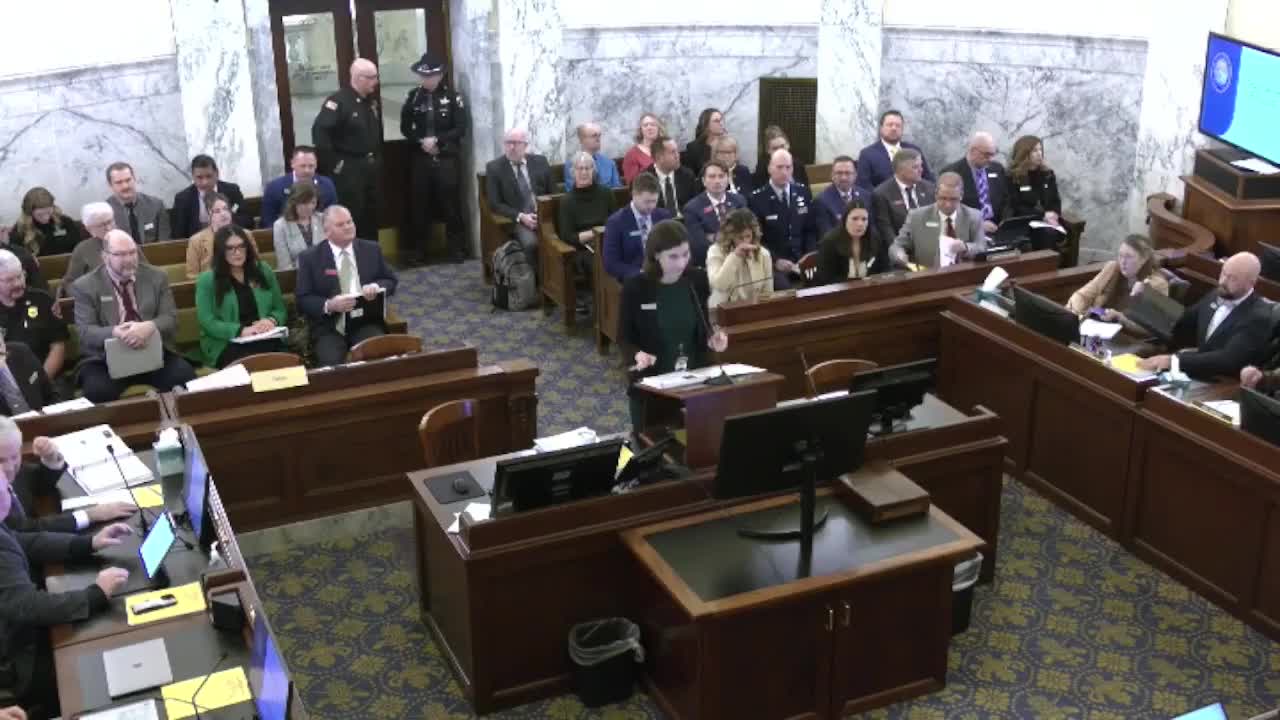
The Idaho Department of Agriculture told the Joint Finance‑Appropriations Committee on Friday that it has expanded invasive‑species monitoring and is seeking ongoing and one‑time funding in its fiscal 2026 request to sustain that work.
Budget analyst Frances Lippett said the departmentʼs statutory responsibilities are set out in several titles of Idaho Code and noted the agency is organized into eight budget programs with about 231 authorized full‑time positions and a long‑term staffing rate near 91 percent. Lippett also reviewed dedicated funds the department uses, including the invasive species fund and the pest control fund, and noted a requested deficiency warrant tied to pest control costs incurred in fiscal 2024.
The request to the committee centers on resources to address quagga mussel detection and response. Director Chanel Tewalt told the panel Idaho doubled its water sampling and nearly doubled watercraft inspections statewide last year after a “precedent‑setting event” on the Snake River, and the department added three inspection stations. “We asked for funding…and Iʼm happy to say that we did that last year,” Tewalt said. Lippett added the legislature provided a one‑time $5,000,000 transfer from the general fund to the invasive species fund in the prior session and approved an ongoing $1.5 million general‑fund appropriation for staffing and additional check stations in fiscal 2025.
Lippett highlighted other components of the fiscal 2026 request: a $340,400 ongoing enhancement to create a pay structure for the departmentʼs 53 agricultural investigator senior positions to improve retention and professional development; a $1,110,000 one‑time request, including roughly $891,000 for replacement items such as vehicles (the agency indicated about 17 vehicles, mostly pickups, are planned for replacement) and $214,700 for IT hardware; and an FY2025 deficiency warrant request of $1,724,300 for exotic species response costs. Lippett said many dedicated funds are appropriated at levels above typical revenues to allow consistent responses as service demand rises.
Committee members asked for clarifications: Representative Mitchell asked for a list of vehicles planned for replacement; Lippett said she would provide the list and recalled the replacement count at about 17. Senator Wintrow and others asked whether general‑fund support was used for quagga work; Lippett confirmed the ongoing $1.5 million appropriation from the general fund is primarily for staffing and additional watercraft inspection stations. The analyst also noted the pest control fund balance reflects costs incurred in fiscal 2024, including Mormon cricket treatment and monitoring.
Tewalt described retention challenges in investigative ranks: of 53 agricultural investigator senior positions, she said 27 had been with the department less than two years. The requested pay‑structure enhancement aims to create a career ladder to improve retention for investigators who respond to complaints ranging from animal care to pesticide drift and to reduce the effect of turnover on service delivery.
The department also summarized five‑year appropriation trends, personnel costs and the makeup of operating spending. Lippitt said appropriations for the agency have ranged roughly from $47.5 million to $67.1 million in recent years and that actual expenditures typically run in the mid‑70s percent of appropriations because many dedicated funds are appropriated at levels that exceed realized revenue.
The director and analyst did not request immediate committee action on an individual motion; the presentation served to inform members as they review the departmentʼs budget requests for the coming year.
Looking ahead, Lippett said next yearʼs data will show whether current declines in some fund balances continue, given the large one‑time response expenditures for quagga mussel control in recent years.