Get Full Government Meeting Transcripts, Videos, & Alerts Forever!
Get email alerts on the Industrial Commission Budget topic
No spam. Unsubscribe anytime.
Industrial Commission requests staffing, IRIS maintenance funding after caseload and tech changes
Summary
The Industrial Commission told the Joint Finance-Appropriations Committee it seeks ongoing funding for 10 enhancements (no new FTPs), plus one‑time support tied largely to the IRIS modernization project, citing increased case volume, vacant positions and a backlog in the crime victims compensation payment queue.
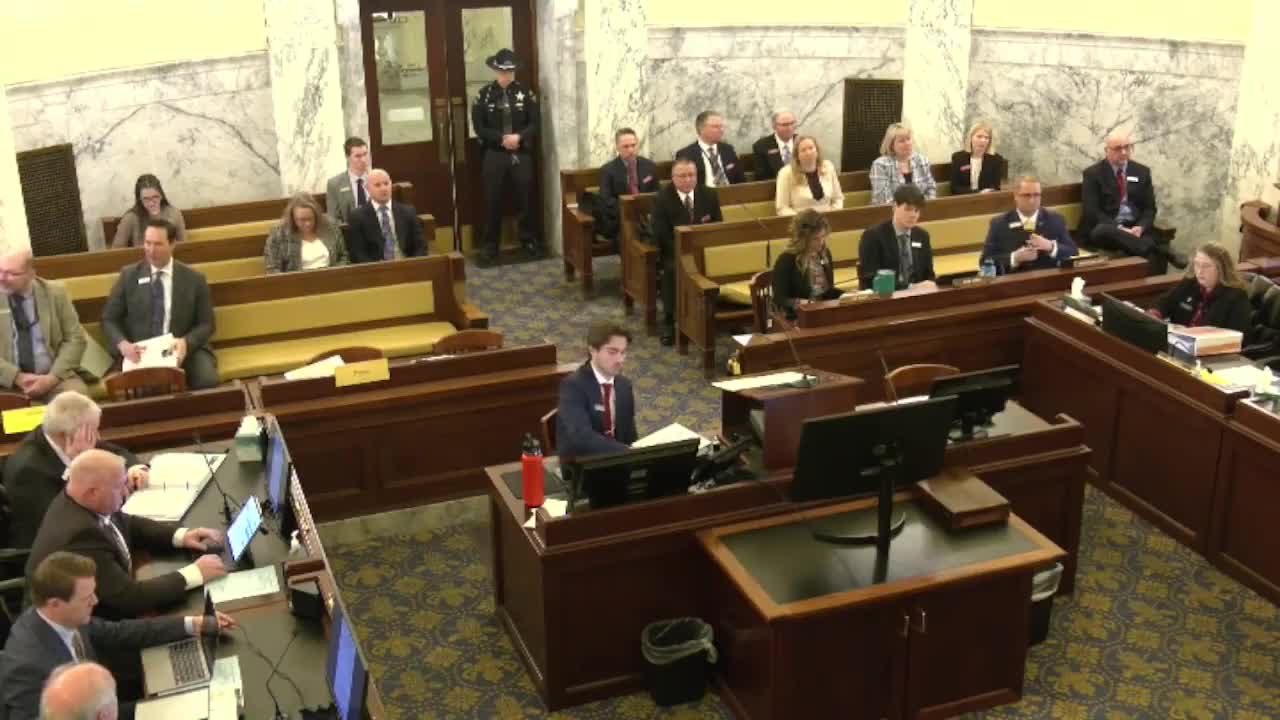
The Industrial Commission asked the Joint Finance-Appropriations Committee on Jan. 23 for continued funding to support a modernized case management system and to fill workloads arising from increased data and caseloads.
The request centers on 10 enhancement items for fiscal 2026 — $298,200 in ongoing increases and $554,200 in one‑time funding — and a supplemental net transfer of $47,000 among the agency’s dedicated funds. The agency said no new full‑time positions are requested; instead, they plan to use vacant FTPs to fund personnel costs.
The request and discussion focused on IRIS, a multi‑year effort to digitize and automate formerly paper‑driven processes. Noah Peterson, budget and policy analyst, Legislative Services Office, summarized the agency’s budget and noted the Industrial Commission received $12,874,000 in one‑time appropriations between fiscal 2021 and 2025 for the IRIS project. Peterson said the agency reverted $4,555,000 last year, driven largely by trustee and benefit payments, and that as of August the agency had 12 vacant FTPs.
Why it matters: director-level and committee questions tied the budget requests to public service timeliness (payments to victims and to providers) and to the speed of adjudication for workers’ compensation and employer‑compliance matters. Agency leaders said recent technology changes expanded the volume and sources of data they process, producing more actionable compliance cases and more work to prepare files for adjudication.
Agency explanation and specific requests
George Gutierrez, director of the Industrial Commission, said IRIS has created an electronic record that improves visibility and eliminates physical paper shuffling, but it also shifted certain responsibilities. Gutierrez said some tasks that formerly fell to referees or hearing officers now require legal associates or technical staff to verify that electronic submissions meet statutory requirements before a case proceeds to hearing.
As a result, the commission’s fiscal 2026 request includes: a senior financial technician to reduce payment turnaround in the crime victims compensation program (Peterson said the goal is a 30‑day turnaround but at the time of the August budget submission the backlog produced an estimated 12‑week turnaround and about 872 outstanding payments); a rehabilitation field consultant for Twin Falls and Burley areas to address higher case volumes there; a referee position to help lower decision times that had risen from an average of 90 days to 110 days after a long‑term referee retired in 2020; a reclassification of five adjudication associates; a technical records specialist for employer compliance; IRIS maintenance and contingency funding; and replacement vehicles and IT equipment for field staff.
Peterson described the IRIS maintenance request as a one‑time $288,000 operating appropriation for long‑term technical support. He explained the agency originally expected the Office of Information Technology Services (OITS) to provide ongoing support, but OITS indicated it cannot at this time. Gutierrez confirmed contracted support is needed until OITS is able to assume the work.
Crime victims and reversion questions
Committee members asked whether reverted funds could instead be applied to staffing. Representative Petzke asked if the agency could use prior-year reversions to fund positions given a pattern of reversion. Director Gutierrez replied most reversion dollars were trustee and benefit payments — funds reserved to compensate victims or to pay peace officer temporary disability benefits — and that the commission lacks unilateral authority to reallocate trustee/benefit appropriations to other uses without special legislative approval.
Operational impacts and field needs
Committee members pressed on why IRIS increased skill requirements and workload rather than simplifying tasks. Gutierrez said IRIS increased the number and variety of data sources and produced more cases for employer compliance and investigations; the better data is producing more results that then need legal and administrative processing. He said the shift from an assigned Deputy Attorney General in the office to the Attorney General’s civil litigation division means cases now go to multiple outside attorneys who require well‑prepared case packages, increasing internal preparation workload.
Vehicle and equipment replacements also drew questions. The commission requested four small SUVs (three for rehabilitation, one for the compensation program). Gutierrez said the vehicles proposed for replacement have high mileage (82,000–98,000 miles and model years roughly 2006–2011) and some have recurring mechanical problems; field staff need reliable vehicles for rural travel.
Agency staffing and workload context
Peterson and Gutierrez provided roster and budget context: the commission operates three programs (compensation, rehabilitation and crime victims compensation) with 130.25 total FTP allocated (70.5 compensation, 47.25 rehabilitation, 12.5 crime victims compensation). As noted in the presentation, the agency expended roughly two‑thirds of total FY2024 costs on personnel (64.8%), about 20% on operating expenditures and about 15% on trustee and benefit payments. Peterson reported the commission expended on average about 80% of total appropriation in the previous four fiscal years and reverted $4,555,000 in the most recent year; $3,000,000 of the reversion was trustee and benefit payments, with $2,400,000 of that coming from the crime victims compensation fund.
What the committee asked for next
Committee members requested additional detail on IRIS spending and obligations, including a breakdown of past appropriations, development phases, the vendor/contracting path and the expected longevity of maintenance costs. Representative Tanner asked for a written breakdown; the director agreed to provide a clearer accounting of development, enhancements and ongoing maintenance obligations. Senator Cook asked for clarification that the $288,000 line item is maintenance rather than new functionality; Peterson and the director confirmed it is contracted maintenance/support while OITS builds capacity.
Ending note
Director Gutierrez thanked the committee for past support and asked for backing for the 2026 budget request, saying the enhancements align with the commission’s strategic plan and performance measures and are aimed at improving timeliness for claimants, victims and employers.
Speakers quoted and paraphrased in this article are identified in the speakers list below.