Get Full Government Meeting Transcripts, Videos, & Alerts Forever!
Get email alerts on the Agriculture Oilseeds topic
No spam. Unsubscribe anytime.
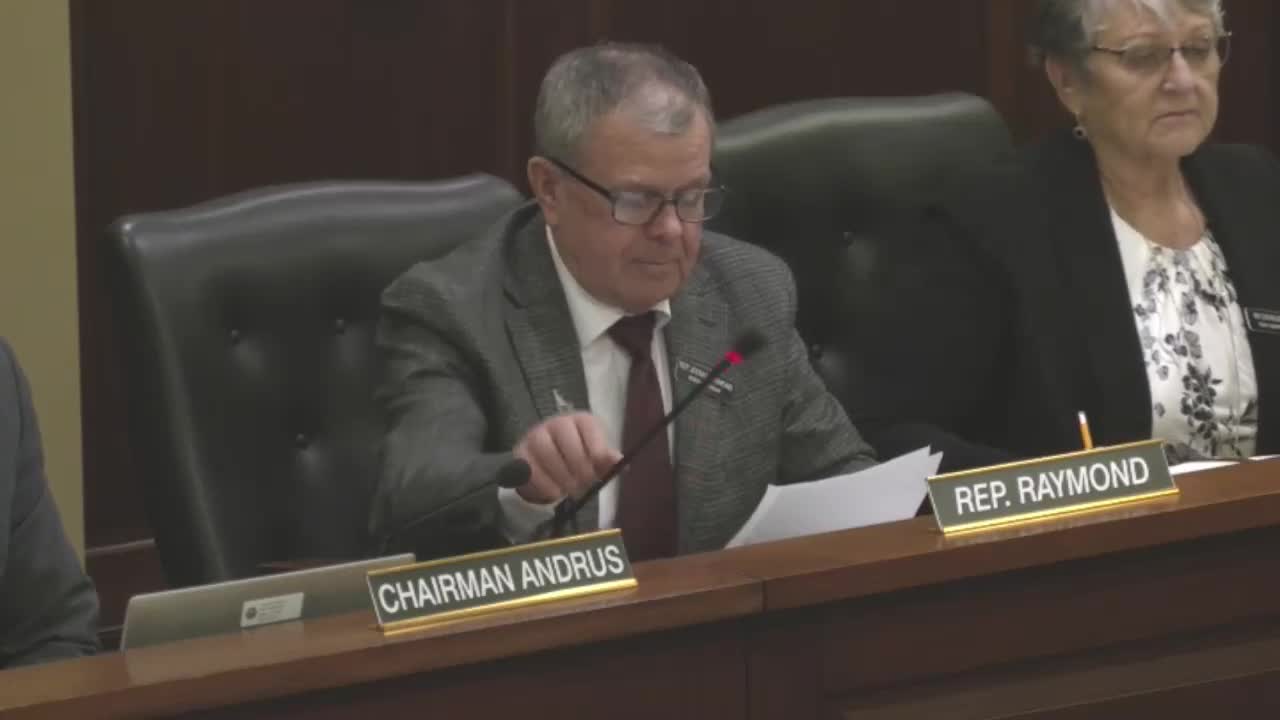
Committee approves rewrite of Idaho Oilseed Commission rules; administrator briefs panel on crops, budget and research
Summary
The House Agriculture Affairs Committee approved a docket to rewrite the administrative rules for the Idaho Oilseed Commission and heard a presentation from the commission administrator about the commission’s scope, budget and research partnerships.
The Idaho House Agriculture Affairs Committee voted to approve a docket rewriting the administrative rules that govern the Idaho Oilseed Commission and then heard a presentation from the commission’s administrator on the commission’s programs and finances.
The approved docket would streamline the commission’s rules under IDAPA 04.20.01, removing language the commission described as duplicative and specifically eliminating a refund-application provision that the administrator said conflicts with Idaho Code provisions tied to a referendum process. "We held 2 negotiated rule makings August 22 and October 3 of this prior year 2024," Paci LaRacia Phillips, administrator of the Idaho Oilseed Commission, told the committee. Phillips said the change is prompted in part by Idaho Code Title 22, Chapter 47 and an affidavit from a former commission chair stating a growers' referendum occurred after the commission's 1996 creation.
Why it matters: the rule changes affect how the commission administers its grower assessments and internal procedures. Phillips told the committee the commission's primary work is research, education and publicity to develop markets and agronomic practices for oilseed crops such as canola, mustard and safflower.
Details of the rule change and legal basis Phillips said the rewrite removes duplicative language in the commission’s legal-authority text, first-purchaser rules and a tax-invoice section. She pointed the committee to Idaho Code Title 22, Chapter 47 and specifically cited what the transcript identifies as Idaho Code § 22-47-17, noting a refund account provision and language tied to a referendum. Phillips said an affidavit from former chairman Doug Scoville describes a growers' referendum that, in her view, eliminates the need for the commission’s separate refund-application rule language.
Committee action Representative Nannie McCann moved "to recommend that the full committee approve docket number 40Three-oneOne-two401," the motion recorded in the transcript. The chair called for the question and the committee approved the docket by voice vote; the record shows an "aye" and the chair declared the motion passed. (Transcript contains a differing docket number reference later during the roll call announcement; the docket-number discrepancy is noted below as a clarifying detail.)
Commission briefing: crops, budget and partnerships Phillips told the committee the commission has three grower commissioners and ex officio members from the Idaho State Department of Agriculture and the University of Idaho. She described the commission’s roughly $175,000 annual budget and said research is the largest line item. "We run on just shy of, or just about $175,000," Phillips said.
Phillips provided crop acreage figures reported to the Farm Service Agency, saying canola acreage was about 93,652 acres, safflower just over 17,000 acres, mustard about 8,200 acres, flax about 520 acres and camelina about 915 acres. She described partnerships that include a University of Idaho-funded plant-breeder position (supported in part by the commission), research contracts with private firms such as Crop Matters LLC and specialty-crop block grant-funded trials coordinated with ISDA and the University of Idaho.
Processing and markets Phillips described processing logistics for canola grown in Idaho, saying most Idaho canola that is crushed goes to a processing facility in Warden, Washington, operated by Viterra; she said the next nearest crushing facility is in Kansas. She also identified Mountain State Oil Seed in American Falls as a major local dealer and processor for mustard and safflower products used for culinary mustard, biofumigant cover-crop uses and bird/pet-food markets.
What the committee asked Committee members asked about the history of the statutory and rule language and why the refund-application provision had not been removed earlier; Phillips said several administrators had served since the commission’s 1996 formation and that she had been in the administrator role since October 2022. Representative Ehlers asked about the affidavit date and why the provision had persisted; Phillips said she could not explain the earlier administrative history but that the commission had run the rewrite through the Division of Financial Management and discussed it with commissioners and stakeholders.
Next steps and context The committee approved the docket as recorded in the meeting. Phillips continued with an informational presentation after the docket vote; the committee then adjourned. The transcript records the committee’s vote by voice and does not contain a roll-call tally with member names.