Get Full Government Meeting Transcripts, Videos, & Alerts Forever!
Get email alerts on the Judiciary topic
No spam. Unsubscribe anytime.
Idaho chief justice urges pay raises and four new judges, citing heavy caseloads and recruitment drop
Summary
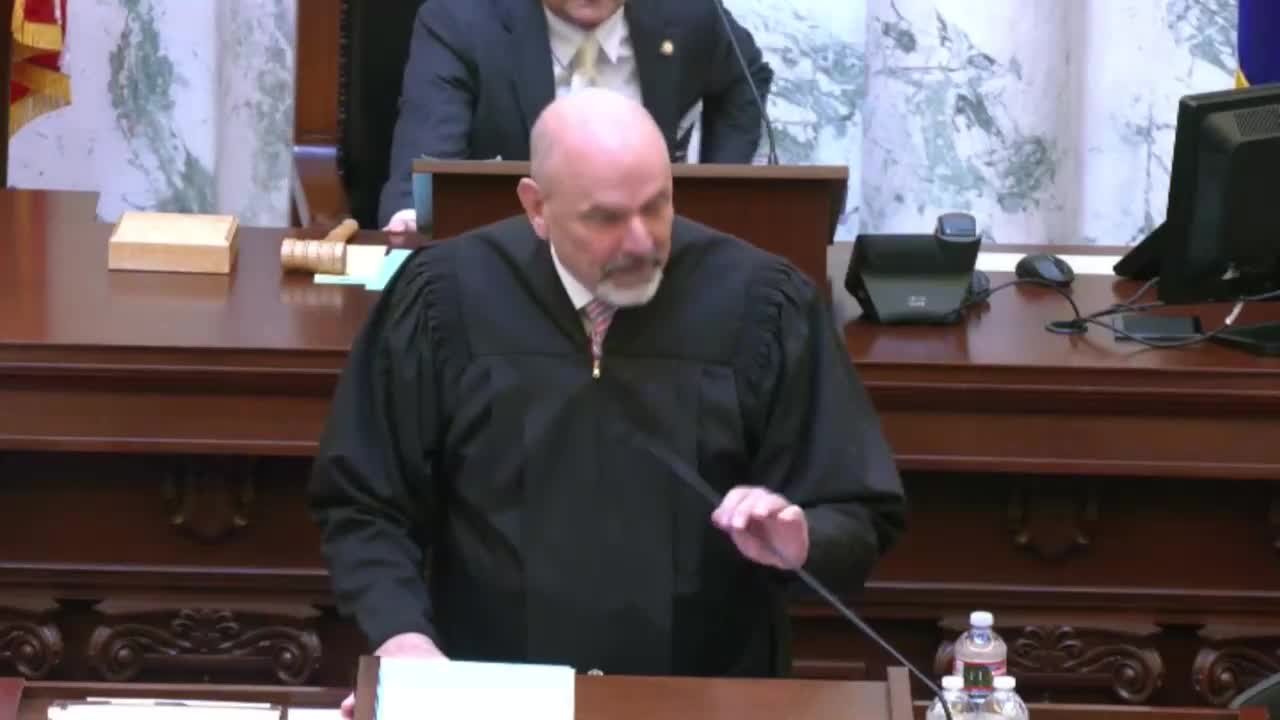
In a State of the Judiciary address to the Idaho Senate on Jan. 15, the chief justice asked lawmakers to fund four new trial judges in high‑need counties and to raise trial judge salaries toward $200,000 to address workloads, recruitment and retention problems.
BOISE, Idaho — The Chief Justice of the Idaho Supreme Court told the Idaho Senate on Jan. 15 that the state needs funding for four additional judges and substantially higher judicial pay to address heavy caseloads, declining applicants and short staffing in several counties.
The chief justice said the court is requesting funding for “4 new judges across these counties” that include Kootenai, Twin Falls and Bonneville and urged lawmakers to raise trial court salaries “to closer to $200,000 annually.” The address was delivered during a scheduled appearance before the full Senate and later ordered spread upon the Senate journal by unanimous consent.
The request is aimed at easing pressure on trial courts that the chief justice described as operating under sustained strain. He described magistrate and district judges who rotate between a wide array of criminal, juvenile, family and civil matters and who travel between counties to cover backlogs. For example, he said one Twin Falls magistrate can handle hearings in as many as 124 different cases on a busy day and that some visiting judges in Kootenai County now cover nearly a full month’s work for a district judge each month.
The chief justice also raised recruitment and retention concerns. He said the average number of applicants for a district judge position fell from about 11 five years ago to 4.6 last fiscal year, and that for several recent vacancies the Idaho Judicial Council was able to forward only three names to the governor. He said applicants from private civil practice are declining: “For vacancies in our trial courts last fiscal year, just 1 in 5 applicants came from the private sector.”
On pay, the chief justice said Idaho ranks low nationally for district judge salaries, telling senators the state is “40th out of 53 states and territories” in the comparison he cited. He said the pay gap with private practice and neighboring states contributes both to fewer applicants and to judges leaving the bench and returning to private practice.
Treatment courts were another highlight. The chief justice said more than half of Idaho’s roughly 150 judges preside over at least one treatment court and that 613 Idahoans graduated from treatment courts in the last fiscal year. “Treatment courts change lives,” he said, and cited studies showing graduates are significantly less likely to reoffend.
The chief justice framed the requests as limited and focused: he said the judicial branch’s budget represents roughly 1% of the state general fund and that the branch pursues only funding requests it cannot otherwise meet. He proposed that long‑term salary decisions be reviewed by an independent committee, with members appointed by the executive and legislative branches and legislative review preserved, mirroring the panel that sets legislative pay.
The Senate accepted a motion by Senator Denhartauge to have the State of the Judiciary address “spread upon the pages of the journal” by unanimous consent. There were no formal votes recorded on the funding or salary requests during the session; the chief justice’s remarks constituted a formal request for the upcoming budget process rather than a binding action by the Senate.
The chief justice repeatedly emphasized the human and operational demands on judges, describing travel burdens for judges who cover multiple counties and noting that some judges spend substantial hours on the road to help caseloads in other jurisdictions. He urged legislators to consider compensation and staffing changes to preserve judicial independence and the capacity of Idaho courts to handle life‑altering matters.
The Senate did not take a substantive vote on the funding or salary proposals during the session. The chamber adjourned until 11 a.m. Thursday, Jan. 16, by voice vote after a motion to adjourn was moved and seconded.