Get Full Government Meeting Transcripts, Videos, & Alerts Forever!
Get email alerts on the Commerce Broadband Economic Development topic
No spam. Unsubscribe anytime.
Commerce highlights broadband spending, BEAD timeline and workforce priorities; $580M BEAD program moves toward project selection
Summary
The Idaho Department of Commerce told the Joint Finance‑Appropriations Committee it has obligated most state broadband funds and is preparing to accept BEAD funding applications this year, while also emphasizing workforce, housing and childcare as priorities for business growth.
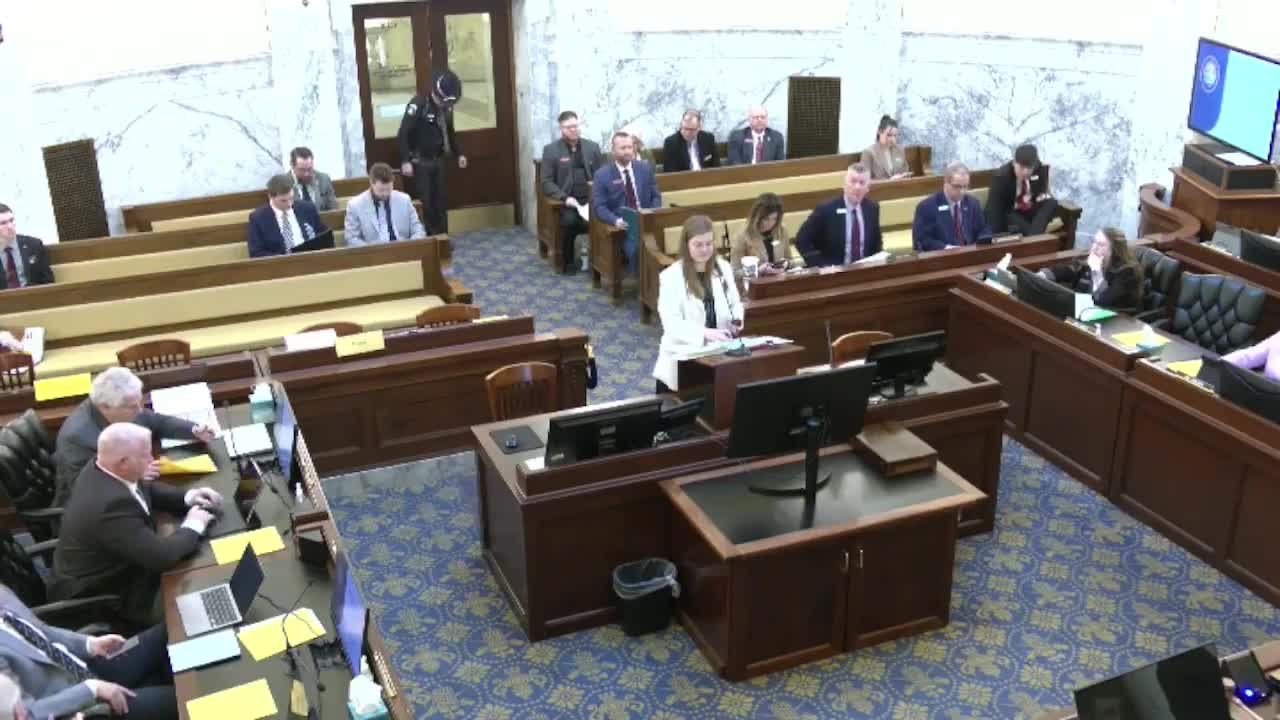
The Idaho Department of Commerce told the Joint Finance‑Appropriations Committee that it is deploying state and federal broadband dollars while continuing work to support workforce, housing and other business needs.
Brooke Dupree, a Legislative Services analyst, reviewed Commerce’s funds and structure and said the department’s broadband office was created in the prior session to increase transparency for broadband expenditures. Dupree summarized recent appropriations: a $35 million state general fund appropriation (Idaho Broadband Fund), $120 million from the capital projects fund (ARPA) that has been contracted across 18 projects, and roughly $100 million of IIJA funds previously appropriated for broadband infrastructure. She said the governor recommended moving appropriation reauthorizations into the broadband office to support project oversight.
Director Tom Kealey and his leadership team described Commerce’s broader priorities, including business recruitment, tourism and industry development. Kealey highlighted work on energy, cybersecurity, AI and supply‑chain opportunities connected to Idaho National Laboratory and other in‑state assets.
Ramon Jabe Sanchez, head of the Idaho Office of Broadband, gave a timetable for the BEAD (Broadband, Equity, Access, and Deployment) program under the federal Infrastructure Investment and Jobs Act. Sanchez said the state’s three major broadband programs are: the Idaho Broadband Fund (state), the capital projects fund (ARPA) and the BEAD program (federal). He said about $26.5 million of the $35 million Idaho Broadband Fund is already obligated and that the capital projects fund is contracted to connect approximately 35,000 homes and businesses across the state under 18 projects.
On BEAD, Sanchez said the office opened a pre‑qualification phase in calendar quarter 1 and expects to open the funding application phase in quarter 2 of the calendar year. He explained the BEAD program’s technology preference hierarchy—fiber first, then licensed fixed wireless, then alternative technologies including low‑Earth‑orbit satellite—while noting the office remains technology‑agnostic when a given approach better serves a location. “Quarter 1 of this calendar year, we opened the pre qualification phase,” Sanchez said, and “the funding application phase [will] open in quarter 2 of this calendar year.” He added officials expect to bundle and forward recommended projects to the federal government by mid‑fall to early winter so funds could move roughly a year later.
Sanchez and Commerce staff emphasized collaboration with private internet service providers and local jurisdictions. The department used a portion of federal planning funds to fund 15 local planning grants and has worked to align stakeholders around regional project planning.
Committee members asked whether BEAD would allow low‑Earth‑orbit satellite solutions (for example, Starlink) in places where fiber or fixed wireless would be cost prohibitive; Sanchez said federal guidance permits alternative technologies in some cases and that Idaho envisions a mix of solutions. A senator raised whether the recent federal executive orders might affect BEAD guidance; Sanchez said the state was “standing by for guidance” from federal partners and had not received new directives.
Commerce staff also discussed housing, childcare and workforce development as constraints for businesses and described efforts to convene partners, share best practices and use private activity bonds and other tools to support housing development.
The department’s FY2026 package included reappropriation adjustments and a transfer to add one FTP in the broadband office for oversight of distribution. No formal committee votes on Commerce’s requests were recorded during the hearing.