Get Full Government Meeting Transcripts, Videos, & Alerts Forever!
Get email alerts on the Food Labeling topic
No spam. Unsubscribe anytime.
House Ag Committee introduces bill requiring labeling for lab-grown and insect-based animal proteins
Summary
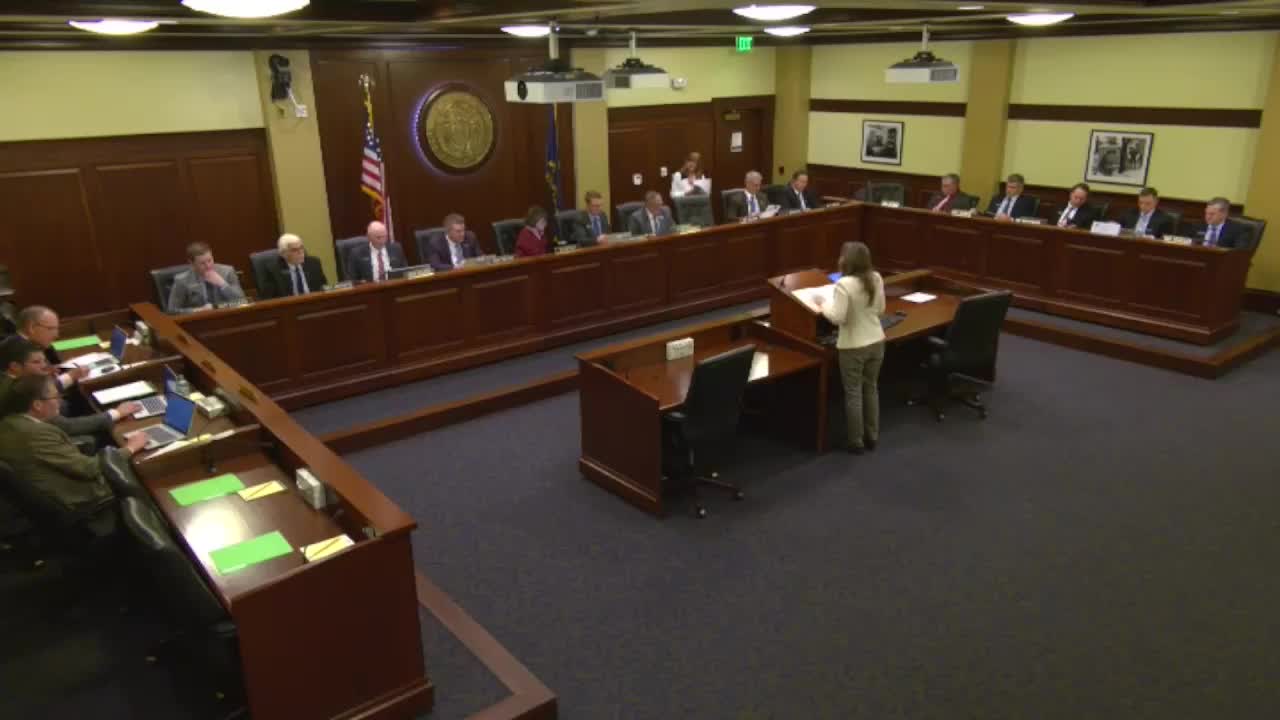
The Idaho House Agriculture Committee voted to introduce RS31941, a bill proposed by Rep. Heather Scott that would add a new chapter to Title 37 to require clear labeling of alternative animal proteins—including lab-cultured meat and insect proteins—and give the Idaho Department of Agriculture enforcement authority and penalties.
The Idaho House Agriculture Committee voted to introduce RS31941, a bill that would require clear labeling of alternative animal proteins, after a presentation by Representative Heather Scott.
Representative Heather Scott said the proposal would add a new chapter to Title 37 to establish definitions and front-of-package labeling requirements so consumers “can make an informed decision” about products made from cultured animal cells and insect-derived proteins. “I think Idahoans have the right to know what’s in the food they eat,” Scott said.
Scott told the committee the measure covers “alternative animal proteins,” which the bill text explicitly includes cultivated (lab-grown) meat and insect proteins. The bill would require common-name identification on packaging and would allow scientific names to be included; it also sets out ingredient-listing requirements and gives the Idaho Department of Agriculture (ISDA) authority to enforce compliance. The sponsor said the bill does not ban these products but seeks transparency in labeling.
Scott cited examples of companies working with insect-based ingredients and described cultivated meat as cell-cultured products that she said were approved in the U.S. in June 2023 and had appeared in restaurants but are not widely available in U.S. retail markets at present. She said the bill’s fiscal note indicates ISDA can implement the proposed enforcement with existing staff and no additional fiscal cost at this time.
Committee members asked several clarifying questions. Representative Levitt asked whether the labeling requirements would apply to institutional procurement such as school lunches and correctional facilities; Scott said she expects packaging and restaurant/menu labeling to be covered and said she would confirm and, if needed, refine the language for institutions when the bill returns for a hearing. Representative Nelson raised questions about how seafood or crustaceans would be treated and whether common names would be sufficient for menus; Scott said the bill anticipates use of common names (for example, “shrimp”) alongside scientific names where appropriate.
Members also pressed on enforcement and deterrence. Representative Raymond questioned whether a $500 penalty is sufficient for a multimillion-dollar industry; Scott said the penalty language is written as a per-item fine and that a case or packaging with many items could multiply the penalty. “It’s 500 for each protein bar,” she said, adding that per-item fines could scale depending on the quantity involved.
Scott said she has begun outreach with producer groups; she reported contacting the Farm Bureau and expected other industry stakeholders, including cattle producers, would be interested and consulted before a hearing. On federal oversight, Scott said the FDA and USDA already play roles—she said the FDA oversees cell collection and culturing and the USDA oversees harvesting, processing and labeling for certain products—but she urged state-level labeling standards to ensure consumer clarity in Idaho.
Representative Michael Garner moved to introduce RS31941. The motion carried on a voice vote; no roll-call tally was recorded.
The committee did not take other formal action on the bill at today’s meeting beyond introducing it; Scott told members she will return with refined language and additional information on coverage for institutional procurement and any other clarifications requested by the committee.
What’s next: The bill sponsor said she will arrange further stakeholder outreach and return the draft for a formal hearing where the committee can examine language, coverage, and enforcement details in greater depth.