Get Full Government Meeting Transcripts, Videos, & Alerts Forever!
Get email alerts on the Bsu Launch Dei Lawsuit Workforce topic
No spam. Unsubscribe anytime.
Boise State highlights LAUNCH enrollment, defends legal spending and promotes workforce programs to lawmakers
Summary
Boise State University President Marlene Tromp told the Joint Finance‑Appropriations Committee on Jan. 29 that 1,300 students are enrolled in the state LAUNCH program (600 rely on it as sole support), that the university used non‑taxpayer funds to defend a lawsuit and that campus changes to student‑support centers have emphasized student success.
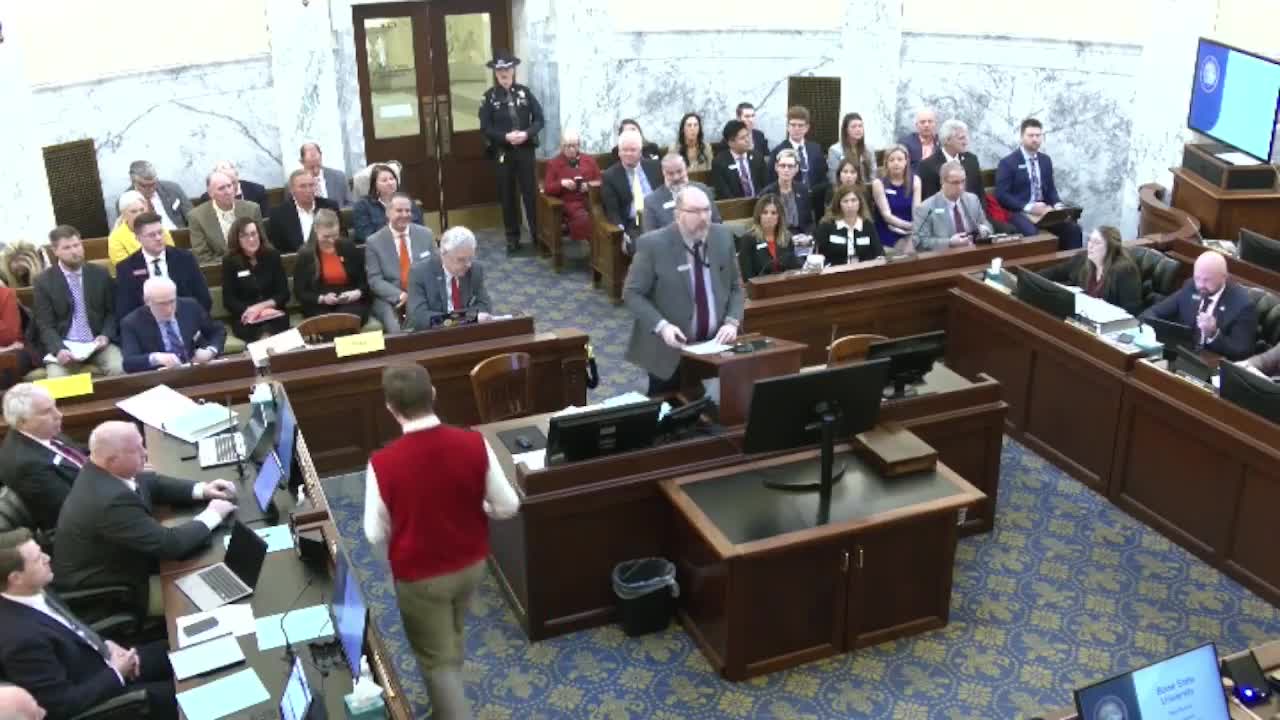
Boise State University President Marlene Tromp and Legislative Services Office analyst Kevin Campbell briefed the Joint Finance‑Appropriations Committee on Jan. 29 on BSU’s finances, program priorities and recent institutional changes.
Tromp opened by describing LAUNCH enrollment and workforce priorities. "We have 1,300 students enrolled in LAUNCH and 600 of those students have LAUNCH as their only financial support," Marlene Tromp, President of Boise State University, told the committee. She said LAUNCH is connecting students to high‑demand areas such as nursing, computer science, radiologic sciences, business, mechanical engineering, elementary education and criminal justice.
Centers, DEI changes and student success Senators asked about centers and staffing that had been tied to diversity, equity and inclusion. Tromp said the university had previously operated several centers and employed eight staff in those functions, and that those units have been transformed and in recent years reduced by five staff positions as BSU reorganized services around "student success" models. She said some work once housed in those centers has been refocused to broader student‑success efforts, and she defended the university’s approach to classroom diversity of viewpoints. Tromp noted Boise State’s faculty senate adopted the Chicago principles; she also cited Idaho Listens, a campus program aimed at civil dialogue.
Lawsuit costs and funding source Senators asked about the Big City Coffee litigation and the costs of defending the university. Tromp said Boise State used only non‑taxpayer funds to support the defense and that the university has spent about $1,500,000 on the defense to date. "We do not anticipate that the appeal will add a significant amount to that total at this time," she said. Tromp told the committee that employees who appeared at trial either served in their roles as general counsel staff or used personal leave to attend.
Federal grants, Micron/semiconductor workforce and capacity request Committee members pressed BSU on federal grants after a federal directive briefly put certain awards at risk; Tromp said the university immediately reviewed potential impacts and that much of federal grant funding is restricted to the purposes set out in the grant documents. Tromp described opportunities tied to semiconductor industry growth in Idaho and said Boise State is expanding engineering and natural‑science programs to supply the workforce for fabricators and related firms. She also listed how BSU would use extra capacity funds proposed in a statewide $25 million capacity program: nursing expansion (she estimated room to graduate 40 additional nurses per year with funding), Cyberdome cybersecurity services for rural small businesses (BSU currently funds the service and supports about 45 rural businesses) and growth in computer science, construction management and electrical/computer engineering if additional faculty FTE were funded.
Performance budgeting and student outcomes Tromp said Boise State operates under a responsibility centered management model that places budget responsibility within academic units, contributing to efficiency metrics and a balanced university budget. She highlighted gains in graduation and retention rates and said 54% of recent Boise State graduates left school with no federal student loan debt.
Next steps and committee requests Lawmakers asked for written assurances that course offerings comply with state code (citations given by members referencing Idaho statutes on dignity and nondiscrimination) and for breakdowns of litigation costs and legal‑defense spending. Tromp agreed to provide detailed follow‑up information to the committee. The hearing then proceeded to the next agenda item.