Get Full Government Meeting Transcripts, Videos, & Alerts Forever!
Get email alerts on the Liquor Division Budget topic
No spam. Unsubscribe anytime.
Idaho Liquor Division seeks pay increases for temp clerks, IT and store upgrades in FY2026 budget request
Summary
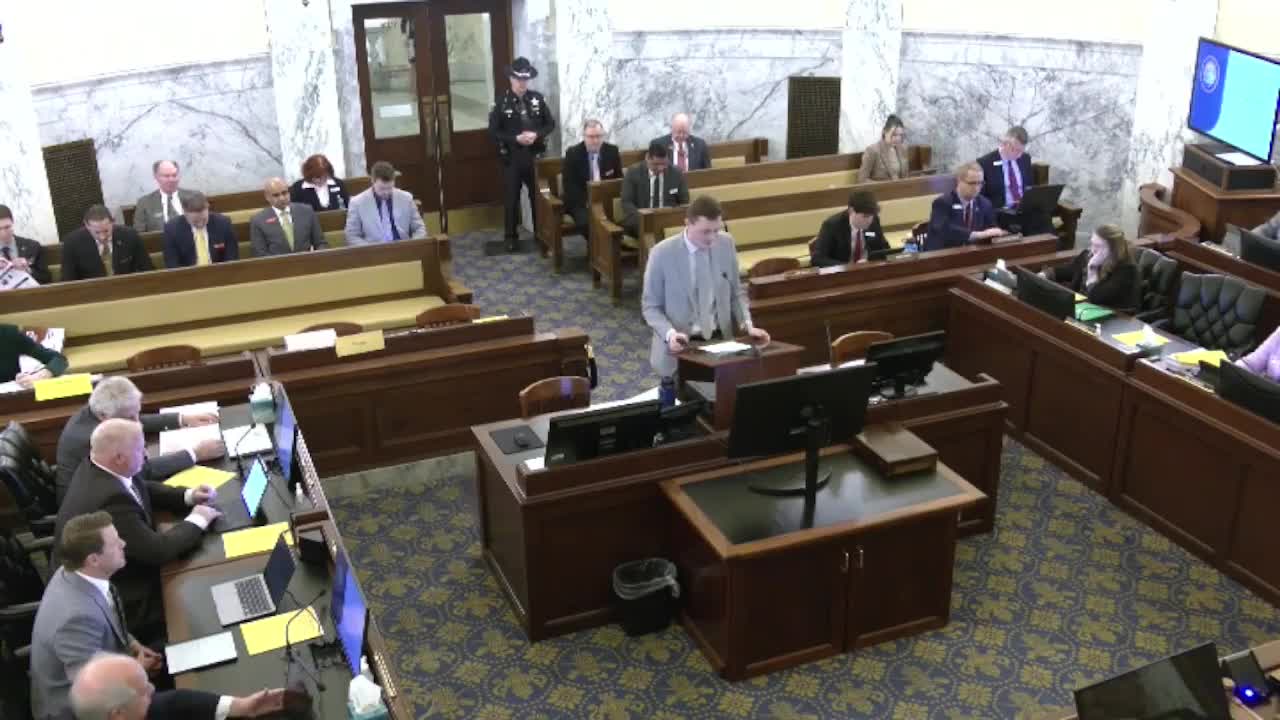
The Idaho State Liquor Division asked the Joint Finance‑Appropriations Committee on Thursday for a mix of ongoing and one‑time funding in its FY2026 budget to address staff turnover, upgrade store and warehouse equipment, and modernize information technology and security.
The Idaho State Liquor Division asked the Joint Finance‑Appropriations Committee on Thursday for a mix of ongoing and one‑time funding in its FY2026 budget to address staff turnover, upgrade store and warehouse equipment, and modernize information technology and security.
Kellen McGurkin, a budget and policy analyst with Legislative Services, told the committee the division’s statutory charge is to “optimize the net revenues to the citizens of Idaho” and reviewed the agency’s recent financial and personnel trends. He said the division distributed about $118.3 million in FY2024 under Idaho Code and reported total sales of about $319.1 million with an average net income that funded statutory distributions.
The division requested ongoing dedicated funding of $131,400, including $57,400 to raise the hourly rate for temporary retail staff from $15.00 to $15.45 and $72,000 to cover the cost of pallet shrink‑wrap required under a new freight contract. McGurkin said the division has an FTP cap of 257.25 and that it uses roughly 185 part‑time clerks who are not counted in the FTP total.
Director Andrew Arulanandam and division staff told JFAC members turnover among temporary store clerks had been high historically and remains a concern. Arulanandam said the division reduced turnover from roughly 140% per year to about 84% after earlier pay increases and other changes. “We think it’s prudent to do it one step at a time,” Arulanandam said when committee members asked whether the proposed incremental pay increases would be sufficient.
Senator Cook questioned a $100,000 one‑time request to bring the agency’s public website into compliance with web accessibility standards under the Americans with Disabilities Act. “Is it really going to cost a hundred grand to fix a menu or am I missing something?” she asked. Arulanandam replied, “There are indeed other items. I don’t have the exact list. We did consult with an expert and he gave us a list of items that we would need to upgrade to be in full compliance.” He described the item as a prudent one‑time expenditure to reduce legal risk.
On IT and security, the division requested a $200,000 one‑time appropriation to buy 70 firewalls and 70 network switches as part of a network modernization project led by the state Office of Information Technology Services (OITS). The upgrade would move stores from DSL/T1 lines to cellular 4G/5G connections using Cradlepoint routers and, according to the division’s materials, is projected to save about $100,000 in upfront hardware costs and roughly $10,000 per month compared with a hardwired alternative. The agency also requested $100,000 to upgrade its website for accessibility and roughly $980,300 in replacement items for stores and warehouse equipment.
McGurkin’s slides noted the division’s free fund balance declined from about $38 million in FY2022 to $14 million in FY2024; he attributed part of that change to higher direct‑to‑consumer sales during the COVID‑19 pandemic that produced higher margins the division has since expended. The division’s FY2024 appropriated expenditures totaled about $28.1 million, of which roughly 66% were personnel costs, 20.5% capital outlay and 12.9% operating expenses.
Committee members asked how contract liquor stores operate in communities without a state store. Arulanandam said the division supplies product to contract stores and “the labor is covered by those contract stores” under contract language. He said store location decisions are market driven and guided by state policy to avoid opening a store likely to fail.
The Liquor Division’s requests were presented as recommendations to JFAC and will be considered alongside other agency budget items; no formal committee actions or votes on the division’s requests were recorded during the hearing.
The division’s staff remained available to answer questions after the presentation.