Get Full Government Meeting Transcripts, Videos, & Alerts Forever!
Get email alerts on the Attorney General Jurisdiction topic
No spam. Unsubscribe anytime.
Committee advances bill to let Idaho Attorney General take complaints about city elected officials
Summary
House Bill 6 would extend to city elected officials the Attorney General's authority to investigate alleged criminal violations by elected local officials, mirroring an existing county statute; the committee sent the bill to the floor after witnesses said the Office of the Attorney General can handle city complaints without additional resources.
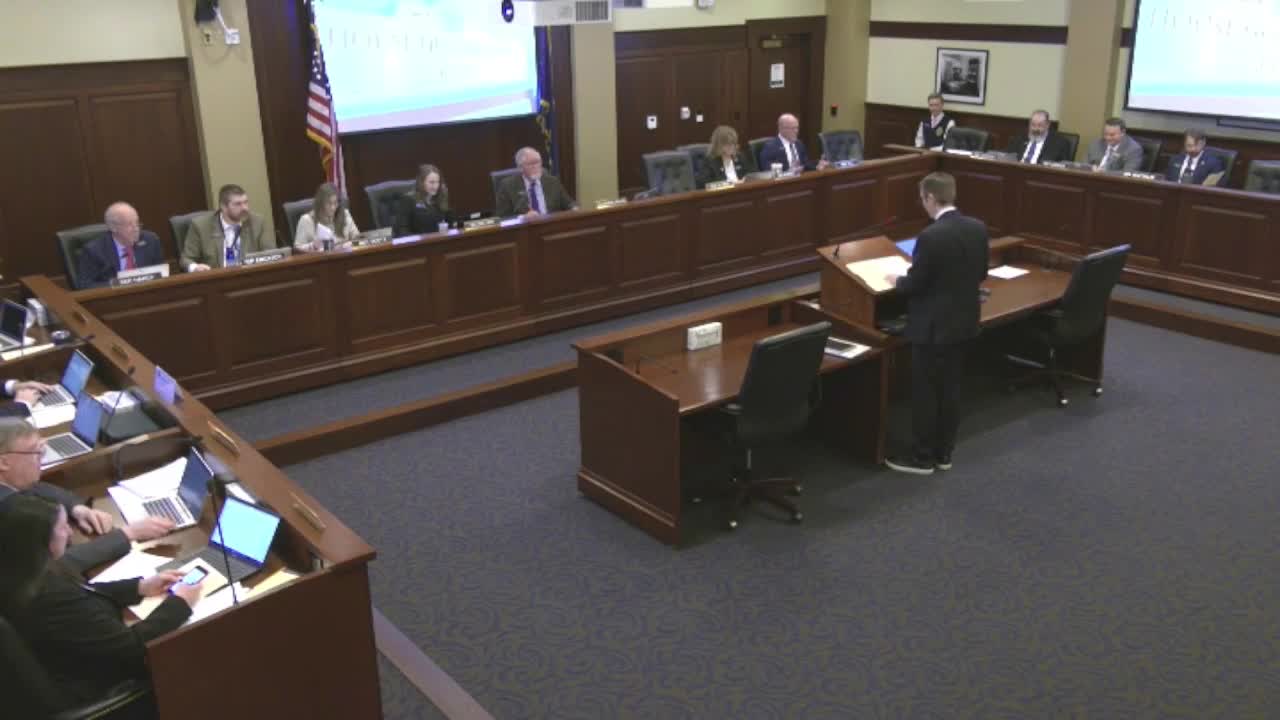
The House Judiciary and Rules Administration Committee voted to send House Bill 6 to the floor with a due-pass recommendation after hearing from the bill sponsor and officials from the Attorney General’s office.
Representative Chris Bruce (R-23rd District) introduced the bill, saying that the measure expands existing law to allow the Idaho Attorney General to accept and investigate complaints about city elected officials in the same manner it already does for elected county officials. "This bill just adds city officials to that as well," Representative Bruce said, explaining that the change is intended to give people in small cities a way to seek a review outside local chains of authority.
Jeff Nye, chief of the Criminal Law Division in the Idaho Attorney General’s office, described the office’s complaint process. Nye said his division reviews incoming complaints to ensure three conditions are met before proceeding: the subject is an elected local official, the allegation involves a violation of state criminal law, and the alleged conduct occurred in the official’s capacity. If the matter meets those criteria, it is referred to the AG’s special investigations unit; the AG then may issue a statement that no action is necessary, recommend training, or bring a criminal prosecution. Nye testified the office can handle the city-level complaints "without any additional resources," and that the office consults with county prosecutors and refers matters that fall outside AG jurisdiction.
Several committee members asked about potential conflicts of interest where local prosecutors advise or are employed by the elected body they might need to investigate. Nye said the office would continue to operate with "concurrent jurisdiction" and does not intend to supplant county prosecuting attorneys; he described situations in which county prosecutors have asked the AG’s office to handle investigations because of perceived conflicts.
Mark Taylor, a recently retired county prosecuting attorney, testified in support and described real-world examples in which county prosecutors faced conflicts when asked to investigate county officials who were also their clients for civil matters. Taylor said he welcomed the AG’s involvement in such cases.
Representative Heather Scott moved to send House Bill 6 to the floor with a due-pass recommendation. The committee approved the motion by voice vote; no roll-call was recorded in the transcript and the motion carried.
Provisions and clarifications discussed during the hearing included the statutory definition of "official capacity" (for example, using government property or claiming to act as an official), a 2014 statute that granted the AG authority over county elected officials, and later amendments that removed civil jurisdiction and left only criminal jurisdiction. Nye and others clarified that the bill would not give the AG authority over civil open-meeting law violations, which are not criminal, and that the bill’s fiscal note shows no state fiscal impact because fingerprinting and other costs are borne by requesting private entities.
The committee advanced House Bill 6 to the House floor with a due-pass recommendation.