Get Full Government Meeting Transcripts, Videos, & Alerts Forever!
Get email alerts on the Campaign Finance Transparency topic
No spam. Unsubscribe anytime.
House panel advances bill to require campaign reporting by tax-exempt groups
Summary
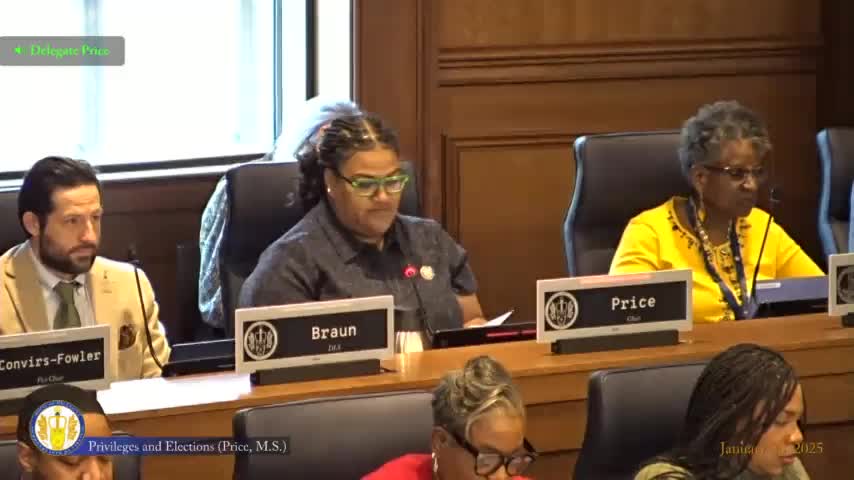
The House Privileges and Elections Committee voted 19-0 to report House Bill 2670 to Appropriations, forwarding a measure that would bring certain tax-exempt organizations under Virginia campaign-finance reporting rules if they spend to influence state elections.
The House Privileges and Elections Committee voted 19-0 to report House Bill 2670 to the Appropriations Committee after incorporating two related measures.
Delegate Sickles introduced the bill as a transparency measure aimed at tax-exempt organizations that “act like a PAC.” The bill would require a tax-exempt organization that expends funds to influence Virginia elections to file a statement of organization with the State Board of Elections, designate an “authorized filer” responsible for compliance, and submit the same periodic campaign finance reports required of political action committees. It would also require the Department of Elections to post independent-expenditure reports and authorize a joint work group of committee chairs, the Department of Elections and the attorney general’s office to study contribution limits and disclosure frameworks; that work group must provide findings to the committee chairs by November of this year.
Why it matters: supporters say the measure brings parity to campaign reporting by treating groups that spend on express advocacy like PACs. Opponents said the bill risks chilling First Amendment-protected advocacy and could sweep in organizations that do non‑electoral issue work.
Supporters who testified in the hearing included Chris Nolan of McGuireWoods, who appeared on behalf of Dominion Energy and said, “If an organization is going to act like a PAC, it should be treated like a PAC.” Nolan told the committee the bill does not require disclosure of membership lists and focuses on money solicited for express election activity.
Several civic organizations provided written or in-person support. Jessica Mott of We Have Action Virginia said she supported the bill’s reporting requirements and the joint work group. Nancy Morgan of Big Money Out said the Supreme Court’s decisions have left disclosure as the primary tool to inform voters. Joan Port of the League of Women Voters of Virginia said expanding reporting to tax-exempt groups will give voters “a more complete set of information on who is trying to influence their elections.” Karen Greenaway, a small-business owner and retired federal law-enforcement agent, said financial concealment complicates enforcement of financial-crime investigations and that the bill is a “small step” toward greater transparency.
Opponents included Chris Kaiser of the ACLU of Virginia, who said the measure raised First Amendment concerns because nonprofit organizations have constitutional protections to keep donors' identities confidential and the bill as drafted could reach some issue-advocacy activities that are not express campaign advocacy. Benjamin Knox of Americans for Prosperity said his organization would participate in a work group but opposed immediate enactment in the current short session.
Committee discussion focused on enforcement and scope. Members asked whether current staff at the Department of Elections could administer and enforce the new requirements; the bill’s patron said the change “would require relatively substantial building of their staff.” Members pressed whether 501(c)(3) charities were covered; counsel answered that the bill’s reporting trigger is when an organization acts to influence elections, and that organizations already barred from campaign intervention by federal law would not be forced to make illegal contributions. Counsel and the bill sponsor also confirmed that Super PACs organized under different IRS classifications already have FEC reporting requirements and would not be covered under this bill’s 501(c) reporting trigger.
The committee incorporated House Bill 2484 and House Bill 2,173 into HB 2670 during the session before moving the combined measure to Appropriations.
The bill’s lead sponsor said the measure would not change who may legally donate under federal law but would require disclosure and reporting where an organization participates in campaign activities.
The committee’s referral motion carried 19-0.
Votes and procedural actions recorded in the committee included two incorporations and the final report-and-refer motion. The bill now goes to the Appropriations Committee for further review.