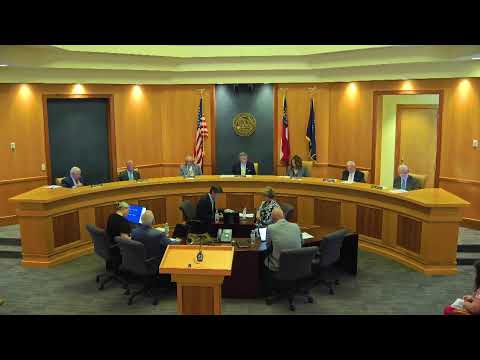
Newnan council approves resolution related to 1¢ ‘FLOSS’ referendum after presentation by city manager
Loading...
Summary
The Newnan City Council unanimously approved a resolution related to the floating local option sales tax (FLOSS) after a presentation by Mr. Phillips explaining how House Bill 581 and the tax would affect homestead exemptions, tax bills and city revenue.
The Newnan City Council on Oct. 14 unanimously approved a resolution related to the floating local option sales tax (often called “FLOSS”) after a presentation from Mr. Phillips, the city manager.
Mr. Phillips told the council that House Bill 581, passed by the Georgia General Assembly earlier in the year, created a floating homestead assessment cap that required voter approval statewide and included an opt-out for local taxing authorities. “By not opting out,” he said, “the legislators placed an option inside the legislation that allowed the communities that did not opt out to ask for an additional 1¢ sales tax called FLOSS … in order to further reduce the obligation of property tax relief.”
Mr. Phillips outlined how the county’s sales-tax composition currently works and said that if the FLOSS referendum passes in November, the combined sales tax in Coweta County would move from 7% to 8% at the cash register. He emphasized that House Bill 581’s homestead benefit applies only to homesteaded properties — “homesteaded properties meaning that you both own and live in your property” — while the additional 1¢ sales tax would apply to all taxable purchases, including many grocery items that are already taxed when they are packaged and processed.
The manager presented examples of potential effects on Newnan’s share of the tax and on individual taxpayers using the city’s current millage rate. Using the city’s current millage of 3.08, he estimated that moving the city’s millage to 0 (if warranted by FLOSS revenue) could translate to about $123 in annual savings per $100,000 of assessed value. He cautioned voters that the benefit is individualized and urged residents to consult the Georgia Department of Revenue website for details on which purchases are taxable.
Council members asked clarifying questions during the presentation. Councilmember Jenkins pressed whether the additional penny would apply to food; Mr. Phillips answered that the FLOSS penny “does apply to food packaged and processed food” and advised residents to consult the Department of Revenue for exemptions. Councilman Thomason asked about the share of purchases made by out-of-county residents; Mr. Phillips said there is no precise local figure and noted past studies using credit card and cell-phone data that suggest substantial out-of-county spending but declined to give a definitive percentage.
Mr. Phillips told the council the city’s preliminary calculations indicated that the city would receive more in FLOSS revenue than it currently collects in city property taxes and said he expected to recommend a 0% millage rate to the council in August 2026 if FLOSS passes and the council chose that option. He also said state law and guidance from the Georgia Municipal Association restrict using FLOSS proceeds to reduce property taxes and that the city could not reduce millage beyond 0% and then repurpose leftover proceeds to general services.
After discussion, the council voted on the resolution tied to the FLOSS question; the motion carried by voice vote. The resolution text was not read into the record during the portion of the transcript provided. Mr. Phillips said staff will present options for how any FLOSS proceeds could be used should the referendum pass.
The public will vote on the statewide referendum Nov. 4, with early voting already under way. Mr. Phillips and staff said they have been conducting educational presentations across the community and directing residents to the Georgia Department of Revenue for details on taxable items.
Members of the public and council were reminded that decisions about school system or county millage are separate and that each taxing authority (county, city, school) will decide individually how to apply proceeds if the statewide question and local ballot items pass.