Get Full Government Meeting Transcripts, Videos, & Alerts Forever!
Get email alerts on the Urban Renewal topic
No spam. Unsubscribe anytime.
RS 32-716 introduced to allow URD dissolution process, fire district opt‑outs and single‑owner manufacturing extensions
Summary
The committee introduced RS 32-716, a targeted set of changes to Idaho’s urban renewal district law that would create a process for cities to initiate URD dissolution, allow certain fire district opt‑outs and enable single‑owner manufacturing URDs to be extended up to 20 years.
The House Revenue and Taxation Committee introduced RS 32-716, a targeted set of changes to urban renewal district (URD) law that a sponsor said is intended to address specific concerns while leaving a fuller rewrite for later.
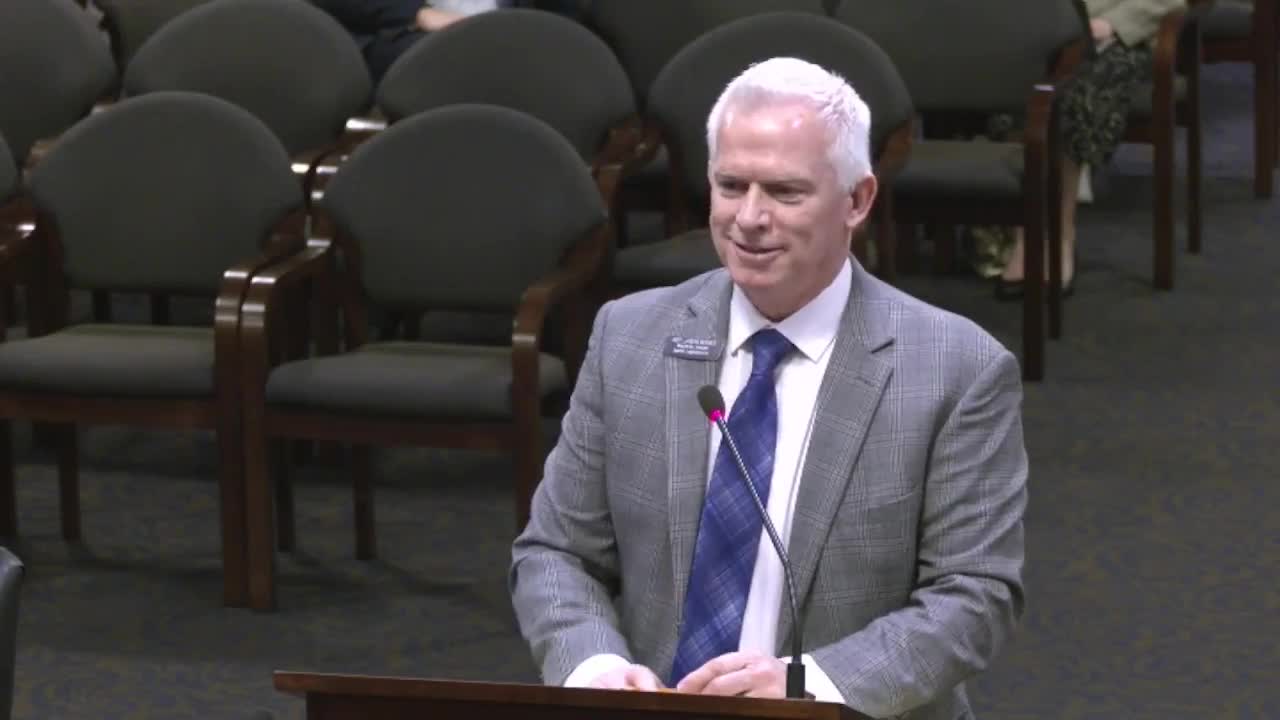
Representative Jason Monks, R‑Ada County, told the committee RS 32-716 is not a complete rewrite but makes three focused changes: it establishes a process by which a city may initiate dissolution of an existing URD (and the associated revenue allocation area), it permits fire districts to opt out of an existing URD so long as that opt‑out does not impair existing indebtedness or bond obligations, and it allows a revenue allocation area that contains property owned or controlled by a single project owner (commonly used for manufacturing sites) to be amended and extended for up to 20 years to support growth or manufacturing development.
Monks described the dissolution process as a notice and planning step: a city would notify a URD by ordinance that it is considering closure, the URD would convene and prepare a plan, and the city could ultimately adopt an ordinance to dissolve or otherwise act. On fire districts, Monks said the change would let fire districts opt out where there are no outstanding indebtedness obligations that depend on the URD allocation; new fire districts would have the option to opt in if they choose.
Monks said he worked with URD attorneys and stakeholders and expects mixed responses if the RS receives a hearing. He cited an example of a small rural fire district that lost about $300,000 due to an URD allocation area and said fire chiefs have been interested in options to protect district revenues. He also described the single‑owner URD change — found in the RS text at page 12, subsection 5 — as beneficial to manufacturing projects that may require long lead‑time infrastructure investments.
Representative Ehlers moved to introduce RS 32-716; the committee approved the motion and RS 32-716 now stands introduced. Several members voiced concern about the timing and scope: Representative Birch said the changes could have profound impacts and urged more public discussion before final action on the floor; Monks said he has been working on the measure since the prior year and would not commit to postponing floor action.
Opponents and supporters likely will appear if the RS receives a hearing; committee members said they expect to hear from city urban renewal staff, developers, fire districts and local elected officials. The RS was introduced for public airing and will be the subject of future committee debate and stakeholder comment.