
Stevenson dance teachers say SEL-focused curriculum boosted student belonging and retention
Summary
Dance teachers at Adlai E. Stevenson High School told the school board that reworking introductory curriculum to emphasize community and risk-taking increased student engagement, retention and classroom climate scores.
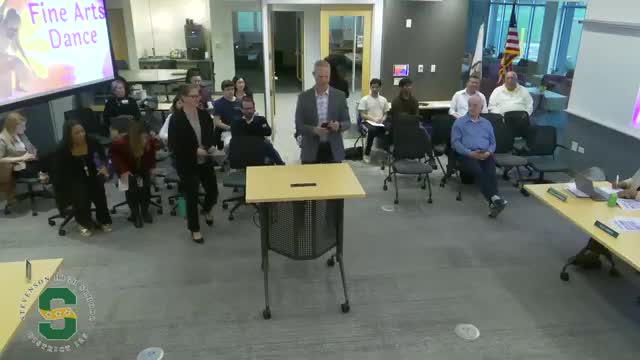
Melinda Crigler, Angela Dalton and Takki Van Cleef, dance teachers at Adlai E. Stevenson High School, told the Board of Education on May 12 that reframing Dance 1 to prioritize community and student agency led to measurable improvements in student engagement and course retention.
The teachers said they shifted curriculum after the COVID years to lead with movement and community-building rather than beginning with strict technique. "We wanted them to just try it — just leap," Crigler said, describing the approach that encouraged students to take risks and support peers. Teachers reported that students responded by taking more chances in class and cheering one another on.
Board members pressed for detail on how the social-emotional learning work connects to grading and standards. "How the SEL and the grading works together, particularly in a class like dance?" a board member asked. The presenters said standards-based assessments, frequent video review and peer feedback let students see concrete skills while the SEL emphasis helped students participate and learn. "It's constant talking and dancing and counting, yelling, music," one presenter said, describing the continuous feedback loop in class.
Teachers described specific classroom practices including structured peer evaluations, student-led teaching units in Dance 4 and Google Forms for group feedback in Dance 1. They said those strategies built students' ability to reflect, give and receive feedback, and to teach peers — all cited as drivers of increased "pedagogical effectiveness" and classroom climate on internal surveys.
The presenters also described a recent New York trip for 26 students that included master classes and performances. Two students’ stories were highlighted: a freshman who overcame reluctance to travel and returned with a new community of friends, and a transfer senior who said she learned English most in dance class because it required interaction about technique and composition.
Board members and administrators applauded the results and asked about placement for students with widely varying experience levels. The teachers said students audition over two days for placement and that multiple Dance 1 sections allow staff to meet students "where they are," including multi‑language learners and students with IEPs.
The presentation closed with board praise for maintaining technical rigor while increasing access and belonging. "They did not compromise the rigor or the integrity of the dance," one board member said.
The teachers left the board packet with sample student reflections, SLA/SPF survey excerpts and photos from class and the New York trip.

Create a free account
Unlock AI insights & topic search