Get Full Government Meeting Transcripts, Videos, & Alerts Forever!
Get email alerts on the Tax Policy topic
No spam. Unsubscribe anytime.
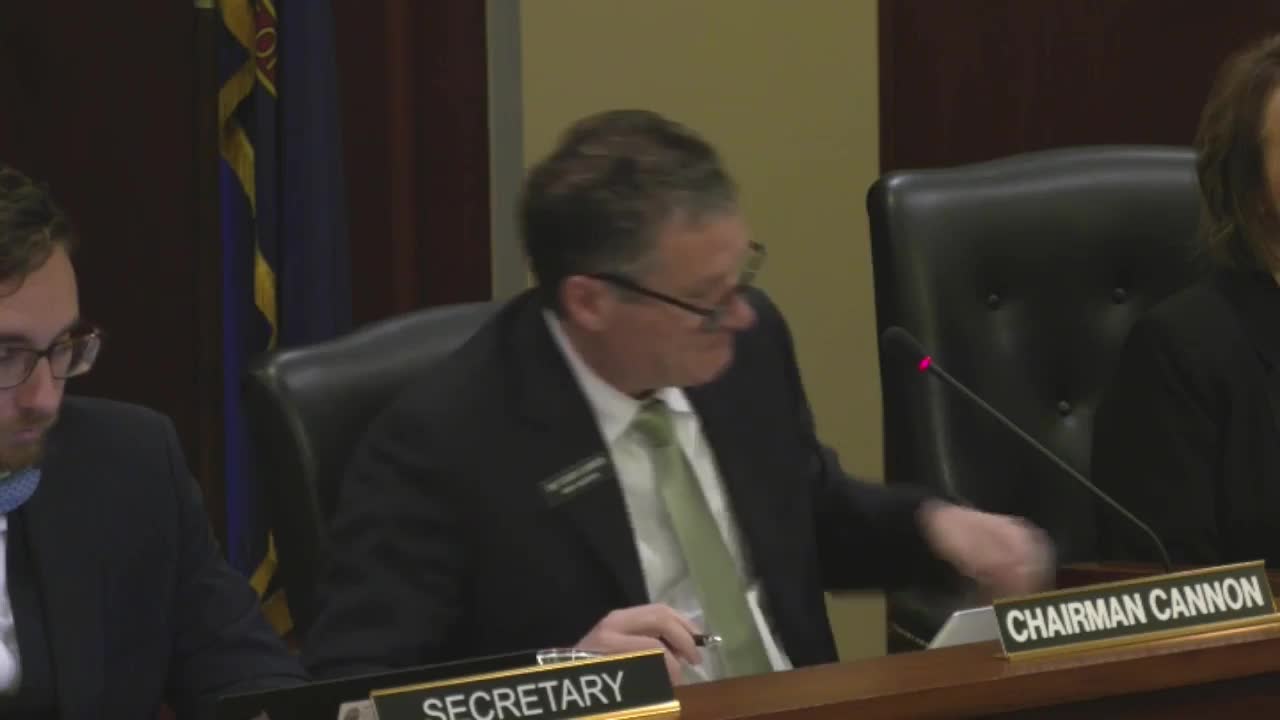
House revenue committee holds HB 412, introduces RS 32-715 to clarify tax rules and timing for $100 million property tax relief
Summary
Lawmakers held House Bill 412 for further consideration and introduced RS 32-715, a companion redraft that clarifies statute-of-limitations rules for audits, interest accrual, revenue accounting for a $330 million adjustment and timing for a $100 million property tax relief transfer to occur in calendar year 2025.
The House Revenue and Taxation Committee held House Bill 412 on a motion by Representative Shepherd and introduced RS 32-715 with a recommendation that it be placed on the second-reading calendar.
Representative Jeff Ehlers, R‑Meridian, told the committee HB 412 contains technical corrections and clarifications tied to several tax bills this session, including House Bill 40 (income tax relief), House Bill 304 (property tax relief) and House Bill 354. He asked the committee to consider HB 412 together with RS 32-715 and said the RS redrafts portions related to property tax relief.
Ehlers said the bill and redraft include multiple, limited changes: clarifying eligibility language tied to military benefits; defining when particular income tax rates commence for given tax years; aligning the statute of limitations for sales‑tax and income‑tax audits when a taxpayer has not filed returns so the tax commission generally may go back three years (with existing fraud exceptions preserved); and specifying when interest may begin to accrue during a commission audit so taxpayers are not charged while the commission is taking action.
Ehlers also addressed accounting language tied to a $330,000,000 line‑item, saying the RS makes clear that the $330 million should be treated as gross revenue and then handled like an appropriation (an expenditure) rather than being netted out of the revenue number. He said that approach keeps the dollars in the K‑12 education base consistent with existing appropriation language used for public schools.
On property tax relief, Ehlers told the committee the $100 million transfer tied to earlier legislation remains intended for taxpayers in calendar year 2025 and that the RS schedules the transfer to occur in late August 2025 so local districts can include the amount in budget work leading to 2025 property tax bills. Ehlers said the timing places the transfer in fiscal year 2026 for accounting (fiscal year 2026 runs July 1, 2025, through June 30, 2026) while delivering the relief in calendar 2025.
There was no registered public testimony on HB 412 at the committee meeting. Representative Shepherd moved to hold HB 412; the committee approved the motion. Later, Representative Jason Monks moved to introduce RS 32-715 and recommend placement on the second‑reading calendar; that motion passed and Representative Ehlers agreed to be the floor sponsor.
Committee members asked technical and policy questions during the discussion. Representative Birch asked whether the RS language in the revenue‑accounting section was reflected in HB 412; Representative Adler confirmed it was and identified the RS lines that contain the changes. Birch also asked whether the accounting wording might allow a transfer to be diverted from the fund intended in code; Ehlers and Adler said the RS uses the same appropriation phrasing historically used in public school funding bills and that it is written to keep the funding directed to public schools.
The committee did not take a final vote on HB 412; the RS was introduced and will proceed to the second‑reading calendar for further floor consideration.
Action items recorded in committee minutes include the motion to hold HB 412 (mover: Representative Shepherd) and the motion to introduce RS 32-715 and recommend it be placed on the second reading calendar (mover: Representative Monks).