Get Full Government Meeting Transcripts, Videos, & Alerts Forever!
Get email alerts on the Cyanidation Permitting topic
No spam. Unsubscribe anytime.
Committee sends cyanidation permitting bill to floor after industry and conservation testimony
Summary
Senate Bill 1170, which clarifies permitting, engineering and public-notice requirements for cyanide ore processing in Idaho, was sent to the House floor with a due-pass recommendation after industry and conservation groups testified.
The House Resources and Conservation Committee voted to send Senate Bill 1170 to the House floor with a due-pass recommendation after brief testimony from mining-industry and conservation representatives.
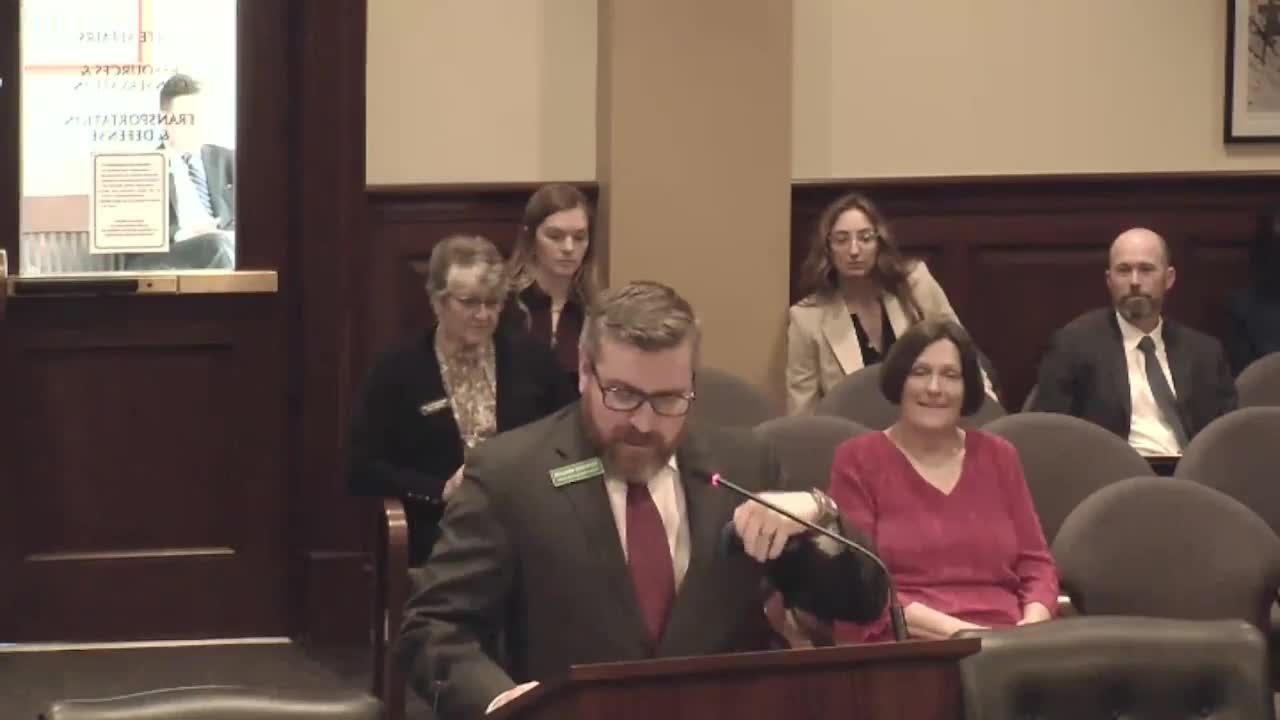
The measure clarifies how the Idaho Department of Environmental Quality (DEQ) and other agencies review and permit ore-processing facilities that use cyanidation, and it updates permitting timelines, design-detail expectations and public-notice steps in state code, Benjamin Davenport, executive vice president of the Idaho Mining Association, told the committee.
“Senate Bill 1170 tries to address these questions by bringing current industry practices and environmental standards into Code while also providing clarity to the application and permitting process,” Davenport said. He told the committee the bill does not expand authorization for cyanide use beyond what existing state law allows and that it does not relax environmental protections.
Davenport outlined several changes in the bill: clearer environmental targets to protect beneficial uses and water quality; staged review so DEQ can require more design detail at later steps; coordination to avoid duplication with other state permits; and a mechanism to allow applicants and DEQ to extend statutory review timelines by agreement. He also said the bill authorizes multiple public notices and comment periods and folds some rule provisions into statute.
Jonathan Oppenheimer, government-relations director for the Idaho Conservation League, testified in opposition to the bill’s current language on process grounds. Oppenheimer said conservation stakeholders had participated in a prior negotiated-rulemaking process and believed rules adopted in 2019–2020 reflected extensive public input. He told the committee that SB 1170 “effectively rewrites those negotiated rules” without full stakeholder participation and that it lacks explicit protections or clarity for public health, safety and wildlife impacts.
After the presentations, Representative Mickelson moved to send the bill to the floor with a due-pass recommendation. The motion carried on a voice vote; the chair announced the ayes had it and the bill will be sent to the House floor.
The bill drew limited testimony at the committee: proponent testimony from the Idaho Mining Association and cautionary testimony from the Idaho Conservation League. Proponents emphasized negotiated drafting with DEQ and said the bill streamlines permitting and clarifies responsibilities; opponents urged more public-process safeguards and clearer language on wildlife and public-health protections.
Votes at a glance: committee moved SB 1170 to the House floor with a due-pass recommendation.