Get Full Government Meeting Transcripts, Videos, & Alerts Forever!
Get email alerts on the Small Seller Sales Tax topic
No spam. Unsubscribe anytime.
House committee backs bill exempting small sellers from sales-permit requirement up to $5,000
Summary
The House Revenue and Taxation Committee voted Feb. 10, 2025, to send House Bill 144 to the full House with a due-pass recommendation. The bill defines a "small seller" as an Idaho resident whose cumulative annual sales do not exceed $5,000 and exempts those sellers from obtaining temporary or regular sales permits, with specified exclusions and recordkeeping requirements.
BOISE, Idaho — The House Revenue and Taxation Committee voted Feb. 10, 2025, to send House Bill 144 to the full House with a due-pass recommendation. The bill defines a "small seller" as an Idaho resident whose cumulative annual sales do not exceed $5,000 and exempts those sellers from obtaining temporary or regular sales permits, with specified exclusions and recordkeeping requirements.
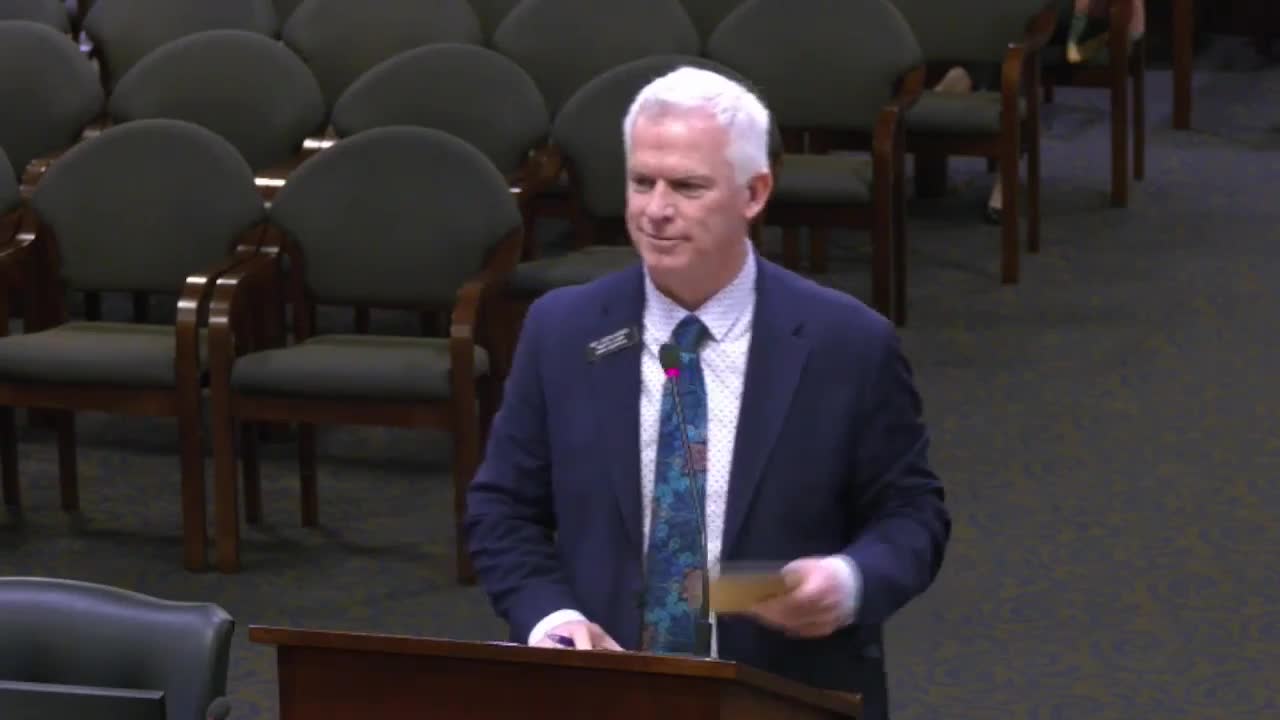
Representative Jason Monks, R.-District 22, told the committee HB 144 “creates what’s called a small seller” and emphasized it “does not create a small seller’s permit; it just identifies what a small seller is.” Monks said the $5,000 threshold is intended to cover occasional, low-volume sellers such as garage-sale hosts, lemonade stands and individuals selling used household items online.
Under the bill text Monks presented, certain items are excluded from the exemption, including motor vehicles, trailers, utility terrain vehicles, snowmobiles and aircraft. The fiscal note attached to the bill estimated a reduction to the general fund of less than $1 million while noting Idahoans would save an estimated more than $1.2 million in aggregate. Monks told the committee the tax commission’s recommended language produced the exclusions and that he did not intend the bill to alter existing regulatory treatments for items that have separate code provisions.
Committee members pressed the sponsor on several points. Representative Raymond asked why alcohol and tobacco were listed as excluded items and whether vape products were covered; Monks said the exclusions reflected language recommended by the Idaho State Tax Commission and that the bill could be revisited if vape-product treatment becomes a concern. Representative Raymond also asked how the bill treats a seller who exceeds the threshold mid-year; Monks said the intent is that the seller must report and pay tax on the full amount once the $5,000 threshold is exceeded — the bill is not intended to exempt only the first $5,000 so taxpayers would not deliberately delay permit registration.
Representative Muggs questioned details in the fiscal note and recounted that the tax commission estimated it takes 14 minutes to process a permit annually; based on 10,701 such permits the commission calculated that time saved would equal roughly 1.5 full-time positions. Monks said the bill’s purpose is to reduce administrative burden for individuals and “provide some freedom for the citizens out here,” not to drive staffing reductions at the tax commission.
Representative Shepherd moved that the committee forward HB 144 to the House with a due-pass recommendation. Shepherd also commented in favor, saying the bill "smells like freedom" and arguing small charitable sales should not be subject to burdensome permitting. No members of the public signed up to testify. The committee approved the motion by voice vote; the chair recorded the motion as carried unanimously.
If enacted, HB 144 would require small sellers to maintain records sufficient to demonstrate their cumulative annual sales do not exceed the $5,000 limit and would not apply to entities that permanently occupy a place of business or maintain distribution/sales facilities. The committee did not record further amendments or an exact roll-call vote in the hearing transcript; the bill now proceeds to House floor consideration.