Get Full Government Meeting Transcripts, Videos, & Alerts Forever!
Get email alerts on the Income Tax Reduction topic
No spam. Unsubscribe anytime.
House committee advances major income tax cut, exempts some military pensions and carves out bullion gains
Summary
The Idaho House Revenue and Taxation Committee on Jan. 30 voted 12–2–1 to advance House Bill 40 to the full House; the bill lowers the state individual income tax rate, expands exemptions for military retirement pay and creates a carve‑out eliminating state tax on gains from certain monetized bullion transactions.
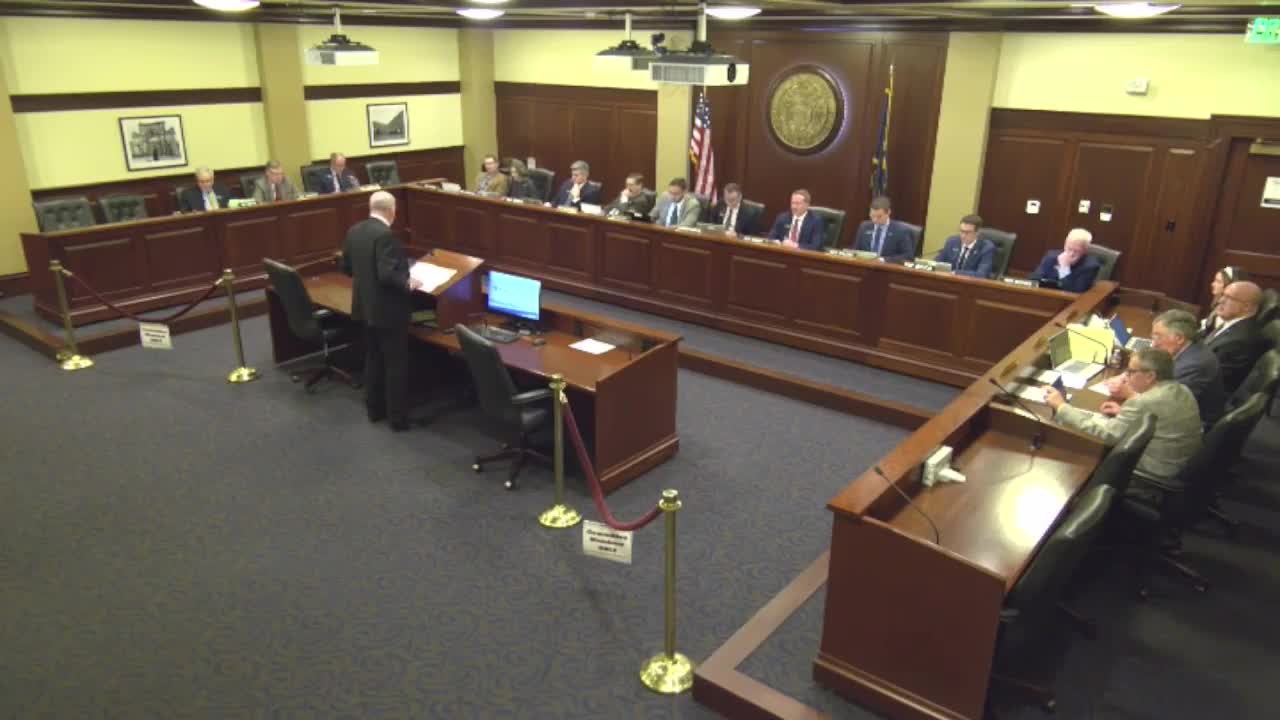
The Idaho House Revenue and Taxation Committee on Jan. 30, 2025, voted 12–2–1 to send House Bill 40 to the full House with a due‑pass recommendation. The bill, sponsored in committee by Speaker Mike Moyle (District 10, Star), would lower Idaho’s individual income tax rate, expand exemptions for military retirement pay and remove state tax on gains from certain monetized bullion and precious‑metal transactions.
Speaker Mike Moyle told the committee the bill is the first of three tax‑relief proposals this session and described it as the latest in a multiyear effort: “The last 6 years the legislature's provided about $4,600,000,000 in tax relief. This year before this committee, we've proposed 3 different bills that propose an additional $400,000,000 in tax relief. This is the first of the 3. This 1 deals with income tax relief.” Moyle summarized the bill’s key provisions: it lowers the income tax rate from 5.695% to 5.3%; it exempts disabled military retirement pay from state income tax at all ages (saying that previously that exemption applied only above age 62); and it eliminates state taxation on gains from certain bullion/monetized precious‑metal transactions.
Moyle framed the change as both fiscal policy and economic development, saying the state can afford $253 million in tax relief and that returning revenue to taxpayers will support economic growth. He warned members they will hear familiar criticisms about affordability but emphasized the legislature’s constitutional role over the budget.
The committee read three pieces of remote written testimony into the record and heard one in‑person speaker. Supporters included Yori De La Rosa (vice president, Idaho Veterans Chamber of Commerce) and Damon Durace (Coeur d'Alene), both urging passage to attract and retain military retirees and their skills. Yori De La Rosa’s submitted testimony said, in part, that eliminating tax on military pensions is “critical not only as a show of appreciation for our veterans, but as a strategic economic policy that strengthens Idaho’s workforce and economic competitiveness.” Damon Durace, who identified himself as the commander of American Legion Coeur D’Alene Post 14, also wrote in support.
Opposing points came in written testimony from Zach Wilson (District 20), who objected to the rate reduction and to what he described as a carve‑out that treats gains on certain bullion transactions differently from Idaho’s existing capital‑gains deduction. Wilson recommended separating the bullion language into a different bill and raised concerns about drafting and age‑based limitations on disability status in the current text.
Fred Birnbaum of the Idaho Freedom Foundation testified in person in favor of House Bill 40 and presented state fiscal data (DFM and LSO materials) arguing projected ending cash balances and revenue growth mean the state can accommodate the proposed tax relief. Birnbaum said the state’s projected ending cash balance is about $1.6 billion and argued that tax cuts are “dynamic” and can spur additional revenue by attracting residents and business activity.
Representative Birch offered a substitute motion to hold the bill in committee at the call of the chair, arguing more information was needed on long‑term revenue needs such as roads, school maintenance and other obligations and expressing concern about equity in who benefits from the proposal. Representative Monks and others opposed the substitute motion, arguing the legislature should return money to taxpayers to spur economic growth; Representative Monks said, “We want the people out there with the money, not the government with the money.” The substitute motion was defeated on a voice vote and the committee proceeded to a roll‑call vote on the due‑pass motion.
The committee’s roll call on the motion to send House Bill 40 to the Floor with a due‑pass recommendation recorded 12 yes, 2 no, 1 absent/excused. The two recorded no votes were Representative Gannon and Representative Birch. The floor sponsor will be Representative Monks.
What the bill would do if enacted: According to the sponsor’s presentation, House Bill 40 would reduce the income tax rate from 5.695% to 5.3%, broaden state tax relief for military retirement pay (including disabled retirees at younger ages than the current age‑based rule), and exempt gains on certain monetized bullion and precious‑metal transactions from state income tax. Opponents urged caution on the rate reduction and on the bullion carve‑out; supporters argued the changes would attract military retirees and expand Idaho’s workforce.
Next steps: House Bill 40 was advanced out of committee to the Floor with a due‑pass recommendation for further debate by the full House. Implementation, fiscal details and any drafting adjustments will be addressed in subsequent committee and floor proceedings, and opponents asked for separate bills or amendments to address some carve‑outs and equity concerns.
Votes at a glance: The committee approved the due‑pass motion on House Bill 40 by roll call (12 yes, 2 no, 1 absent/excused).