Get Full Government Meeting Transcripts, Videos, & Alerts Forever!
Get email alerts on the Education Tax Credit topic
No spam. Unsubscribe anytime.
Committee introduces parental choice tax credit bill that names micro‑schools and learning pods
Summary
The Idaho House Revenue and Taxation Committee on Jan. 30 introduced RS 32,116, a draft parental choice tax credit that names micro‑schools and learning pods, adds accreditation or portfolio requirements and a parental survey, and expands the public‑enrollment exclusion to part‑time public students.
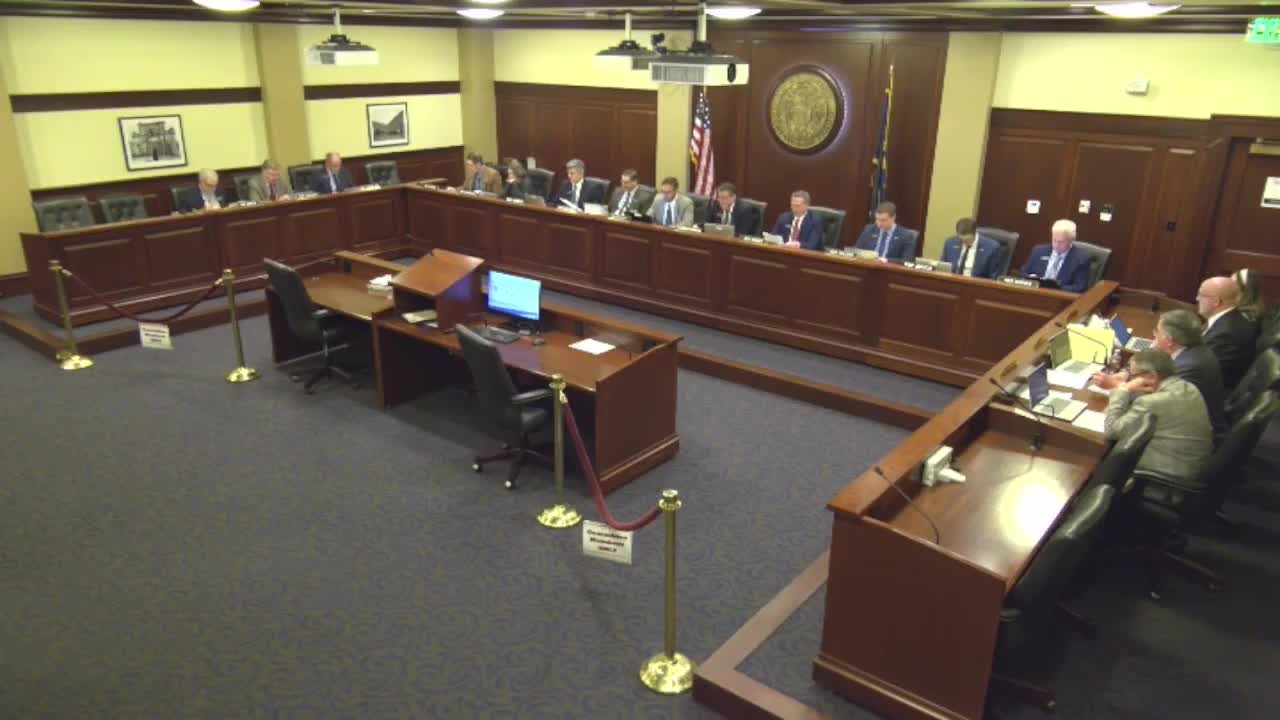
The Idaho House Revenue and Taxation Committee on Jan. 30, 2025, voted to introduce RS 32,116, a draft parental choice tax credit bill sponsored by Representative Wendy Horman of District 32 in Bonneville County.
The draft explicitly calls out nonpublic micro‑schools and learning pods, requires those programs to be accredited or to maintain a documented portfolio showing instruction in math, science, reading and history, removes an ambiguously worded “other educational materials” category, and requires participating parents to complete a satisfaction and engagement survey. The bill also expands an eligibility restriction that previously barred students enrolled full time in public school to now bar both full‑time and part‑time public‑school students; the sponsor noted that “part time is defined as 2.5 hours in the state of Idaho under our current funding formula,” so students taking one or two public classes could still qualify.
Representative Horman said the draft contains adjustments made after colleague feedback and described those changes as clarifications: “Those changes include the definition of non public school to now call out specifically micro schools or learning pods,” she told the committee, and added the accreditation/portfolio and survey requirements when she introduced the RS.
During debate Representative Gannon raised fairness concerns about administrative timing and the potential for disparity between filers who can submit documentation earlier (for example, self‑employed filers using Schedule C) and those who must wait for third‑party forms such as W‑2s. Gannon asked whether the bill directs the Idaho State Tax Commission to adopt rules addressing those implementation issues; Representative Horman said she would “be happy to get into the details of the bill” and to address those issues if the committee advances the measure to a full hearing.
The motion to introduce RS 32,116 was made by Representative Monks. The chair recorded two nays—Representative Gannon and Representative Birch—and the motion carried; RS 32,116 stands introduced.
The committee did not take final action on policy language beyond introduction. Representative Horman and members indicated the RS will return for a full hearing if the committee chooses to advance it, where the Tax Commission rulemaking question and other implementation details can be addressed.
Votes at introduction: The committee recorded two members as voting no (Representative Gannon and Representative Birch); the chair announced the motion carried and RS 32,116 was introduced.
How this matters: The draft narrows and clarifies which nonpublic instructional settings would qualify for the proposed credit and adds documentation and parental‑reporting requirements. Questions about administering eligibility and the potential for timing‑based disparities were raised and were left for a later hearing, per the sponsor.