Get Full Government Meeting Transcripts, Videos, & Alerts Forever!
Get email alerts on the Unemployment Insurance topic
No spam. Unsubscribe anytime.
Department of Labor seeks $7.33 million in dedicated spending authority as federal UI funding declines
Summary
The Idaho Department of Labor requested $7,330,000 in dedicated-fund spending authority for unemployment insurance operations and a $4,868,600 cash transfer between agency funds; lawmakers asked for staffing and program detail and the director described the trust fund status and benefit-duration rules.
The Idaho Department of Labor asked the Joint Finance for Appreciation Committee to approve increased dedicated-fund spending authority to sustain unemployment insurance operations as federal pandemic-era grants decline.
Brooke Dupree, legislative budget analyst, outlined the department’s request: $7,330,000 ongoing for unemployment insurance operations (to offset lower federal grant funding), a proposed cash transfer of $4,868,600 from the unemployment penalty and interest fund back into the employment security fund, and $161,000 for office hardware. Dupree said the requested cash transfer would reduce the department’s projected ending fund balance by about $4 million in fiscal year 2026 under the presented estimate.
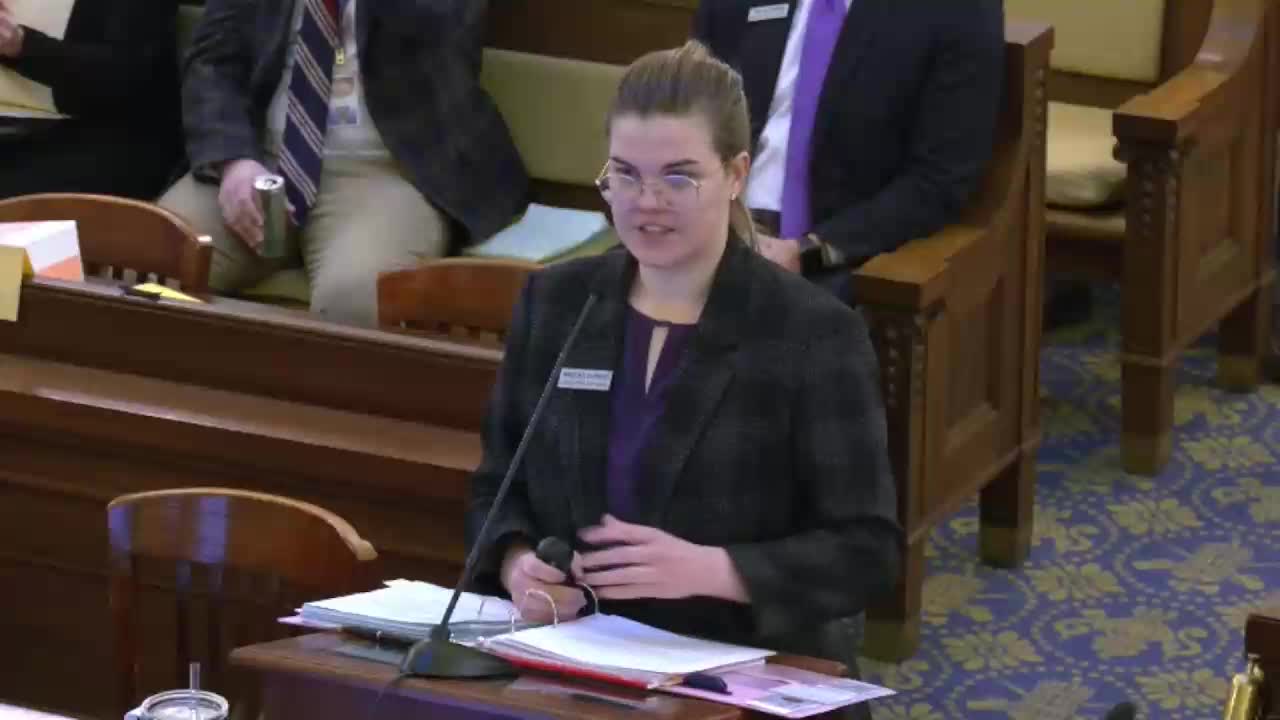
Why it matters: Director Janie Rivera told the committee the department relies on a federal–state partnership for UI administration and that federal grant support has fallen since the pandemic. Rivera said the $7.33 million is requested as dedicated-fund authority (not general fund) so the department can maintain core determinations, compliance and appeals work if federal grant levels remain low. She described the state trust fund as solvent and explained how benefit durations are indexed to unemployment rates.
What the department told lawmakers: Rivera said Idaho has a large unemployment trust fund and described options if the trust fund is exhausted: borrowing from the federal government or issuing bonds (both are established contingency mechanisms used by states during major recessions). She told the committee, "We have about a billion dollar trust fund," and said current projections show Idaho "has a very solvent trust fund and no need for significant tax increases." The director also explained benefit-duration indexing: in Idaho, the typical duration ranges from a statutory low (about 10 weeks for intermittent earners) to a statutory maximum (20–26 weeks depending on unemployment rate); at the time of testimony the department calculated a 21-week maximum for eligible claimants based on a 3.7% unemployment rate.
Questions and follow-up: Committee members asked for more precise staffing and expenditure figures (how many baseline positions, pandemic-era hires and how staffing would fluctuate in downturns). The department said some pandemic hires were for adjudicators and claim specialists and agreed to provide the committee with actual headcount and spending detail. Lawmakers also asked whether the $7.33 million would be used to keep current staff employed (the director said yes, it is intended to support existing staff as federal grant levels decline).
Ending: The director said the department will follow up with concrete staffing and category-by-category spending numbers for legislators. The committee did not take a formal vote during the hearing; members indicated they want the additional documentation before final appropriation action.