Get Full Government Meeting Transcripts, Videos, & Alerts Forever!
Get email alerts on the Military Division Hazmat Communications topic
No spam. Unsubscribe anytime.
Idaho Military Division seeks supplemental funds for communications, vehicles and hazmat teams
Summary
The Military Division told the Joint Finance-Appropriations Committee it needs supplemental appropriations to clear a vehicle backlog, modernize public-safety communications, and replace 20-year-old hazardous-materials response equipment across seven regional teams.
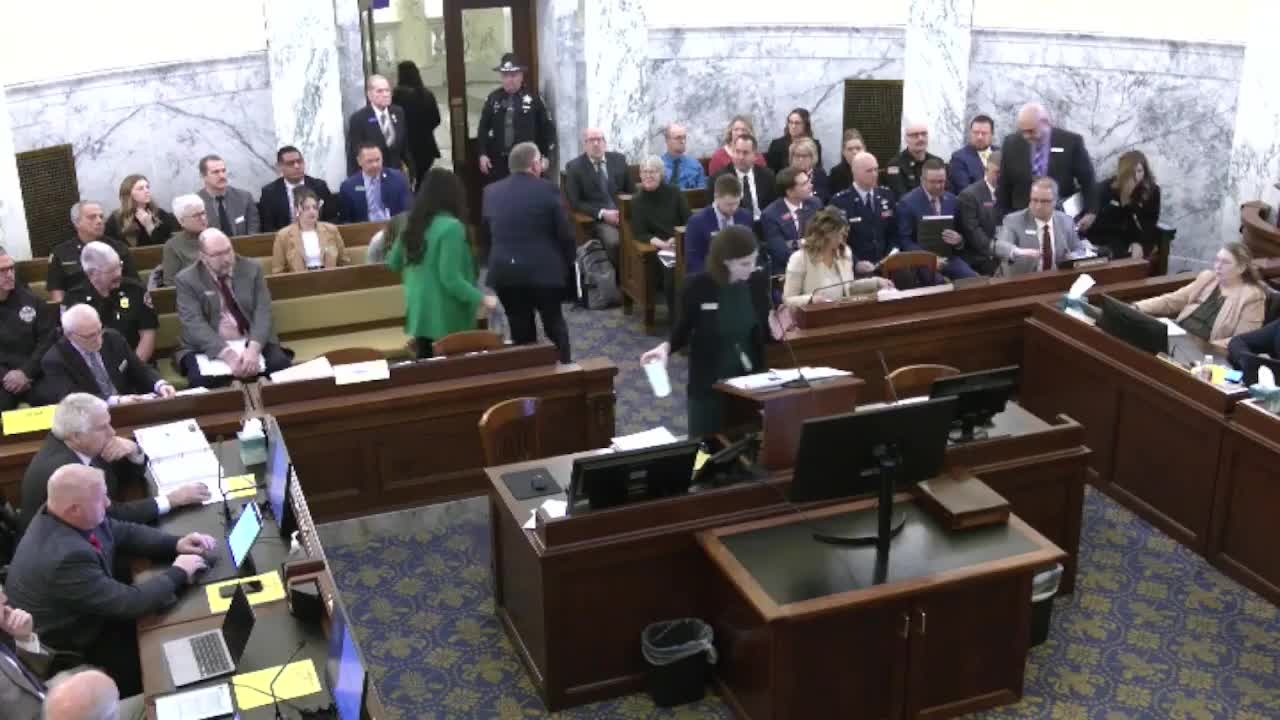
Frances Lippitt, budget and policy analyst for the Legislative Services Office, summarized the Idaho Military Division’s budget and the governor’s recommended supplemental and enhancement items for FY 2026 before Major General Tim Donnellan, the state’s adjutant general, answered questions from the Joint Finance-Appropriations Committee.
The division asked for both one-time and ongoing adjustments to address a backlog of vehicles that could not be upgraded earlier because of industry chip shortages, to modernize public-safety communications infrastructure, and to update regionally staged hazardous-materials response equipment the division said has not been replaced since about 2005.
Why it matters: The supplemental requests are tied to public-safety capabilities — vehicles used by Idaho State Police and other agencies, the microwave-based public-safety communications network, and hazmat response teams that serve multi-county regions.
What the division told lawmakers
- Vehicle backlog and installation capacity: Lippitt and Major General Tim Donnellan said the division and law-enforcement partners received a sudden influx of vehicles once chips became available, creating a backlog of vehicles needing communications packages. The governor recommended funds to pay a private contractor (estimated $240,000) to clear the backlog and about $300,000 for construction work to add installation bays. Donnellan said the contractor route is necessary to clear the backlog quickly and that additional bay space will reduce future bottlenecks. "We do need to get those vehicles," Donnellan said.
- Public-safety communications and IT: The governor recommended approximately $759,200 for IT infrastructure and licensing to allow public-safety communications to establish a network independent of the statewide ITS network, and to modernize hardware to improve security.
- Hazmat regional response: The governor recommended an $8,600,000 appropriation (via cash transfer from the state emergency relief fund) for the Office of Emergency Management to distribute to regional hazardous-materials response teams. Donnellan said regional teams have used the same equipment since about 2005 and the funding would purchase modern, standardized gear across seven regional teams.
- Continuous and deficiency items: The division requested a FY 2025 deficiency warrant of about $34,200 for hazardous-substance response costs it was unable to recoup from incident originators.
Questions from committee members
Lawmakers pressed the division on timing and whether supplemental requests could instead be included as FY 2026 enhancements. Donnellan and staff said the vehicle backlog and urgent communications needs justified supplemental timing; they argued they can spend and execute the vehicle contracts and construction projects within the fiscal year. Committee members also asked about long-term staffing and whether private contractors are a cost-effective long-term solution; the general said contractor work is roughly twice as expensive per vehicle and that quality-control concerns have required in-house checks of contractor-installed packages.
Program context
The military division reported roughly 430 authorized FTE and a federal-state program that accounts for a large portion of its expenditures. The Office of Emergency Management distributes federal disaster aid and supports 9-1-1 dispatch upgrades; the division is pursuing fund shifts and replacements recommended by the state Office of Information Technology Services.
Ending
The committee did not take formal action during the hearing. Staff and division leaders said they would provide follow-up materials and that the governor’s recommended supplementals are intended to address equipment and public-safety backlogs the division described as urgent.