Get Full Government Meeting Transcripts, Videos, & Alerts Forever!
Get email alerts on the Insurance Market topic
No spam. Unsubscribe anytime.
JFAC reviews Department of Insurance budget; lawmakers probe PBM compliance, wildfire impacts and proposed homeowner resilience pool
Summary
The Department of Insurance presented its FY2026 enhancement requests including a staff actuary, regulatory compliance role, pay increases for fire marshal staff and capital outlay for fire response; director described PBM oversight work, high‑risk reinsurance and concern about wildfire‑driven insurance market tightening.
The Joint Finance Appropriations Committee on Jan. 21 heard from the Department of Insurance about its FY2026 budget priorities and ongoing implementation of last year’s pharmacy benefit manager reform.
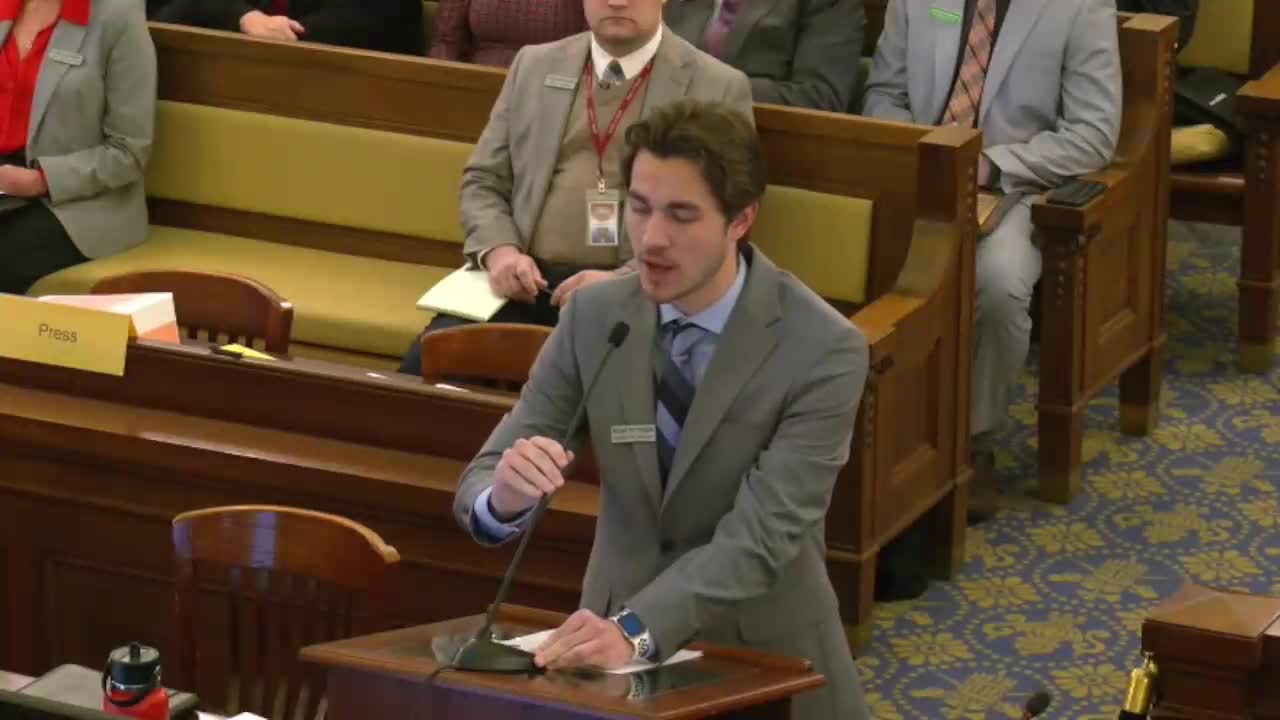
Noah Peterson, budget and policy analyst with the Legislative Services Office, told the committee the department has 75.5 approved full‑time positions, with 63.5 in insurance regulation and 12 in the state fire marshal division. Peterson said the department reverted just under $2.2 million in FY2024: roughly $917,000 in personnel and $1,277,000 in operating expenditures.
Dean Cameron, director of the Department of Insurance, told committee members the agency is implementing House Bill 596 and has received a trailer appropriation of one full‑time position and $132,400 to support PBM oversight. "She's receiving numerous complaints," Cameron said of the new PBM analyst, referring to the range of issues from dispensing fees to contract and responsiveness problems. He said most PBMs have submitted required data but the department is working with those who have not.
Cameron also described the state’s use of a Section 1332 waiver with the federal government and a high‑risk reinsurance pool that the department maintains. He said the high‑risk pool acts "as reinsurance" to help spread the cost of expensive claims and has contributed to more carriers participating in Idaho’s individual market and to moderating rate increases.
The department’s FY2026 enhancement requests include a staff actuary (requested at roughly $201,900 ongoing), a regulatory compliance specialist to serve as an internal legal resource, a compensation increase for the state fire marshal and deputies ($48,100 ongoing from the Arson, Fire and Fraud Prevention Fund), and $162,200 in one‑time capital outlay for state fire marshal replacement equipment (including turnout gear, cameras and two medium‑duty pickup trucks).
Committee members pressed Cameron about wildfire‑driven market changes. "We started seeing forest fires in California, Oregon, Colorado and it started a tightening of the property insurance market," Cameron said, linking national catastrophic losses, inflationary costs and rising reinsurance prices to capacity issues that can push consumers into the surplus lines market. He said Idaho has seen more nonrenewals and that surplus lines — which have fewer consumer protections — have more than doubled in volume.
Cameron described draft legislation the department is proposing to create a pool that would fund mitigation to harden homes against wildfire and help carriers remain in the state. "The first function is to help homeowners harden their homes... The second part is to help maybe act as a mechanism to help carriers stay here," he said.
No formal committee action or vote was recorded at the hearing. Members asked the department for additional data, including complaint counts and PBM compliance metrics, to track implementation and outcomes.