Get Full Government Meeting Transcripts, Videos, & Alerts Forever!
Get email alerts on the Invasive Species Quagga Mussel topic
No spam. Unsubscribe anytime.
Idaho Department of Agriculture highlights quagga mussel spending, seeks pay structure for investigators
Summary
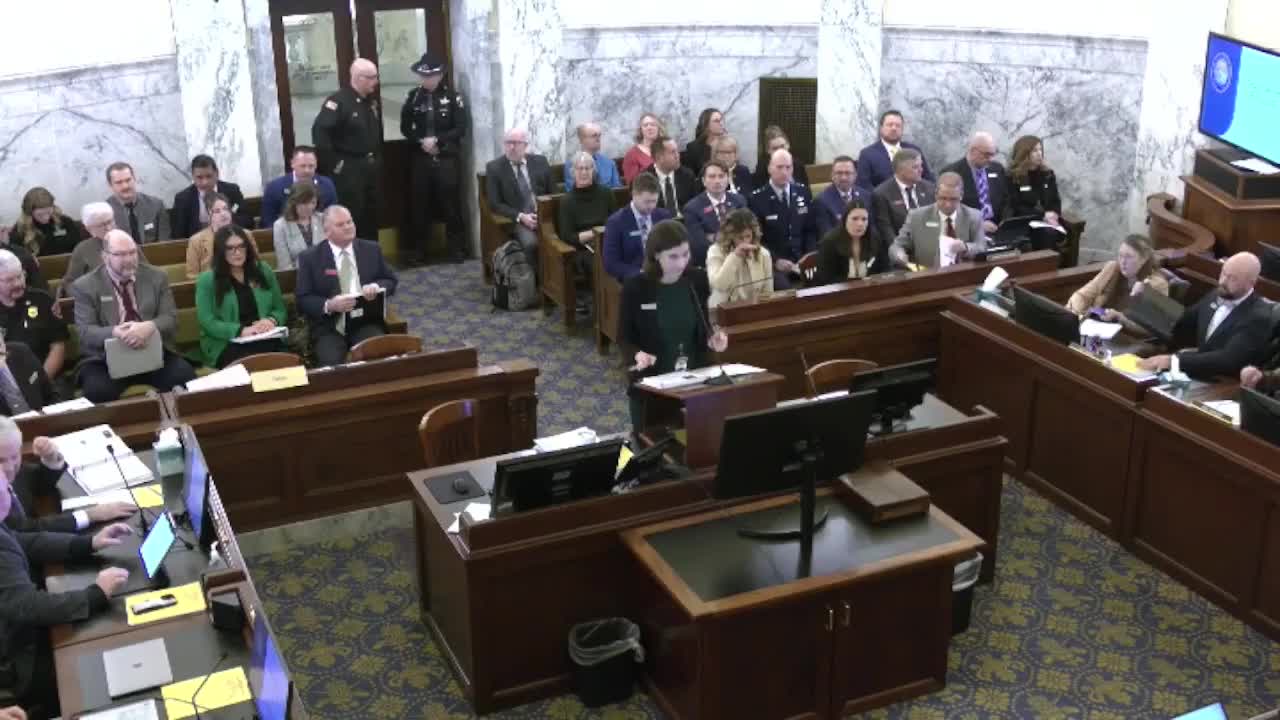
At a Joint Finance-Appropriations Committee hearing, the Idaho Department of Agriculture outlined recent spending on quagga mussel response, a request to create a career-ladder pay structure for agricultural investigators, and a one-time request for vehicle and IT replacements.
Frances Lippett, a budget and policy analyst with the Legislative Services Office, presented the Department of Agriculture’s budget history and fiscal year 2026 requests to the Joint Finance-Appropriations Committee. The department told lawmakers it received a mix of dedicated-fee revenue and recent infusions from the general fund to respond to invasive quagga mussels and other emergent needs.
The department said the Legislature provided a $5,000,000 cash transfer from the general fund into the invasive species fund during the last session and added an ongoing $1,500,000 appropriation from the general fund "primarily for staffing and building additional watercraft inspection stations," according to Lippitt. Director Chanel Tewalt told the committee the department nearly doubled statewide water sampling and watercraft inspections in 2024 and used the added resources to expand stations and staff. "We doubled the sampling statewide," Tewalt said, describing increased sampling and inspection capacity after 2023 detections on the Snake River.
Why it matters: The invasive species fund and related pest-control activity have driven recent bumps in the department’s ending free fund balance. Committee members pressed analysts and the director on how one-time transfers and ongoing general-fund support interact with fee-backed funds.
Key details and requests
- Funding for quagga mussel response: The department reported a $5,000,000 cash transfer from the general fund to the invasive species fund for FY 2024 actions, and an ongoing $1.5 million general-fund appropriation for staffing and check stations beginning FY 2025. Lippitt explained the budget shows both the cash transfer appropriation and the dedicated-fund appropriation, which net to the state’s actual $5,000,000 cost.
- Pest control fund and deficiency warrant: Lippitt said a balance of about $1,700,000 incurred in FY 2024 (largely Mormon-cricket treatment and monitoring costs) was being requested for payment in FY 2025.
- Personnel and structure: The Department is authorized about 231 FTE and has maintained roughly a 91% staffing rate, Lippitt said. Plant industries is the largest program (about 75 FTE); Animal Industries is second (about 62 FTE); Agricultural Inspections is about 37 FTE.
- Ag investigator pay proposal: The department requested $340,400 ongoing to create a pay structure for its 53 agricultural investigators. Lippitt said 23 investigators have under two years of service and only nine have 10 or more years; the proposal would create a career ladder to encourage retention and training.
- One-time replacement requests: The department requested about $1.1 million one-time, including roughly $891,000 for vehicle replacement (director’s office staff estimated about 17 vehicles, mostly pickup trucks and some SUVs) and $214,700 for IT hardware replacements, mainly laptops.
What lawmakers asked and department answers
Lawmakers sought clarification on how the general-fund transfers interact with fee revenue and why both appear in the appropriation tables. Lippitt explained the accounting: when a cash transfer occurs the budget shows an appropriation into the dedicated fund and an appropriation out of the general fund; the two show on different lines but net to the state's outlay. Representative Mitchell asked for a detailed list of the vehicles proposed for replacement; Lippitt agreed to provide that list.
Department context and constraints
Lippitt emphasized that many of the department’s dedicated funds are appropriated at levels above typical fee revenue to allow the agency to maintain services during periods of rising demand. She also noted that spikes in appropriation largely reflect one-time responses, such as a $6,100,000 resilient food systems grant and invasive-species response costs.
The department did not present any formal votes at the hearing; the presentation closed with officials offering to follow up on specific documentation requests.
Ending
The department’s FY 2026 request centers on retention pay for investigators, replacing aging fleet vehicles and IT equipment, and sustaining quagga mussel prevention and response capacity. Analysts and the director committed to providing the committee additional detail on vehicle counts, specific replacement needs, and the timing and accounting for dedicated-fund transfers.