Get Full Government Meeting Transcripts, Videos, & Alerts Forever!
Get email alerts on the Behavioral Health topic
No spam. Unsubscribe anytime.
Idaho officials explain delays, federal grants and transfer requests tied to behavioral health plan
Summary
State health officials told the Joint Finance-Appropriations Committee that the Idaho Behavioral Health Plan went live in July 2024 after legal delays, and requested supplemental federal authority and transfer-exemption language so the Department of Health and Welfare can access awarded grants and shift funds within the division.
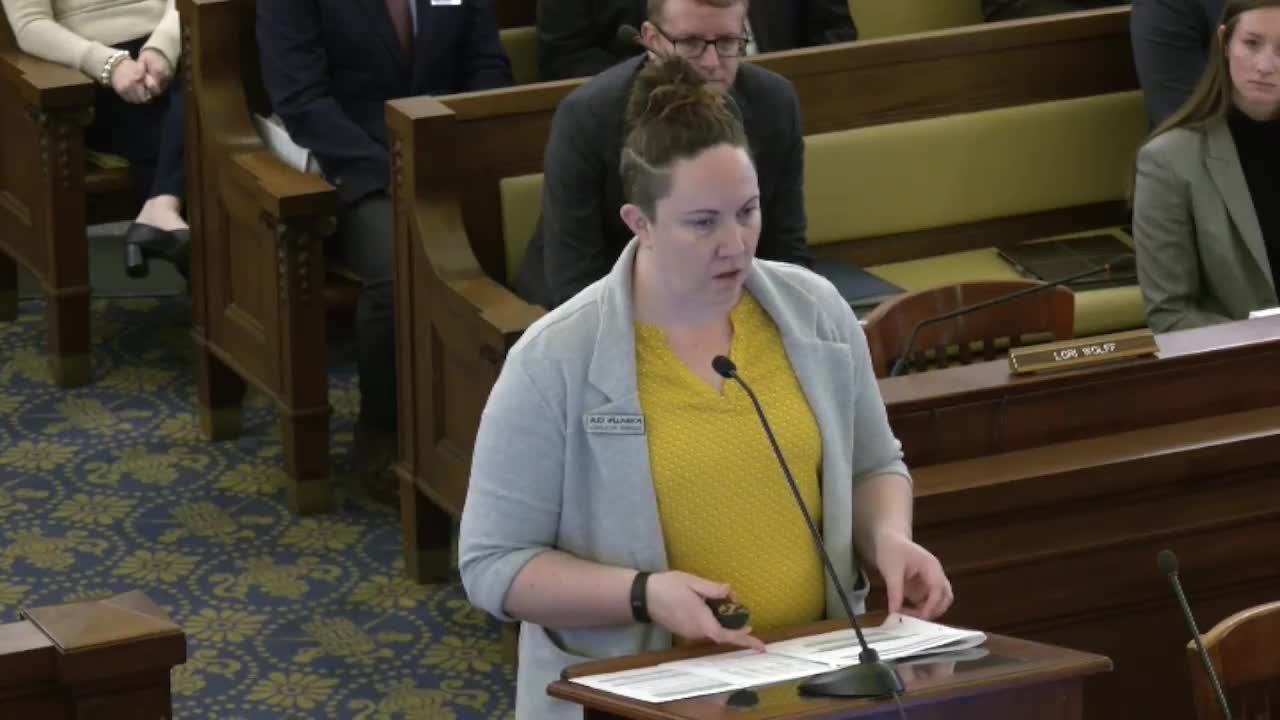
Alex Williamson, a budget and policy analyst with the Legislative Services Office, told the Joint Finance-Appropriations Committee that the Department of Health and Welfare’s Division of Mental Health Services is seeking a fiscal 2025 one-time federal supplemental of $6,700,000 and a 2026 ongoing federal increase of $261,400 to support the Idaho Behavioral Health Plan (IBHP).
The funding requests are intended to allow the department to access federal grants tied to the IBHP and to cover operating costs connected to grant work, Williamson said. She also identified an agency request for a transfer-exemption tied to Idaho Code 67-35-11 that would lift program-transfer limits for fiscal 2025 and allow broader transfers in fiscal 2026.
The IBHP was scheduled to go live in 2022 but “went live July of this last year,” Williamson said. Director Alex Adams told the committee the procurement and contracting process for IBHP was “the largest contract in the history of the state” and that the process encountered legal challenges that delayed implementation by about a year. “When things get tied up in court it delays the ability to implement,” Adams said, adding that once the legal challenges were resolved the department prioritized doing the contract correctly rather than quickly.
Why it matters: committee members pressed officials on the length of the procurement and the budget implications. Senator Cook asked why the request and contracting process took so long and whether those delays increased costs. Adams said the size of the contract invited legal challenges and that those delays were outside the department’s control.
Adams explained the department’s request for transfer-exemption authority as a practical response to the timing mismatch between when federal grants were issued and when the legislature originally appropriated authority. He said some federal grants tied to the IBHP were issued in connection with the system’s July 2024 go-live but were appropriated in 2022 and therefore the department lacks the current state appropriation to access those funds. The exemption to 67-35-11 would let the agency move department-wide resources into adult and children's mental health in fiscal 2025 as needed, the director said.
Committee members also asked about 988 crisis-line startup funding and contractor selection. Williamson noted a one-time appropriation of $4,400,000 in fiscal 2024 to help stand up the 988 crisis line and a $3,000,000 one-time appropriation for community mental health. Representative Tanner raised concerns about contractor selection and naming, noting a vendor named Janus on public materials and expressing concern about the vendor’s stated values; Director Adams said the state’s contract is with Magellan, which in turn may subcontract to other vendors and that the department is “agnostic as to who the contractor is” provided the vendor meets contractual standards.
Officials urged the committee to consider transfer flexibility. Adams said the department must operate inside a fixed budget and that some programs that fill gaps (for example, behavioral health services not covered by Medicaid) are not entitlements; he contrasted that with Medicaid, which is an entitlement and obligates payment regardless of caseload. The transfer-exemption request is intended to give the department flexibility to move funds to cover unforeseen costs without returning for multiple supplementals, Adams said.
Ending: The committee did not take a vote on the requests during the hearing. Williamson said the slide deck will be updated to reflect committee action already taken on staffing levels and that the department and Legislative Services Office will provide further details as requested by members.