Get Full Government Meeting Transcripts, Videos, & Alerts Forever!
Get email alerts on the Substance Abuse Funding topic
No spam. Unsubscribe anytime.
Health department plans fund swaps to meet federal cap on administrative spending for substance-use grants
Summary
Department officials said federal guidance put Idaho on corrective action because personnel spending on the substance-use block grant exceeded a 5% administrative cap; the department proposes shifting state liquor-control and other sources to cover personnel while allocating more federal dollars to trustee and benefit payments.
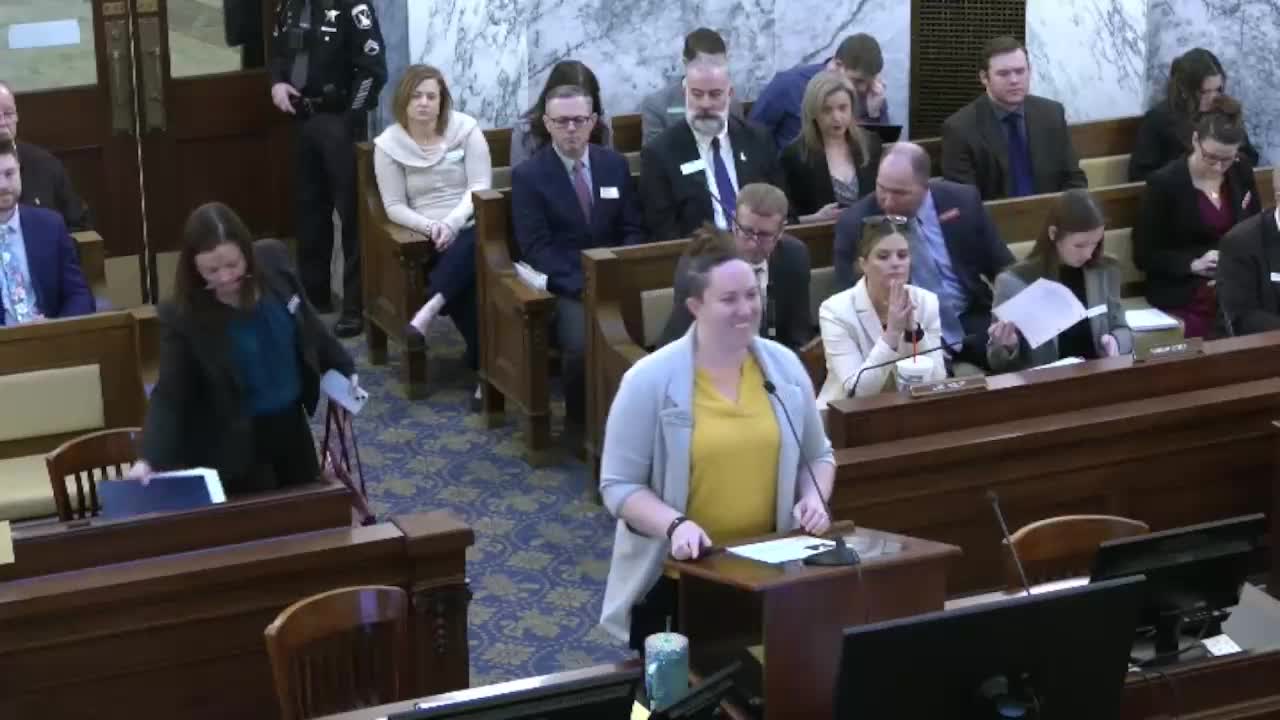
Alex Williamson presented the Division of Substance Abuse Treatment and Prevention budget and told the committee federal guidance recently prompted the division to request net-zero fund shifts to comply with a federal 5% cap on administrative/personnel spending for the substance-use block grant.
"The federal organization doesn't necessarily have a preference on how much is spent, just how much of it is used for personnel dollars — as long as they're not using the federal dollars for more than 5%," Williamson said, explaining the department requests authority to shift $533,900 from liquor-control and other state funds to pay personnel and to move $673,900 from federal personnel to trustee-and-benefit payments so the formula complies with federal limits.
Director Alex Adams described the department as a "pass-through" for many of the Millennium Fund and opioid-settlement dollars that were appropriated by the legislature and noted the department reduced four FTP in the substance‑abuse program request while covering some gaps by moving dedicated funds. Adams said the department did not request to make the Millennium and some opioid-related appropriations ongoing; many were appropriated in prior sessions as one-time funds.
Representative Tanner asked about a Boise State University collegiate recovery program funded from opioid-settlement money. Adams said Boise State reported establishing the program, hosting seven social events with roughly 375 student impressions, and that the department’s role is as a fiscal passthrough and it has no operational oversight.
Why it matters: federal corrective action and the administrative-cap rule require the state to reassign which fund sources pay certain personnel costs to remain eligible for federal grants. Committee members asked for performance information about settlement-funded projects and for reports showing program outcomes; department leaders said they would provide written updates to the committee.